


The Paradox of Digital Proximity: How Technologies Amplify Loneliness
Digital platforms create the illusion of an active social life based on instant messages, quick reactions (likes, comments), and continuous interactions. In reality, these forms of communication can replace relationships that lack authentic human contact. The emergence of chatbots (e.g., Character.AI) and artificial intelligence adds a new dimension to this phenomenon, offering an unreal form of communication, especially to emotionally vulnerable individuals. Technologies intended to unite people can, paradoxically, intensify the feeling of inner isolation.
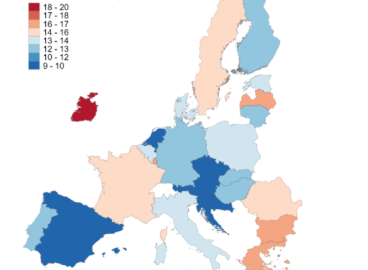
Climate change alert: Southern Romania under siege by desertification and extreme temperatures
Romania in 2026 faces an increasingly evident climatic fracture. While the intra-Carpathian regions still maintain features of the classic temperate-continental climate, the south of the country—especially the Romanian Plain and Dobrogea—is rapidly sliding toward an arid climate regime characteristic of subtropical zones. The phenomenon of desertification is no longer a theoretical projection but a reality transforming agriculture and the way of life for millions of inhabitants.
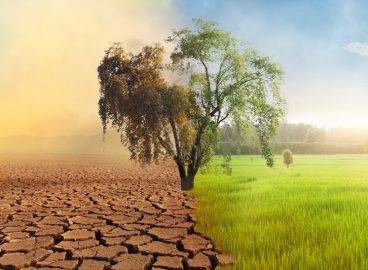
Virtual Singapore: The world’s first digital city and the ultimate test of modern urbanism
In an era where the world's metropolises are suffocating under the pressure of overpopulation and climate change, a small island state in Southeast Asia has decided to build a perfect replica of itself in the digital environment. Singapore is no longer just a physical city-state; it is a two-headed entity, existing simultaneously on land and on high-performance servers. The project, known as "Virtual Singapore", represents the most ambitious urban modeling effort in human history.

The Chocolate Fair Chocolate Saga 2025: Delicacies, magic, and art at Ghica House
The winter holiday season began with the sweetest edition of the largest artisanal chocolate festival in Romania. In November 2025, Chocolate Saga returned with the 8th Edition in Iași, between November 14-16, at Palas Mall, after holding the 7th edition in Bucharest in October, at the National Library of Romania (October 24-26, 2025).

Coachella 2026: Justin Bieber’s triumphant return after a 4-year hiatus
The most anticipated comeback of the decade The Coachella Valley Music and Arts Festival 2026 marks one of the most significant moments in recent pop music history. After a hiatus of over four years from most major live performances, Justin Bieber returns to the stage as the festival's headliner, in an event that has already generated the #Bieberchella mania on social media worldwide. The announcement of the 2026 lineup was made on September 16, 2025, confirming that Bieber will headline the festival alongside Sabrina Carpenter, Karol G, and Anyma. This edition promises to be the most memorable in Coachella history, with a pop artist returning after one of the longest absences of his career, transforming a simple performance into a cultural moment that will remain in the history of contemporary music. The Bieber phenomenon at Coachella 2026 is not just about music, but about a story of healing and artistic rebirth. Fans worldwide have eagerly awaited this moment, and tickets for the weekends Justin Bieber is performing sold out in record time, generating a wave of enthusiasm that exceeded all expectations. His return to the Californian desert stage marks not only the end of a difficult period but also the beginning of a new chapter in the career of one of the most influential artists of his generation.
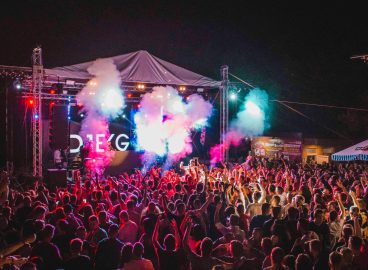
The sound that heals: What music means to Gen Z
Perhaps many of us tend to seek refuge when we want to take a break, but life doesn’t stop for you. I know that music has always helped me, and that the younger generation has a unique style when it comes to their favorite artists. Why do they listen to it? Why do we see young people everywhere on the street with headphones on their heads? Why do we go to the gym, clean, eat, and dance to our favorite songs? Why do we have a song we put on repeat when the sky falls in our world? For that last question, I have some answers... I might even call them touching and powerful.

Horizon 2030: Green hydrogen and the end of the fossil fuel era
In a desperate attempt to halt global warming and ensure real energy independence, world governments have turned their attention to the most abundant element in the universe: hydrogen. However, not just any type of hydrogen is the solution. "Green Hydrogen," produced through the electrolysis of water using renewable energy, has become the "new oil" of the 21st century, promising to decarbonize industries that until now seemed impossible to clean up, such as aviation, maritime transport, and steelmaking.
Beyond the dental chair: How I found my voice as a doctor in the town near home
It is said that dental school prepares you to restore smiles, but no one warns you how hard it will be to keep your own after six years of intense study. My name is Mihai Marcel Ghinea, I am 27 years old, and today I proudly wear a badge that says "Doctor." However, the road to this small rectangle of plastic was strewn with closed doors, painful compromises, and a silent struggle with a system that offers no safety net for beginners.
