Across Europe, more and more young people are starting businesses before they finish their studies. Sometimes, even before they finish school. Some launch small, local ventures. Others build ambitious tech startups inside university labs. The motivations are different, the environments vary widely, but one thing is clear: student entrepreneurship in Europe no longer looks like a side project. For many, it’s a serious path.

Student entrepreneurship in Europe today

Europe offers young entrepreneurs more tools than ever before. Universities host incubators and accelerators. Public funding schemes and competitions are widely available. Cross-border mobility, digital tools, and EU-level programmes make it easier to test ideas and collaborate internationally. And the appetite is there: a survey from OECD shows that about 39 % of young Europeans (aged 15–30) would rather be self-employed than work for someone else. Yet only around 7 % are currently self-employed, suggesting plenty of room for growth in actual business creation. Talk is there, but action is missing. At least for now.  According to the same survey, young people in the EU are more likely than older adults to start a new business, even if many of those ventures remain early-stage. If youth participated at the same level as older adults, Europe could see millions more young founders entering the economy in the years ahead.

But the experience of “starting up” still depends heavily on context. A student building a local service business in Bulgaria faces a very different reality from one developing AI-based technology in the Netherlands. Access to capital, mentors, infrastructure, and even social trust varies significantly across regions. In this article, I bring you the stories of two young founders in different regions of Europe, along with the perspective of an experienced business and startup mentor from Spain. Numbers and data are fine, but we can only understand reality through real-life human stories.

What unites these paths is not ease, but experimentation. Student entrepreneurship today is less about overnight success and more about learning by doing. And that often happens while balancing studies, with access to limited resources, and uncertainty.
Starting a small business out of high school in Bulgaria

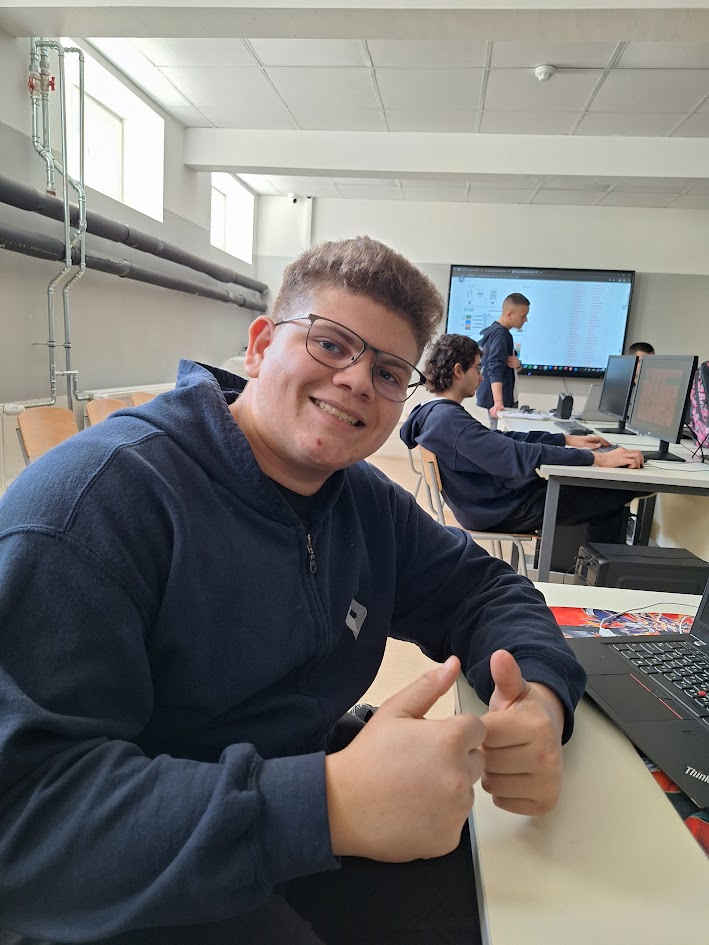
Ivan Ivanov started thinking about business while still in high school. At just 15, he tried to launch his first clothing brand in Bulgaria. And it failed. Not because of a lack of motivation, but because the product didn’t meet his expectations. Instead of quitting, he decided to understand the problem from the inside.

“I realised that I could actually be part of the solution. Not just for myself, but for others who were in the same situation as me.”

Without the ability to legally register a company or access funding, Ivan did what was available to him: he worked. During a summer break, he spent four months doing agricultural labour in Italy, saving enough money to buy basic equipment, materials and learn the craft.

“I worked from six in the morning until the afternoon. Everything related to agriculture – grapes, tomatoes, peppers. When I came back, I invested everything I had into the business.”

He started small: printing and embroidering clothes for friends, then friends of friends, then small local businesses. Orders were modest, margins were tight, but the learning was constant. One challenge stood out above all others: credibility.

Ivan Ivanov, personal archive

“People simply don’t take you seriously when you’re that young. I sometimes had to tell clients I was older, just so they would trust me with an order.”

Support from his community was also nowhere to be found:

“Instead of support, I mostly heard why it wouldn’t work. That it’s too hard, that I won’t manage taxes, that business isn’t for someone my age.”

And yet, the business grew. A first larger order became a turning point for the business. The funny coincidence? The order came from a person who also tried to start his business while he was still in high school. Today, Ivan works on developing brands for others and sees his business as something long-term, not a quick win.

“When I got that first order, it wasn’t just about the money. It was the moment I realised I could actually make a living from something I built myself. People my age want fast results. I chose this industry because I love it. And it is stable. It’s not a get-rich-quick scheme. It’s something that can last a lifetime.”

The high-tech builder: innovation inside the local ecosystem

Zander van den Elzen’s path looks very different. Not in a sense that it is easier. It is just a different journey. He is a master’s student in Industrial Design at the Technical University of Eindhoven, building a startup in markerless motion tracking for sports. His idea emerged from curiosity. How could technology meaningfully support human movement? And he believes he has found an answer.

“I think it’s a better use of computing power than making people addicted to scrolling.”

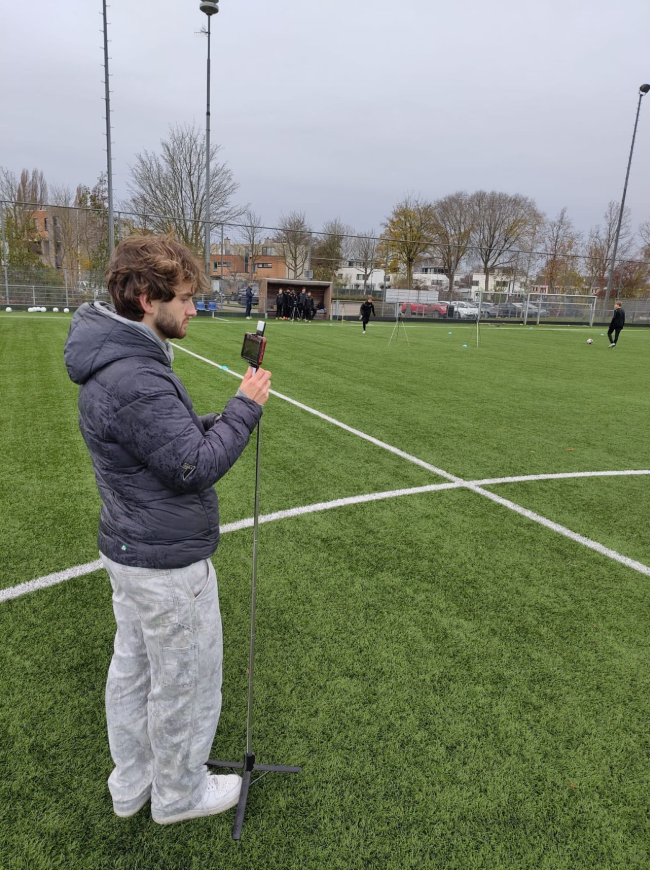
What started as an exploration quickly turned into a research project, and then into a real prototype. His software uses a phone camera and a laptop to analyse sprinting technique, providing coaches and athletes with detailed feedback. Unlike Ivan, Zander operates inside a dense innovation ecosystem. University accelerators, professors who are willing to help, a variety of startup events, and student networks play a central role.

“There are a lot of resources you can access as a student in Eindhoven. Accelerators, mentors, even events where you meet potential co-founders.”

Still, the biggest lesson didn’t come from a classroom:

“You don’t build a startup behind your laptop. You have to talk to people. A lot of people. I had this tunnel vision of one solution. Testing showed me that trainers don’t want an AI telling them what to do, but they can benefit from the measurements it provides.”

Zander testing with athletes, personal archive

Motivation, he admits, is one of the hardest parts:

“Progress feels slow. Sometimes you feel like you’re stuck. But when you look back after a year, you realise how much you’ve actually built.”

For Zander, student entrepreneurship is a balancing act between ambition and realism. Dreaming big, but starting with a concrete, usable product.

What do students often get wrong?

From a broader perspective, Professor Ismael Abel Valles from Valencia, Spain, has observed hundreds of student ventures over the years. His view is both supportive and cautious. One of the biggest underestimations, he says, is the real world itself:

“Students often underestimate contacts with suppliers, distributors, and channels. Business doesn’t exist in isolation.”

He also notes a growing trend that worries him: pushing students to start companies too early:

“Many successful companies are promoted by people with some experience. Starting immediately after studies often means being too rookie.”

And he seems to be right. Research on high-growth entrepreneurship finds the average founder of the fastest-growing new ventures is about 45 years old, and that success is more strongly associated with prior industry experience than youth alone. That doesn’t mean that young people should not start a business and that they are doomed to fail. And Ismael presents an idea that can help young founders beat statistics:

“I would suggest partnering with senior people or gaining experience in the sector first.”

At the same time, he acknowledges how much student entrepreneurship has evolved.

“Students today are far more exposed to innovation, ecosystems, and entrepreneurial thinking than 10 years ago.” 

The challenge, he argues, is not a lack of ideas. It is more the lack of patience and perspective from young entrepreneurs.

What does this mean for young people in Europe?

Whether building a local textile business in Bulgaria or a high-tech startup in Eindhoven, the core challenges remain similar: credibility, learning speed, access to networks, and the ability to keep going when results are slow. Europe gives students space to experiment. What no one can promise is the guarantee of success. Only the chance to learn by doing.

Student entrepreneurship doesn’t have one shape. Your business doesn’t have to be digital, global, or revolutionary. It can be local, practical, or traditional. As long as it solves a real problem. Europe now offers more tools than any previous generation had. But the most important step remains the same: starting. Conditions for that will never be perfect, and yet you have to make the first step. As these stories show, building a business when you are young is less about having the perfect idea and more about developing the mindset to learn, adapt, and persist. And sometimes, that’s the most valuable education of all.

And what about you? Are you chasing your dream or just talking about it?

Written by

Shape the conversation

Do you have anything to add to this story? Any ideas for interviews or angles we should explore? Let us know if you’d like to write a follow-up, a counterpoint, or share a similar story.