


USA’s and Israel’s war on Iran is backfiring. Greece should stay out of this no exit strategy war
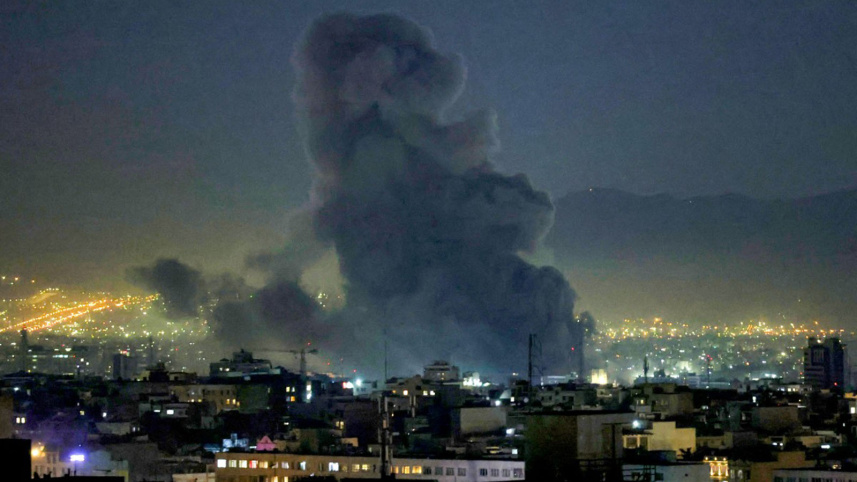
Tehran bombing (Source: Channel News Asia)

USA’s and Israel’s war on Iran is backfiring. Greece should stay out of this no exit strategy war
Tehran bombing (Source: Channel News Asia)
Iran has been at odds with American and Israeli politicians and high ranking officials since the Islamic Revolution in 1979 that brought down the Shah and replaced him with Ayatollah Khomeini in power which led to the establishment of a Shia Islamic republic. Tensions have escalated since the kidnapping of American diplomats in Tehran in 1980, the threat of an attack in the aftermath of the war on terror in early 2000s and the 12 day war between Israel and Iran in July 2025. The goal is clear: Regime change in Iran that will complete USA’s domination in the post 9/11 Middle East and an end to the threat felt by Israel to expand its influence in a collapsing and chaotic Middle East. However, the newly launched war on Iran is not going according to plan.
Donald Trump’s new foreign policy dogma (Dogma Donroe) is asserting domination first in Latin America (America’s backyard famously described by Henry Kissinger) as seen in the 3rd of January by kidnapping Venezuelan President Nicolas Maduro on accusations of drug trafficking, threatening to invade Cuba and attempting to erase the threat Iran poses both to the US and to Israel. Benjamin Netanyahu on his side sees Iran as strategic threat to Israel’s plan for regional expansion (“Greater Israel”) which consists of three steps. First, destroy Gaza and complete the building of settlements in the West Bank so as to force the remaining Palestinians out of Israel. Second, bring regime change in Iran and destroy all of its proxies in the region: Hezbollah in South Lebanon, Shiite paramilitary groups in Iraq and promote regime change in Iran, meaning a regime friendly to the US and Israel. Thirdly, sign peace accords and normalize ties with the majority of the Arab world, most importantly with Saudi Arabia and the Gulf states who are enemies of Iran. So far only the third step has been successful and the rest remain to be achieved.
The launching of strikes against Iran on the 28th of February leading to the killing of Iran’s Supreme Leader Ayatollah Khamenei was supposed to produce a shock to the leadership of Iran and force them to negotiate on US’s terms and conditions. However this short term strategy turned out to be false. Iran responded by striking US military bases across the Middle East from the Gulf states to Jordan and Turkey. Ballistic missiles were also fired at the Israeli cities of Tel Aviv, Jerusalem and Beit Shemesh. Simultaneously Hezbollah, Iran’s proxy in Lebanon fired rockets in Israel resuming the hostilities between the two in the country’s south. The US and Israel each responded by bombing military areas in Tehran. Israel took out Iran’s Defense Minister Aziz Nasirzadeh and IRGC commander Mohammad Pakpour along with four others intelligence officials. Moreover, Israeli strikes caused huge pollution and black rain in Tehran with long term human and environmental consequences for the local population. The US bombed a girl elementary school full of girls aged 7 to 12 killing 180 children which would fall under the category of war crime according to UN human rights groups.
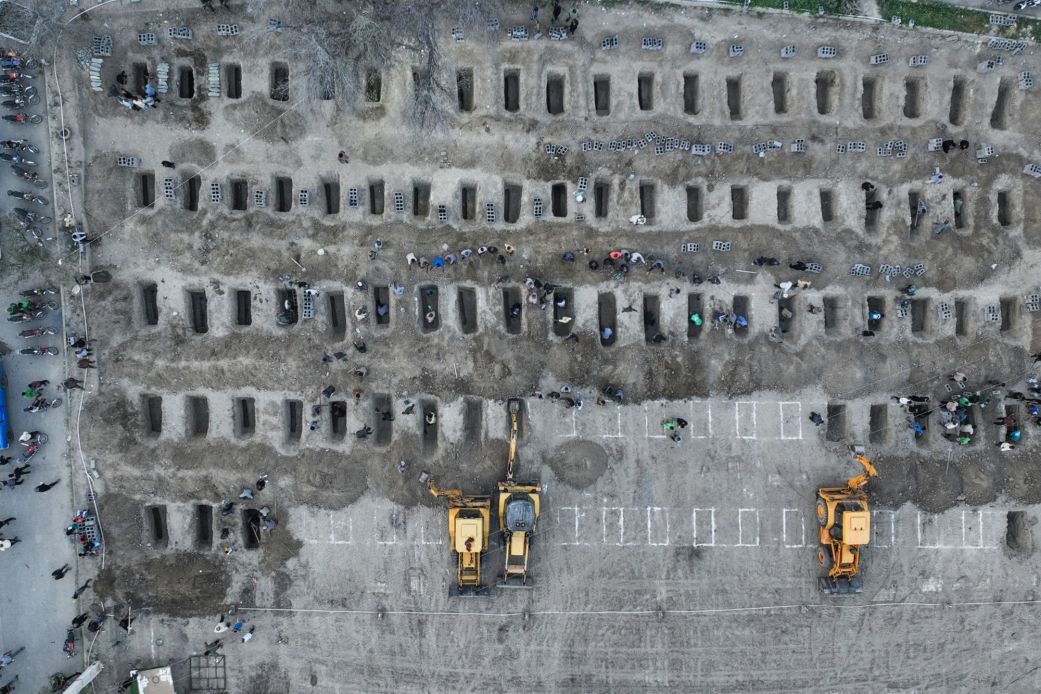
Iranians building graves for girls killed by air strikes (source: CNN)
The response of the Iranian government to the killing of its head of state was not only military but also an economic one. The Streets of Hormuz were closed resulting in the biggest oil price swing in history. The narrow waterway is one of the world’s most important trade arteries, through which a fifth of global oil and seaborne gas is shipped from production facilities and refineries in the Gulf to buyers around the world. It is also the most important trade route for cargoes of liquified natural gas (LNG), shipped on super-chilled tankers. Meanwhile, oil storage facilities in Saudi Arabia, the United Arab Emirates and Kuwait are reaching their limits, meaning large oilfields may need to be shut down if crude cannot be exported via the Strait of Hormuz to the global market.
The mission to force a regime change to create a failed state has backfired for both the US and Israel. The structure of the Iranian leadership and its backbone the Iranian Revolutionary Guards have remained in place, its military capabilities remain untouched and its nuclear facilities have not been destroyed. The regime has managed to unite the pro regime and anti regime citizens after months of protesting and deadly state repression in the January protests of 2026 with over 30,000 shot in cold blood and numerous human rights violations. This lack of division destroys the plan for a civil war, a huge flow of Iranian refugees and a failed, chaotic state that would not challenge Israel’s policy towards the Palestinians and to an extent the whole of the Middle East. Despite the major opposition to the government due to the suppression of individual and social rights for women, LGBTQ etc and the theocratic ruling of the country under the clerics, the Iranian population does not want foreign interventions to their country with the latest historical example of foreign intervention being the toppling of the democratically elected president Mohammad Mosaddegh in 1953 by the US and the British governments for wanting to nationalize the assets of foreign oil companies which then led to the return of the western friendly Pahlavi dynasty until the revolution in 1979. As a result, the only way to change the political leadership of the country would be to deploy troops on the ground though such an act would be catastrophic for the US as the Iranian military is a well-organized army and the engagement to guerrilla warfare tactic would inflict considerable damage in the battlefield.
Having analyzed the current situation in Iran and the goals of the US and Israel war against it, a troubling issue is the participation of EU member countries in this conflict in order to help the military ambitions of its allies. Cyprus and Greece have played a crucial role promoting Israel’s interest in the East Mediterranean signing treaties with it on defense, energy and security. This partnership aims to counter the influence of Turkey in the region that is an enemy to both Greece and Cyprus. It includes joint naval and air exercises, sharing of intelligence information, AI development and academic research programs. Last but not least, there have been discussions for a developed East Mediterranean undersea gas pipeline to export cheap energy to Europe called “East Med Pipeline” and also the “Great Sea Interconnector” project, a subsea electricity cable intended to be the world’s longest and deepest submarine power cable.
This trilateral bloc has forged deals to ensure regional stability and security along with the promotion of economic and technological projects. This cooperation is at the same time a risky one both politically and geopolitically. Israel has been accused of perpetrating a genocide in Gaza by UN human rights groups, the International Amnesty and genocide scholars. Since the war began on 7th of October 2023, over 75,227 Palestinians have been killed by the Israeli Defense Forces according to the Gaza Health Ministry and actions such as cutting of water and electricity, carpet bombing civilian areas, forcing thousands of inhabitants to move away from their homes, blockading the humanitarian corridor and torturing civilians have also been described as crimes against humanity. At the same time, the demolition of Palestinian houses, the building of illegal settlements and the daily check point entrances for Palestinian Arabs to move and work out of the West Bank resembling an apartheid policy based on the color of skin has set the ground for either the complete overtake of the occupied territories, thereby violating UN resolution 242 and the right of the Palestinian refugees to return to their homes or the self-willing abandonment of the territories by the Palestinian living there. Thus the aim of the exodus of the Palestinians that started in 1948 will be achieved. Besides the Israel’s policy towards the Palestinians, the war waged on southern Lebanon simultaneously with the 14 day war between Israel and Iran has caused massive damage to civilian lives and infrastructure. Whole residential buildings are left in ruins, 634 killed and 816,000 Lebanese have been forced to South Lebanon in the Bondi beach living in tents like refugees in their own country. A state affected heavily by the explosions in Beirut in 2020 now is havocked by another war being added to a long list of destroyed Arab Middle Eastern countries. The human rights violations on both occupied Palestinian territories and Lebanon does not sit well with EU member states declaring to support human rights, peace and international law and order.
Greece’s involvement in the war against Iran could have serious geopolitical consequences apart from the political – ethical ones. First of all, Greece has been in turmoil with Turkey regarding border controls, island rights and east Mediterranean energy interests. Turkey’s expanding role in the Middle East and the Arab world in general for the past decade from Libya to Syria and an aggressive foreign policy towards its neighboring countries, Greece and Cyprus, of which half its territory is occupied illegally by Turkish forces since 1974, is alerting and the only way to mediate and resolve potential issues is through dialogue, diplomacy and a call to respect international law. Tolerating a regime change that is in violation of international treaties on the one hand and on the other calling for neighboring countries with an expansionist foreign policy is not only contradictory but also sets a dangerous precedent for the complete disregard for laws in international affairs. Secondly, letting the US use military bases in Greek soil to strike Iran or sending naval ships and aircrafts to defend Israel gives Iran the right to consider these bases as legitimate hit targets as part of the war. Civilian lives would be put in danger, military infrastructure would be damaged and the economy would plunder in record lows on income, rebuilding infrastructure and the welfare state. Moreover, an involvement could provoke terrorist attacks from activated Iranian sleeping cells across Europe including Greece, resulting in chaos and destruction as a means to spread fear to the local population and put pressure on the government to take action against the escalation of war. Thirdly, a potential destruction of the Iranian state would create a massive flow of tens of thousands of refugees in Europe. Europe is already facing multiple crises: financial crisis, energy crisis, housing crisis, environmental crisis, war and still has not managed to address effectively and in accordance with the international human rights law the flow of migration that has come to Europe since 2015 though on a smaller scale than before. The refugees coming from Iran will need specific policies to be integrated into the society and not be treated as inferiors to Europeans that would aim to overcome the cultural differences, not to be castigated as strangers, criminals and a threat to Europe’s societal (non-existent) well-being and to prevent religious extremism that could harm the whole of society both physically and intellectually.
The Greek government’s foreign policy towards the war should be an independent, principled policy based on the international law first and then on its national interests. Greece is a crossroad between Europe, Africa and Asia and it has an important role to play in mediating conflicts and promoting dialogue and cooperation between the states that are in conflict. Instead of providing military and logistical support to a state that engages in war against another sovereign state and is accused of committing war crimes it should stop providing military and logistical support, refuse the use of military bases in Greek soil to fire missiles, stop exporting or importing goods, stalk diplomatic relations, vote on UN security council amendments to put pressure to stop the exchange of fire and call for peace talks between the countries and act as a mediator which will upgrade the country’s status worldwide.
The conflict between the US, Israel and Iran was the continuation of an imperial foreign policy by a super power and its ally at its peak serving both national and regional interests. Despite the shocking strikes, the Iranian regime seems unlikely to fall and that could ultimately damage the reputation and the power balance of the US and Israel, which will have a game changing effect on global affairs. Greece’s involvement in the war is troubling and the consequences could be severe on an economic, military, social and political level. A lawful foreign policy approach would strengthen the country’s resilience to future threats and would also set as example to conflict resolution.
Do you have anything to add to this story? Any ideas for interviews or angles we should explore? Let us know if you’d like to write a follow-up, a counterpoint, or share a similar story.