Beyond the uniform: Interview with Horațiu Măndășescu
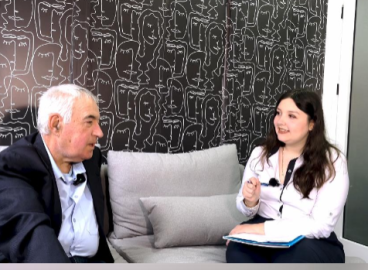
The younger generation should seek historical truth, fairness, and respect the course of events, especially to prevent history from repeating itself; this is the advice of Horațiu Măndășescu, a former member of the Militia (the name of the police forces during the communist regime and the main instrument of control against society), a police officer, a faculty member at the Police Academy in Bucharest, and author of the book "The Militia in Ceaușescu's Time."
Is Critical Thinking Possible on Algorithm-Driven Feed?
Remember a time when you had to wait for your favorite TV program, cartoon, or the evening news, walk into a library to pick your next book, or actively search for perspectives beyond your own – a time when the desire to broaden your viewpoint required effort and patience.

Can free gym memberships tackle Malta’s obesity crisis?
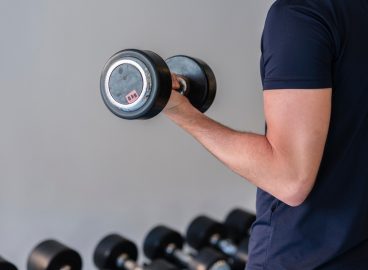
Starting in 2025, Malta offered young people born between 2005 and 2007 a free six-month gym membership. The response was positive, with over 6,000 applications.
Opinion: I Marched for Change in 2023. Now, I’m Watching My Country Slip Away
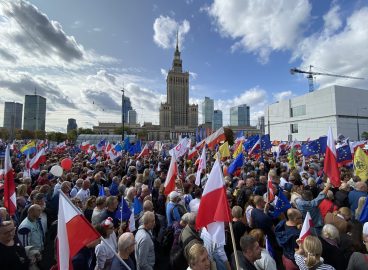
2023 is a year Poland will never forget - for the first time in eight years, the nation stood united. The parliamentary elections brought a fresh wave of hope. But it was the looked down upon, ‘ungrateful’ Gen Z that stole the show, voting the conservative and eurosceptic coalition out with a skyrocketing turnout of 75%. The democratic opposition won, only for Poland to return to the right-wing track two years later, choosing Karol Nawrocki as the next president. Why and how did the Polish Gen Z revolution fall? I sat down with my Polish colleagues to reflect on our country’s situation and ask them: what happened to the ‘hope’ of 2023, and where did the momentum go?
When “I’ll Work for Lockheed Martin” Stops Being a Meme
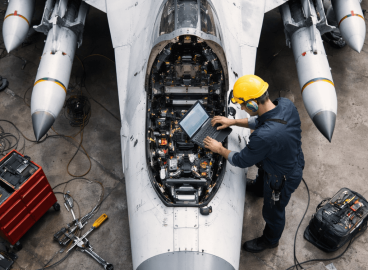
Behind the engineering meme of “I’ll just go to Lockheed Martin” lies a serious ethical issue: defence engineering offers stability and prestige, but not the astronomical wealth often promised to undergraduates. As the industry grows and the world demands more weaponry, engineers have to confront the ethical responsibility that comes with where they choose to apply their skills.
From climate change to the tragedy at Praid
For some, climate change doesn't mean much—just some glaciers melting in a hurry or temperatures that can terrify people—but this can lead to natural disasters that become true tragedies, as we witnessed at the Praid Salt Mine. More than eight months have passed since Romania witnessed a disaster in the heart of Harghita, in Praid, where since May of last year, states of alert seem to continue without stopping. The Praid Salt Mine was flooded after the flow of the Corund stream rose abruptly, and the press reported even then that all the water overflowed into one of the most important tourist attractions in the country. Shortly after this incident, both tourism and production activities at the salt mine were halted. Consequently, Romania lost control, and authorities and organizations began to worry. We spoke with several representatives of civic organizations to find out how they managed the period when the Praid Salt Mine was flooded, what solutions they propose to fix the problem, and how to prevent possible incidents through awareness of climate change issues. "Only 4% of Romanians consider climate change a national priority. Awareness of the impact on agriculture, water, economy, and health does not yet translate into a strong demand for climate action," said Dragoș Tuță, President and Founder of the Sustainability Embassy in Romania. "In a democratic society, messages should be transmitted by citizens to political leaders through collaboration with civil society." Public policies are necessary to reduce climate risks, but involvement from everyone is also needed to protect vulnerable communities and contribute to the fight against climate change through initiatives accessible to the general public. climate change through initiatives accessible to the general public.

What the European Union is doing for mental health
The European Union has launched several initiatives regarding mental health. Since the Covid-19 pandemic, the issue of psychological well-being has become increasingly pressing: even before 2020, approximately one in six people in the EU had mental health problems, and the problem has only grown.

EU approves “safe countries”: a measure that simplifies procedures but weakens migrants’ rights
Europe has approved a new repatriation regulation and expanded the list of "safe" countries, but many of the measures risk eroding fundamental rights and shifting responsibility outside the EU. Migrants are the ones who pay the highest price, increasingly exposed to expedited procedures, detention, and centers in third countries.