



What began as a regional military confrontation is now triggering ripple effects across energy markets, international alliances, trade routes, and digital infrastructure. Governments, markets, and institutions are scrambling to respond to a rapidly changing balance of power.
Energy Prices Surge and Ripple Through the Global Economy
One of the most immediate consequences of the conflict has been a sharp rise in global energy prices. Oil and broader energy markets have experienced significant volatility as supply routes through the Strait of Hormuz, one of the world’s most critical energy chokepoints, face potential disruption. Approximately 20 million barrels of oil per day, around 20% of global petroleum consumption, normally pass through the strait, making it vital for global energy supply. Higher fuel costs are expected to ripple through the global economy, raising transportation and shipping costs, agricultural costs, and energy-intensive processes like desalination and manufacturing.
The spike is largely tied to disruptions in Middle Eastern supply routes, particularly the Strait of Hormuz, through which roughly one-fifth of the world’s oil normally passes. Iranian forces have targeted shipping in the region, striking commercial vessels including the Thai-flagged bulk carrier Mayuree Naree, the Japanese container ship ONE Majesty, and the Marshall Islands-flagged cargo vessel Star Gwyneth, as well as oil tankers such as Safesea Vishnu and Zefyros. Many of these vessels are linked to companies connected to Western and allied economies, including the United States, Japan and European partners, which depend heavily on Gulf energy shipments. These attacks have created severe uncertainty in global supply chains.
According to the International Energy Agency (IEA), the conflict has produced “the largest supply disruption in the history of the global oil market.” Gulf producers — including Saudi Arabia, Iraq, Kuwait, and the United Arab Emirates — have reportedly reduced output by at least 10 million barrels per day due to the partial blockage of the Strait of Hormuz.
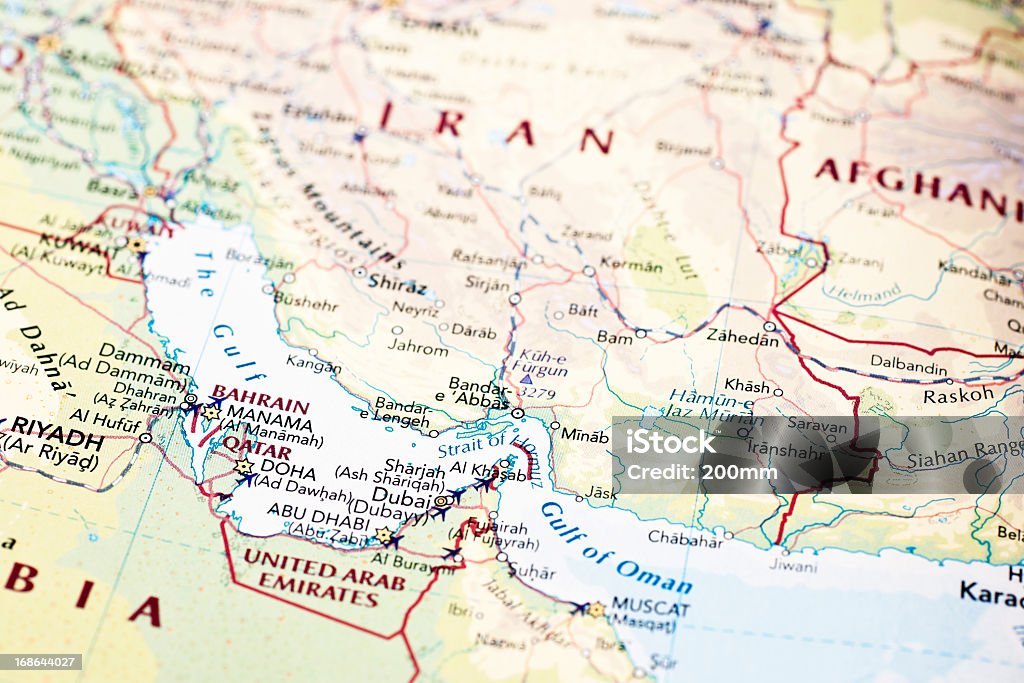
Map Strait of Hormuz and Persian gulf countries
G7 Response: Strategic Oil Reserves Released
The crisis prompted urgent discussions among major economies. On March 11, leaders of the G7 countries convened to coordinate a response to the energy shock. Following the meeting, French President Emmanuel Macron confirmed that G7 members had agreed to release 400 million barrels of oil from strategic reserves, the largest coordinated release in history. The measure aims to stabilize global oil prices and ease market panic.
Macron explained that the volume corresponds to roughly twenty days of oil normally transiting through the Strait of Hormuz, highlighting the scale of disruption currently affecting global markets. France alone may contribute up to 14.5 million barrels, though officials indicated the release would occur gradually to preserve long-term strategic reserves.
The IEA, which coordinates strategic petroleum reserves among its member states, plays a key role in organizing such emergency responses during global energy crises. IEA Executive Director Fatih Birol described the situation as “unprecedented in scale,” stressing that because oil markets are global, responses to major supply disruptions must also be coordinated internationally.
The Strait of Hormuz also serves as a major gateway for agricultural imports into the Gulf region. The waterway functions as the primary gateway for food imports into Gulf Cooperation Council (GCC) countries, including Saudi Arabia and the United Arab Emirates, with more than 70% of the region’s food supplies arriving by sea through Hormuz. Shipping disruptions have already delayed vessels carrying grain into the Gulf.
The waterway is also crucial for fertilizer trade: around 25% of global seaborne nitrogen exports and roughly 10% of phosphorus shipments move through the strait annually. Any prolonged disruption could therefore raise fertilizer prices, increase agricultural costs and contribute to broader food inflation.
G7 summit or meeting concept. Row from flags of members of G7 group of seven and list of countries, 3d illustration
Why the United States May Be the Beneficiary
While the war has destabilized markets, some analysts argue that the United States stands to gain economically from the turmoil. Over the past decade, the U.S. has become the largest oil producer in the world, largely due to shale production. Several geopolitical developments have simultaneously weakened competing energy suppliers: Iran’s oil shipments to China, previously substantial, have been disrupted by the ongoing war involving Iran and Western and Israeli forces in the Middle East; Libya’s internal divisions have repeatedly disrupted its oil production.
The U.S. influence has expanded across the Western Hemisphere energy market, including renewed access to Venezuelan oil resources. Some authors have described this geopolitical reality with a touch of irony. Italian journalist Michele Serra remarked that “Americans are very lucky, because wherever they go to bring freedom… they find oil.”
With the competitors constrained, Washington’s relative market share grows as global supply tightens. U.S. President Donald Trump, in a recent social media post, recently said, “the United States is the largest Oil Producer in the World, by far, so when oil prices go up, we make a lot of money,…”
U.S. strategic objectives may extend beyond short-term financial gains. Washington’s long-term objective may not necessarily be to halt Iranian oil production, but rather to influence and control the flow of oil within global markets. Such control would allow the United States to influence which countries access oil and at what price.
Russia’s Energy Advantage in a Turbulent Market
Russia currently finds itself in a potentially advantageous position within global energy markets. As one of the world’s largest oil exporters, it stands to benefit directly from rising oil prices, which increase export revenues and provide a crucial source of state income.
At the same time, disruptions affecting other sanctioned producers, such as Iran or Venezuela, could further increase demand for Russian energy. Asian markets are particularly important in this context. China, the world’s largest oil importer, has already deepened its energy relationship with Moscow. In recent years, Russia has redirected much of its oil exports toward Asian buyers, especially China and India.
The other factor is the recent U.S. decision to temporarily allow the sale of Russian oil already at sea in order to stabilize global markets. It also allows Russian shipments to reach international buyers and generate revenue despite existing sanctions. Taken together, these dynamics could create a strategic opening for Moscow. Higher global prices, sustained demand from large importers such as China, and temporary regulatory flexibility from Western governments may allow Russia to maintain strong energy revenues even under sanctions. In this sense, a geopolitical crisis that Russia did not initiate could nevertheless reinforce its position in global energy politics.
Conflict Expands Beyond the Battlefield as Infrastructure and Trade Come Under Fire
The ongoing confrontation between Iran, Israel, and the United States is increasingly extending beyond conventional military targets. It appears that the conflict may now be entering a new phase, where data centers, cloud computing infrastructure, and global trade routes are being used as leverage.
On March 1, Iranian drones attacked three Amazon Web Services (AWS) data centers in the United Arab Emirates and Bahrain, marking the first confirmed military attack on hyperscale cloud infrastructure. Several major services experienced disruptions. Regional banks including Emirates NBD and First Abu Dhabi Bank reported outages. Tasnim News Agency, widely considered close to the Iranian government and linked to the IRGC, reported that around 30 technology facilities across the Middle East could be potential targets. The report identified infrastructure associated with companies including Amazon, Microsoft, Google, Oracle, NVIDIA, IBM and Palantir as installations linked to Iran’s adversaries.
Data centres house the servers that power modern economies. They support banking systems, government platforms, artificial intelligence processing and cloud-based applications used by millions of businesses and public institutions.
These facilities are also among the most expensive infrastructure projects in the modern technology industry. A single hyperscale data centre can cost close to or more than $1 billion once equipment, cooling systems and power infrastructure are included. Losing one facility therefore represents a financial blow. However, within the broader context of the global artificial intelligence infrastructure boom, such losses may still be financially manageable for the world’s largest technology companies.
The Middle East has become an increasingly important hub for cloud infrastructure in recent years. Governments across the region have invested heavily in digital transformation and artificial intelligence initiatives. At the same time, the region’s strategic position between Europe, Asia and Africa makes it a valuable location for global data traffic and low-latency cloud services.
However, the developments may push technology companies to reassess security around critical digital infrastructure. Governments are increasingly considering whether data centres should be classified as critical infrastructure.
Ultimately, the financial damage may matter less than the broader geopolitical signal sent by the attacks. With the growing importance of artificial intelligence and cloud computing to economies and national security, the data centers that make these technologies possible are now being considered strategic assets in the new geopolitics.