


Running a company while still in sixth form might sound unrealistic. Yet for hundreds of students across Europe, this is exactly what the Junior Achievement (JA) Company Programme challenges them to do: build a real business from the ground up.
Last scholastic year, I joined the programme through JA Malta Foundation as part of Team Simplex, where we designed and produced handcrafted wooden pill poppers for individuals with dexterity issues. What started as a classroom project quickly evolved into something much bigger, a crash course in entrepreneurship, teamwork, and leadership.
For me, the experience became one of the most defining parts of my sixth form years.
Turning an Idea into a Product
At the heart of every mini company is a problem that needs solving. Our team focused on individuals living with Parkinson’s disease, a progressive neurodegenerative disorder that affects the nervous system and often causes tremors and loss of dexterity.
These symptoms make simple tasks, like handling pills, surprisingly difficult.
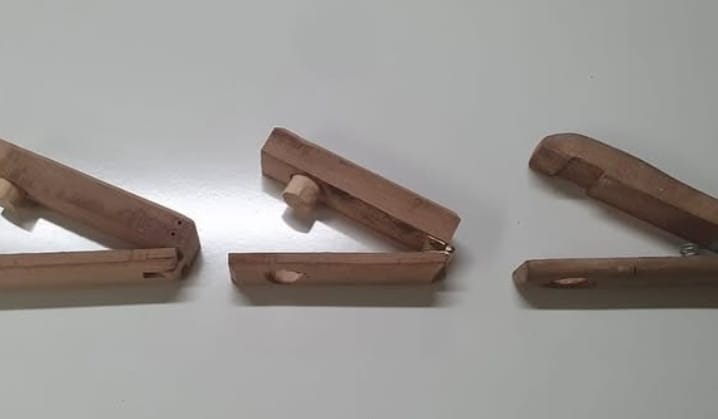
Our solution was the Pill-Popper, a small ergonomic device that allows users to release pills easily with minimal effort and greater control. Designed specifically for people struggling with hand tremors, the product aimed to restore a degree of independence in managing daily medication.
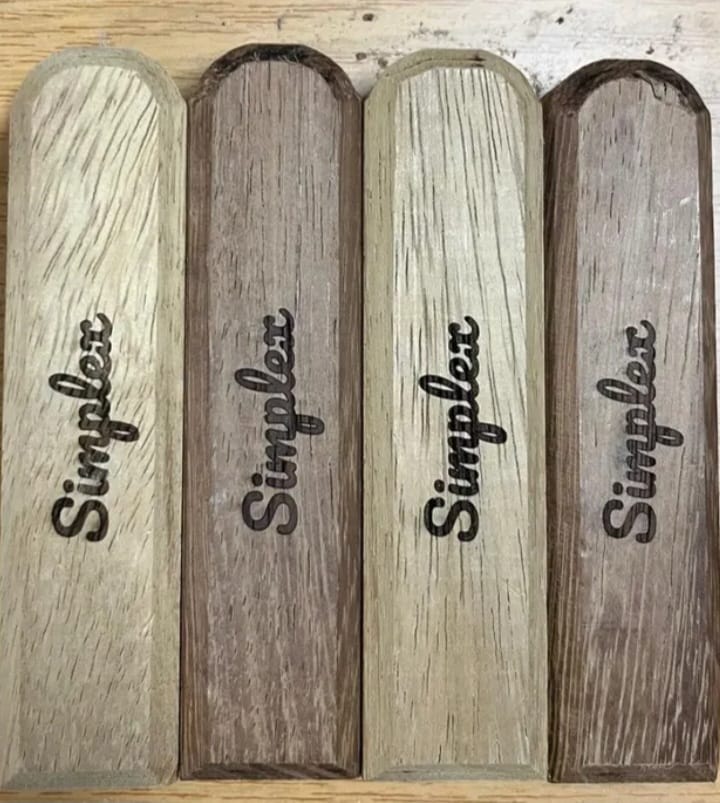
Sustainability was also central to our concept. Each Pill-Popper was handcrafted from wood cut-offs, repurposing materials that would otherwise be discarded. This approach allowed us to create a product that was not only functional but also environmentally responsible.
Building a Brand
As Marketing Manager, my main responsibility was to build a strong and recognizable brand identity for Simplex. That meant ensuring that every element, from our social media content to our packaging, communicated our values of sustainability, innovation, and accessibility.
The role allowed me to reconnect with a childhood hobby of mine: editing. Through designing content and promotional material, I rediscovered the creative side of marketing while also strengthening my communication and debating skills.
Every social media post became an opportunity to share our environmental message and highlight the unique aspects of our product. We were the only team offering pill poppers made entirely from wood cut-offs, and even the shape of our device was specifically designed for individuals with dexterity issues.
Through this process, I learned an important lesson: creativity must always complement functionality. A product can be beautifully designed, but if it does not solve a real problem, it has little value.
Learning the Power of Presentation
As our project gained traction, Simplex was featured on several Maltese news outlets. Being interviewed on television was initially intimidating, but preparation quickly became my greatest tool.
Before appearing on TVAM, I anticipated possible questions such as “What criticism have you received?” or “What challenges have you faced while promoting the Pill-Popper?”. Preparing answers in advance helped me stay calm and articulate during the interview.
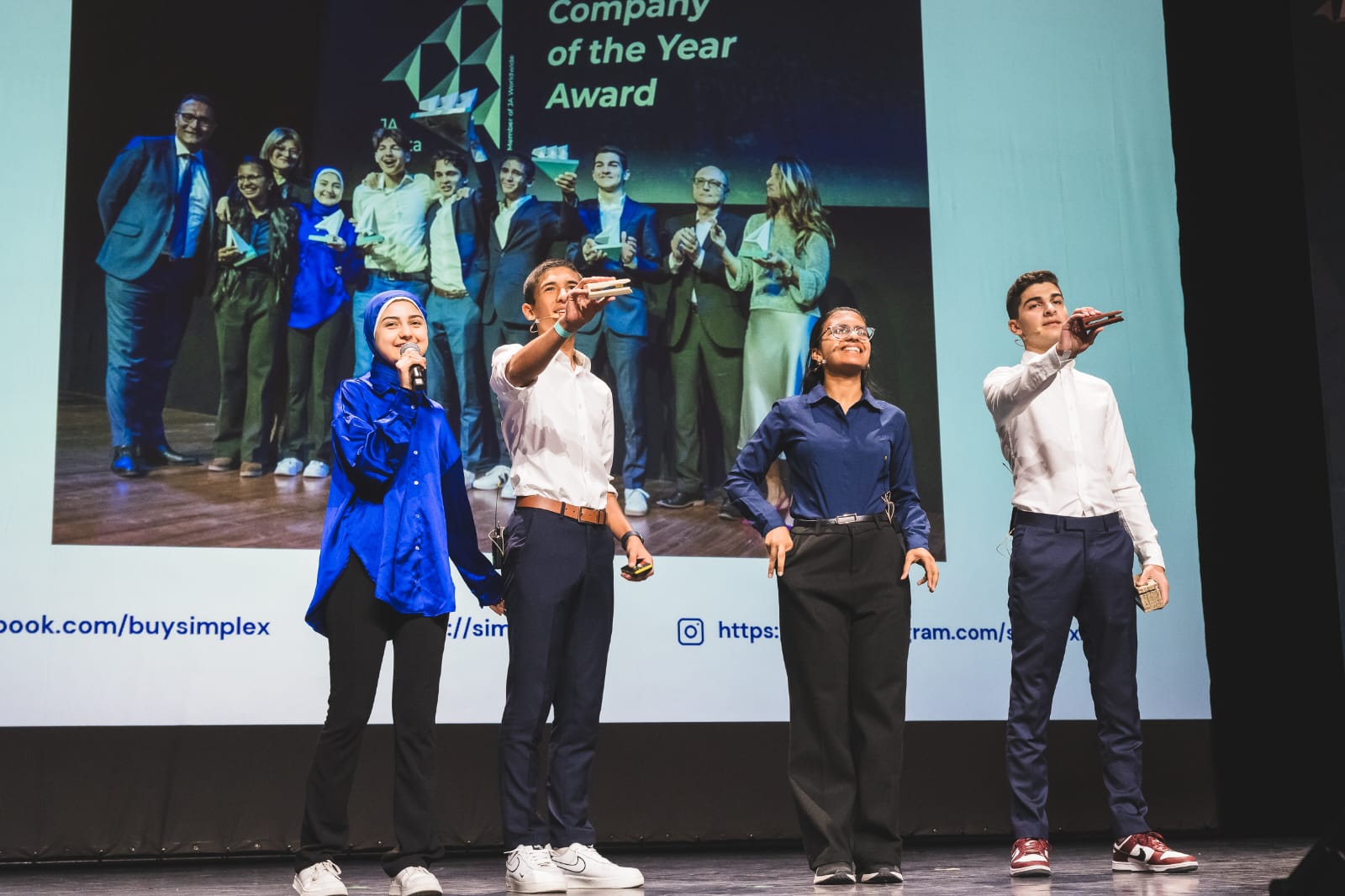
Our team also made a conscious decision to wear blue during media appearances, the same colour used in our branding. While subtle, this detail reinforced visual consistency and strengthened our professional image.
It was a small but powerful reminder that branding goes beyond logos and design. It is also reflected in behaviour, presentation, and the way a team communicates its story.
Beyond marketing campaigns, I also contributed by designing company polo shirts and preparing a professional media kit, further pushing my creative and organisational limits.
From Malta to Europe: Representing Simplex at Gen-E
After winning Company of the Year, Simplex had the honour of representing Malta at Gen-E, Europe’s largest entrepreneurship festival.
For three intense days, we pitched our product on stage, presented it at our exhibition stand, and engaged with an international audience of entrepreneurs, mentors, and investors.
The experience was unforgettable. Surrounded by talented and innovative students from across Europe, I witnessed firsthand the incredible potential of youth entrepreneurship.
One mini company that particularly impressed me was SeedSap, which uses seed-coating technology to improve germination (the biological process by which a dormant seed, spore, or pollen grain resumes active growth, developing into a seedling or new organism) by delivering nutrients and retaining moisture. Their mission to support farmers in arid regions while reducing reliance on synthetic fertilizers demonstrated how entrepreneurship can address real global challenges. This experience was a reminder of how powerful it can be to identify a gap in the market and turn it into a solution.
Beyond the competition itself, Gen-E was also about connection. Despite language barriers, students from different countries bonded easily, exchanging ideas and learning from each other’s perspectives.
Each team brought its own culture and personality, yet we were united by the same entrepreneurial spirit.
When Things Don’t Go as Planned
Like any real company, Simplex faced its share of challenges.
Production quickly became one of the most demanding aspects of the project. Each Pill-Popper took approximately an hour to craft by hand, requiring several steps including cutting, sanding, drilling, assembling, and packaging.
At one point, a shipment of hinges from Italy was delayed due to a container accident. Instead of halting production, we adapted by 3D-printing hinges using recycled filament.
Adaptability became essential.
Even when the Ministry of Health and Active Ageing approached us for a potential collaboration, we had to decline the bulk order because we simply could not scale production fast enough. While disappointing, the experience taught us a valuable lesson about scalability and resource management.
Sometimes, maintaining quality means recognising your limitations.
Business with a Purpose
From the beginning, Simplex wanted to create more than just a product.
We introduced a Pay-It-Forward scheme, allowing customers to purchase a pill popper even if they did not need one themselves. These units were then donated to individuals in need through our collaboration with Step Up for Parkinson’s.
In addition, we donated €700 from our profits to the organisation.
This initiative reinforced an important belief within our team: businesses have a responsibility not only to generate profit, but also to create meaningful social impact.
Lessons Beyond the Classroom
Throughout the programme, JA workshops and mentorship sessions helped me develop a deeper understanding of branding, business strategy, and financial management.
But the most valuable lessons came from experience.
Working in a team meant learning to compromise, accept criticism, and manage expectations — both my own and those of my teammates. Over time, this strengthened my emotional intelligence and taught me to separate personal attachment from professional feedback.
Public speaking also became a skill I gradually developed. At the start of the programme, pitching ideas in front of an audience felt intimidating. By the final show, however, presenting our product had become something I genuinely enjoyed.
One unforgettable moment came when we pitched our idea at Castille to Prime Minister Robert Abela, who offered practical advice on solving a technical challenge we were facing with our hinges.
Experiences like these made the project feel remarkably close to the realities of running an actual business.
Thinking Like a CEO
During a networking event at Gen-E in Athens, the CEO of JA Worldwide asked participants what they had learned from the experience.
My answer was simple: learning how to become your own CEO.
Not in terms of titles, but in mindset.
The programme taught me to take initiative, accept responsibility when things went wrong, and move forward without excuses. Leadership, I realised, is not about holding a position — it is about caring enough to take ownership of the work you do.
The Power of Networking
Another crucial lesson was the importance of networking.
Technical skills are valuable, but genuine relationships can often open doors that knowledge alone cannot. Throughout Gen-E, I made it a point to speak with mentors, teachers, and participants from other countries, asking about their experiences and learning from their journeys.
These conversations helped me strengthen my communication and interpersonal skills while also building professional connections that may prove valuable in the future.
The Journey Continues
Although the JA Company Programme has officially ended, the entrepreneurial journey does not stop there.
I have since joined the JA Alumni Network, which connects former participants across Europe and offers new opportunities to continue developing entrepreneurial skills. I will also be taking part in the JA Buddy Programme, mentoring the next generation of mini-company teams.
Through this role, I hope to share what I have learned — from public speaking and marketing strategies to teamwork and resilience — while supporting students as they navigate the same challenges we once faced.
Looking back, the JA Company Programme was far more than a school project. It was an immersive experience that taught me how to think critically, communicate effectively, and approach problems with creativity and determination.
Most importantly, it instilled a mindset that will stay with me long after sixth form: the confidence to take initiative, the resilience to learn from failure, and the drive to turn ideas into meaningful solutions.
Simplex Team