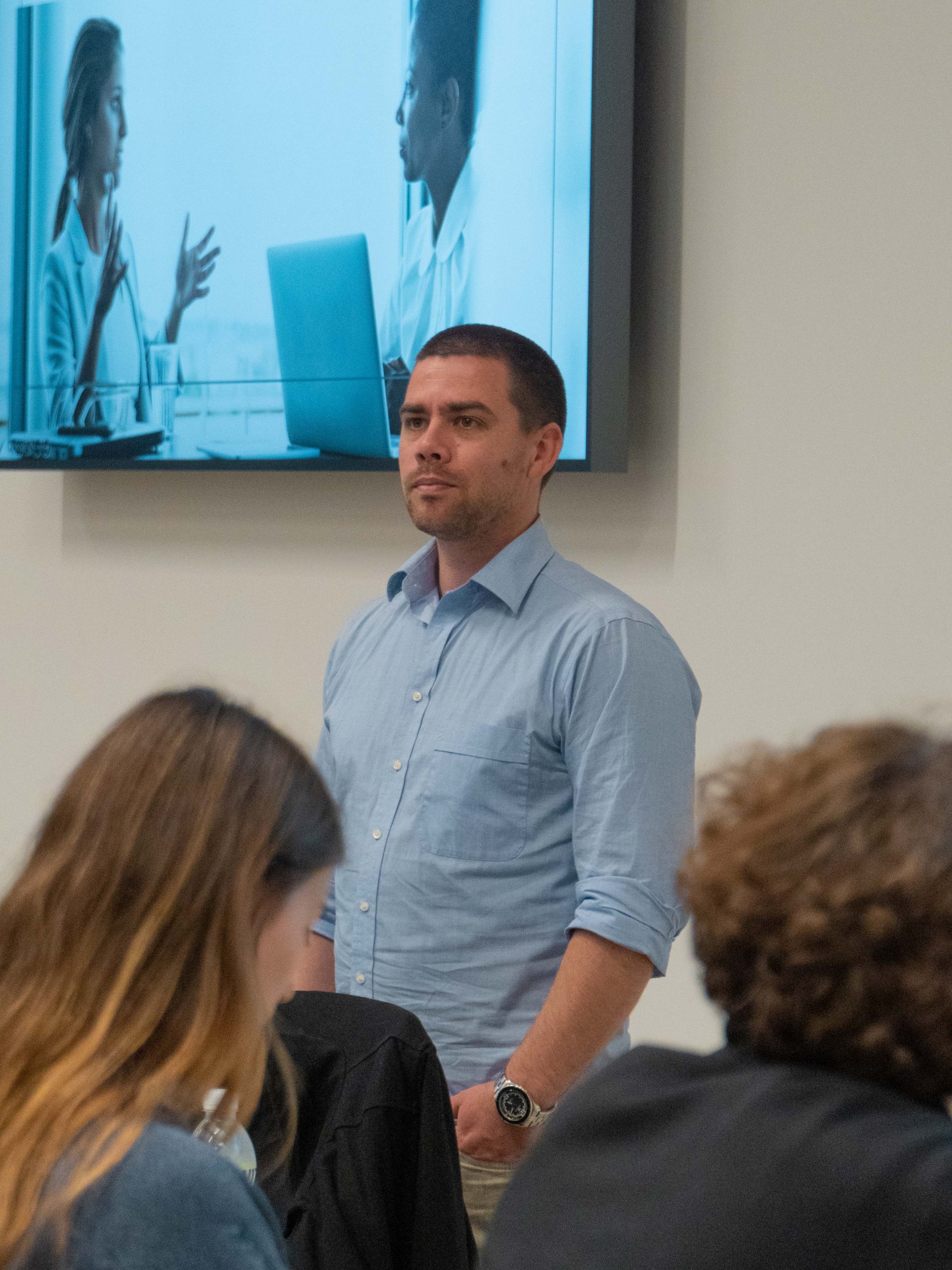
A couple of months ago, I was invited to give a lecture in front of a group of motivated students part of the I DO initiative of Rotterdam School of Management, Erasmus University. This initiative supports 15 NGOs, pairing them with teams of 5 students who consult them on different issues in a 9-month period. From time to time, the students receive a guest lecture on a specific topic. On the 28th of October, they got me. The title of my lecture is the same as the article, and although some elements of the lecture are not relevant here, I will share the essence of my message with you.

Most people who try to change the world look confident from the outside. They speak with passion, lead projects, motivate others, and seem to know where they’re heading. But behind every smile, there is usually a story that is much harder, heavier, and far more complicated than anyone can imagine.

This is the side almost no one talks about. The dark side of trying to make a difference. In my lecture, one theme appeared again and again: no matter how noble the mission, the path is filled with personal battles. Change comes at a price, and at the end, someone has to pay the bill.

This “bill” can have many variations. One person carried the weight of financial problems that threatened to crush their dream. Another faced deep family challenges at the exact moment they were trying to help others. A third found themselves standing alone when defending a cause and fighting corruption, feeling as if the entire world was pushing back against everything they did.

These stories were different, but something connected them: None of the people gave up.
Each learned a lesson, adapted, and continued forward, often becoming stronger than before after overcoming the personal struggles they faced.

The cost of impact

Most of us believe they are one of those people who could change the world. The feeling of being useful, of seeing progress, of working with good ideas and good intentions is great. But over time, we all learn a truth that nobody prepares you for: trying to make a difference has a dark side. And it’s not always where you expect to find it.

When I started working on social change back in the day, I (like many others) thought passion, competence, and hard work would be enough. I thought people who wanted to do good would naturally support each other. Instead, I saw how idealism slowly collides with human nature. Many of us start with big dreams, but somewhere along the way, we also start chasing approval, recognition, and attention. Not because we are bad people, but because doing good is never as clean or as simple as we pretend.

I have seen how organizations, meetings, events, and social media campaigns often become more about appearance than impact. Everyone speaks about values, change, and community, but behind the scenes, the structure is shaky. People burn out. Projects fall apart. Good ideas die because they rely on enthusiasm instead of strategy. I have seen people who say they want to help others, but sometimes also want to help their own ego.

And then there is “the system”, like an invisible wall. Institutions, legislation, bureaucracy. You push and push, but the wall doesn’t move. I have seen people with beautiful ideas walk straight into that wall and lose the energy that made them start in the first place. I saw people who tried to make a difference leave with disappointment. I have also seen people who continue to fight, but without the inspiration they once had.

The hardest part was the moment when I realised the dark side wasn’t only “out there.” It was also inside me. The uncertainty. The self-doubt. The frustration. The feeling that I wasn’t doing enough, wasn’t achieving enough, wasn’t changing enough. It was uncomfortable to admit, but it was a truth I had to face.

Тrying to change the world forces you to face your limits and to realize that maybe you will fail in achieving your mission. Often, because of external things you can’t control. But here’s what I also learned: Even if you fail at your mission, you don’t fail at making a difference.

Even a small change matters

The impact is rarely the one you expect. Sometimes it’s smaller. Sometimes it’s more personal. Sometimes it takes years to see. Yet it still matters. Every conversation, every person helped, every story that continues because of your action. All of that is a trace of good you have left behind. Like ripples in the water when you throw a stone. They are small but get bigger and bigger with the distance they move. Changing the world is not a heroic act. It’s a constant effort. Every day you have to show up and work hard to make a difference. With hope and humility. It’s learning to celebrate the wins, even the small ones, and to keep moving despite the setbacks. What you have to remember is that doing good is not only about improving the world, it’s also about taking care of yourself.

To the young changemakers: protect yourselves

If you want to help people and build something that can make a positive difference in the world – that’s beautiful. But beauty won’t protect you. Passion won’t protect you. Good intentions won’t protect you.

You need boundaries. Real boundaries. The kind you don’t cross even for a “good cause.”Set limits on your time, your energy, your emotions.

Say NO when you’re tired.
Say NO when you’re overwhelmed.
Say NO when someone expects from you more than you can give or do.

Don’t fall for the trap that doing good means sacrificing yourself. That’s not heroism. That’s self-neglect dressed as purpose.

Here are the boundaries I wish someone had told me to set earlier:

A boundary with your schedule: Not every evening, weekend, or holiday must be dedicated to a project.

A boundary with your emotions: Other people’s problems are not always your personal responsibility to solve.

A boundary with your identity: You are not your work. Your worth is not defined by impact reports or applause.

A boundary with your ambition: You cannot fix everything. You shouldn’t try to.

A boundary with exhaustion: Rest is not the enemy of change. Burnout is.

A boundary with guilt: Feeling tired, frustrated, or lost doesn’t make you less dedicated. It makes you human.

And the most important thing of all: Ask for help when you need it.

From colleagues, from friends, and even from professionals. Going to a psychologist is not shameful. It can help you find solid ground under your feet when you feel like falling.

Written by

Shape the conversation

Do you have anything to add to this story? Any ideas for interviews or angles we should explore? Let us know if you’d like to write a follow-up, a counterpoint, or share a similar story.