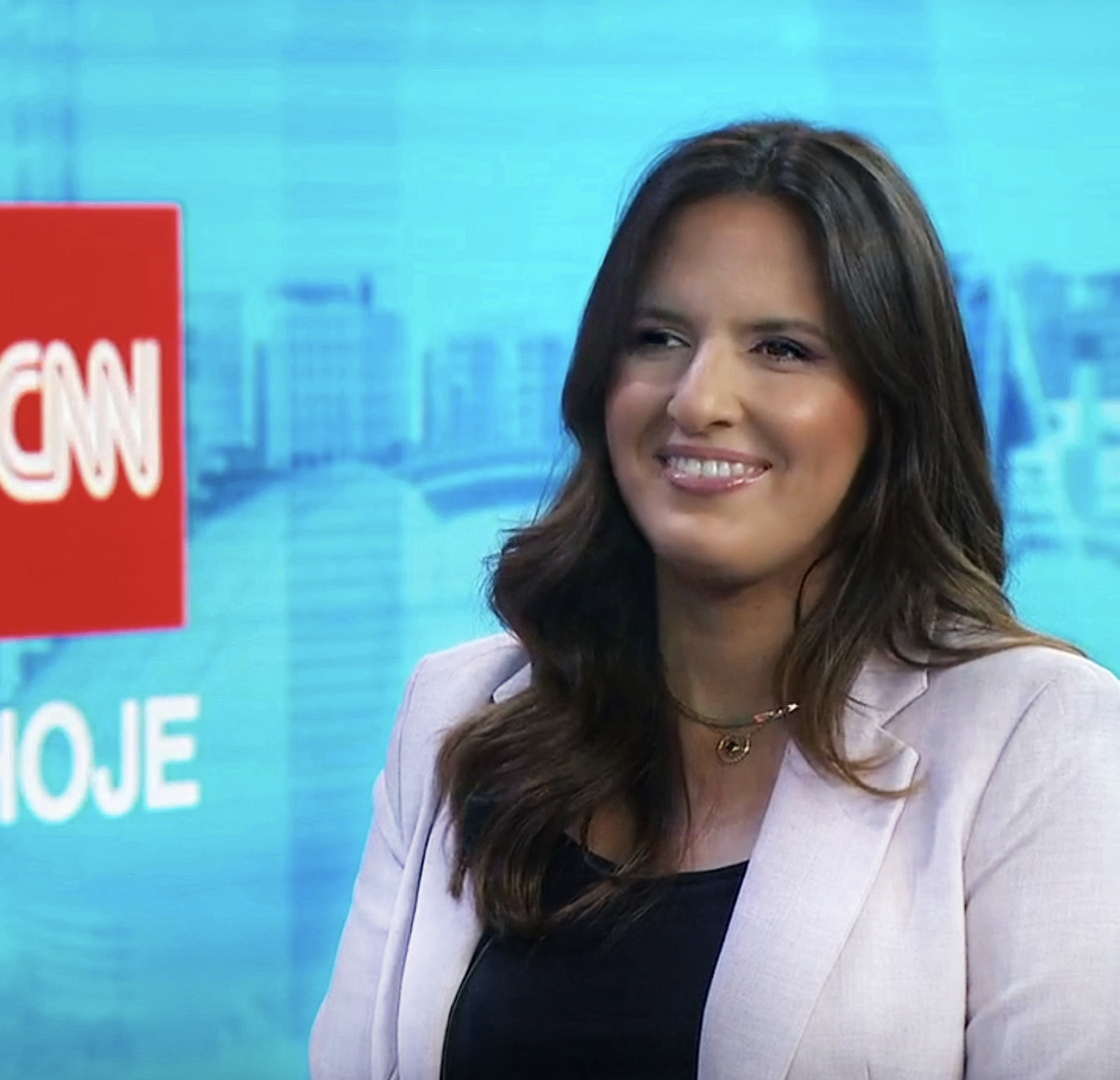
Francisca Costa blends communications, activism and public policy in her work. Source: Instagram.


After studying in the Netherlands and joining Maastricht for Climate for street actions and student mobilisations, Francisca returned to her home country of Portugal to support civil society orgs, co-host the Radical Empathy podcast and amplify sustainability on social media. Now based in Brussels, she has worked at the European Commission’s DG REGIO on the Social Climate Plan, a new fund targeting vulnerable groups for transport and energy transitions amid the crisis.

Today, in renewable energy communications, she champions “sustainability with empathy” and envisions a world where we solve systemic problems collectively, without blame.

Why is it so important to talk about climate change?

Climate change is going to affect everyone, but it is not something we can easily see. We only really “feel” it occasionally: when it is unbearably hot, when we are cold at home, or when there are obvious disasters such as floods in Valencia or wildfires in Portugal. In Europe, many people only sense the crisis when these catastrophes are very close to them.

Because these events seem sporadic, we tend to forget that all our actions, both collective and individual, are shaping not only today’s climate but also how we will live in 20 or 30 years. There is a time gap between the policies and behaviours we have now and the consequences to come. That is why it is so important to explain what needs to change and why we have to act now, so we do not compromise our own lives and those of future generations. Climate cuts across every sector: health, economy, environment in ways that undermine society as a whole. Precisely because the impacts are systemic and sometimes hard to visualise, we need to keep talking about them.


You could have focused on many different skills. Why is communication the tool you chose?

Communication felt very natural to me from early on. I have always enjoyed talking to people and trying to get a message across, not only when it comes to climate. My academic path in Law and then Sustainability and Public Policy exposed me to very complex material, from legal frameworks to natural sciences. I realised that one of the most valuable things I could do was to take that complexity and make it accessible.

Simplifying difficult concepts through communication is, for me, the best way to reach people and, at the same time, to influence and change narratives. That might be through writing opinion pieces, hosting a podcast or using social media, but the goal is the same: to help people understand how climate and public policy actually affect their lives. Communication feels inherent to who I am, which is why I have chosen to invest so much of my time and work in it.


The idea of “sustainability with empathy” really stands out. Why does empathy matter here?

Climate change and sustainability issues affect everyone, but not in the same way. Empathy, in this context, is the ability to put ourselves in someone else’s position and understand how they experience these changes and impacts. We cannot expect everyone to make the same decisions with different resources. Not everyone has the same financial capacity or even the same level of literacy to change their behaviour in response to the climate crisis. We also need to be empathetic with ourselves, to understand what we can realistically demand of our own lives.

With social media, it is very easy to point fingers when people “fail” to live up to certain ideals or lifestyles. But each person is on their own path, and the important thing is not to police it, but to understand why people make certain choices, why they sometimes step back or become less consistent. That understanding only comes through empathy: the capacity to stand in someone else’s shoes and see why they think and act the way they do. It also means suspending judgement, which is increasingly difficult in today’s polarised, online-driven society.

Climate-related disasters, including heatwaves, floods, and storms, caused over €145 billion in economic losses in the EU over the past decade,
according to the European Commission.

If you had to choose two or three core values that guide you, what would they be?

Empathy is at the top. Right alongside it is honesty, because it is about being transparent about why we say what we say and why we do what we do. It forces us to look at our own motives and contradictions, as well as those of others, with clarity instead of hiding behind convenient narratives.

The third value I would name is integrity. It is about trying, as much as possible, to be consistent between what I believe and what I do, both in my personal choices and in how I relate to others. I try to be an integral person in activism and in more institutional spaces, even if the way that shows up has to adapt to the context.


You have one foot in activism and one in institutions. Where do you see more of those values?

In terms of honesty, I definitely see more of it in activism. Activists are usually the first to say things that are uncomfortable to hear, while in institutional environments it is often easier to hide certain truths to suit political objectives. The institutional side has more incentives to present a polished version of reality.

When it comes to empathy and integrity, I would say it is more balanced. In my institutional work, I have been very lucky with the people I have worked with, including incredible teams and colleagues who are deeply human, beyond their titles or reputations. People may sometimes have to “put on the jacket” of their job and not show their values directly, because they represent an institution. That is my experience, but I know it can’t be generalised to every institutional context. The hard part is deciding when to raise your voice and say what you think, and when to keep certain ideas for other platforms outside of your professional role.


We hear much less about climate now than a few years ago. What is failing?

Leadership is failing. Leaders are not fully grasping that climate will affect every other problem we are dealing with, including future economic crises. Climate has been at the root of conflicts and is shaping those we see on TV. Think of Ukraine: Europe had to make a massive energy transition to stop depending on Russian gas, and to accelerate the use of renewable energy at an unprecedented speed. Yet the narrative focused almost exclusively on the arms industry, because war “sells.” The same is true in Palestine. Beyond the genocide, there are huge climate impacts linked to the war: emissions, resource extraction like water, and the destruction of native plants and ecosystems.

The narrative shift happened when it became clear that companies would have to drastically change their behaviour to meet climate targets and that states would also have to change. The green frame did not sell enough, but that does not mean climate is less important; in fact, it has never been more urgent to talk about it, and to link it to everyday issues such as housing and war.

Around 48 million Europeans are unable to keep their homes warm, with rural households dedicating around 7% of their spending to energy. These are some of the signs of energy poverty in the EU, as warned by the Joint Research Centre.

You said leadership is failing. Having worked at the Commission, how do you see the EU’s role?

The European Green Deal was a major step forward by the previous European Commission. It was not enough, but it was a big advance and it pushed many countries to accelerate their energy and ecological transitions. It led to a wave of national legislation to support those shifts. However, that momentum was lost.

In the current mandate, the Commission has largely moved away from that path. It no longer talks about the “Green Deal”, but rather “clean industry” and “clean energy.” It is energy that brings in money, while biodiversity protection or adaptation do not generate short-term profit. In the long term, not investing in biodiversity, adaptation and mitigation will cause far greater economic losses than the costs of acting now. Focusing only on what pays quickly is a very short-term vision, and it does not match what sustainability really entails.


What keeps you motivated to carry the climate banner? And how to make it relevant again for young people?

Being surrounded by people who keep believing, even when we lose battles. As long as we still believe it is possible to meet the UN climate goals and to pull back from the edge, I will keep going. If I am going to face all the climate problems coming in 10, 20 or 30 years, I would rather be fighting now than looking back later and thinking, “I could have done something and I did nothing.”

Making climate “sexy” again is the million-euro question. I believe we need to show people their collective power. Most of the big changes we need are made top-down, so individuals are often told to make tiny changes like not using a plastic straw. Those can matter, but they do not resonate with everyone, especially not with lower-income groups who simply do not have the social, economic or mental capacity to redesign their lives. We work so much that many of us barely have time to think about which changes we could make. That is why I put a lot of emphasis on the power of public action in the streets and in civic spaces.


What is a concrete example of our civic power?

We recently saw a general strike and a massive mobilisation in Portugal against a labour package. People went out and said, “No, we do not want this.” That is the kind of public power we also need on climate. The challenge is to transform the climate crisis we are already living through without leaving anyone behind. The most vulnerable are the first to suffer from climate impacts and, at the same time, are often the easiest to forget, whether when we call people into the struggle, seek camaraderie, or try to work for the common good. If sustainability is not empathetic, it will fail them first.

Sources on climate change and sustainability:

European Commission (2022) Losses from climate change: €145 billion in a decade. Eurostat publications.

European Commission (2025) European rural areas face higher levels of energy poverty. Joint Research Centre.


Shape the conversation

Do you have anything to add to this story? Any ideas for interviews or angles we should explore? Let us know if you’d like to write a follow-up, a counterpoint, or share a similar story.