
Tinder, Bumble, and Badoo are apps that once promised to revolutionize love and dating. But today they are also shaping the way young people think about intimacy, relationships, and commitment. Swiping has become a common part of dating, but it also raises the question: what happens when romance turns into an algorithm?

Online dating is a common part of life for the younger generation, but it’s also becoming increasingly challenging. New research shows that love in the digital age is easier to find but harder to find. In a recent study , nearly all respondents, both men (91 percent) and women (94 percent), agreed that dating is more challenging. Despite this, a majority of both men (53 percent) and women (68 percent) said they wanted a romantic relationship.

Just twenty years ago, it was common to meet people through friends, at school, or at work. Today, most first dates start on a mobile phone. According to a 2023 Pew Research Center study , more than half (53 percent) of young people under 30 (ages 18–29) in the United States have used a dating site or app. This compares to 37 percent of older adults ages 30 to 49, 20 percent of people ages 50 to 64, and 13 percent of people ages 65 and older.
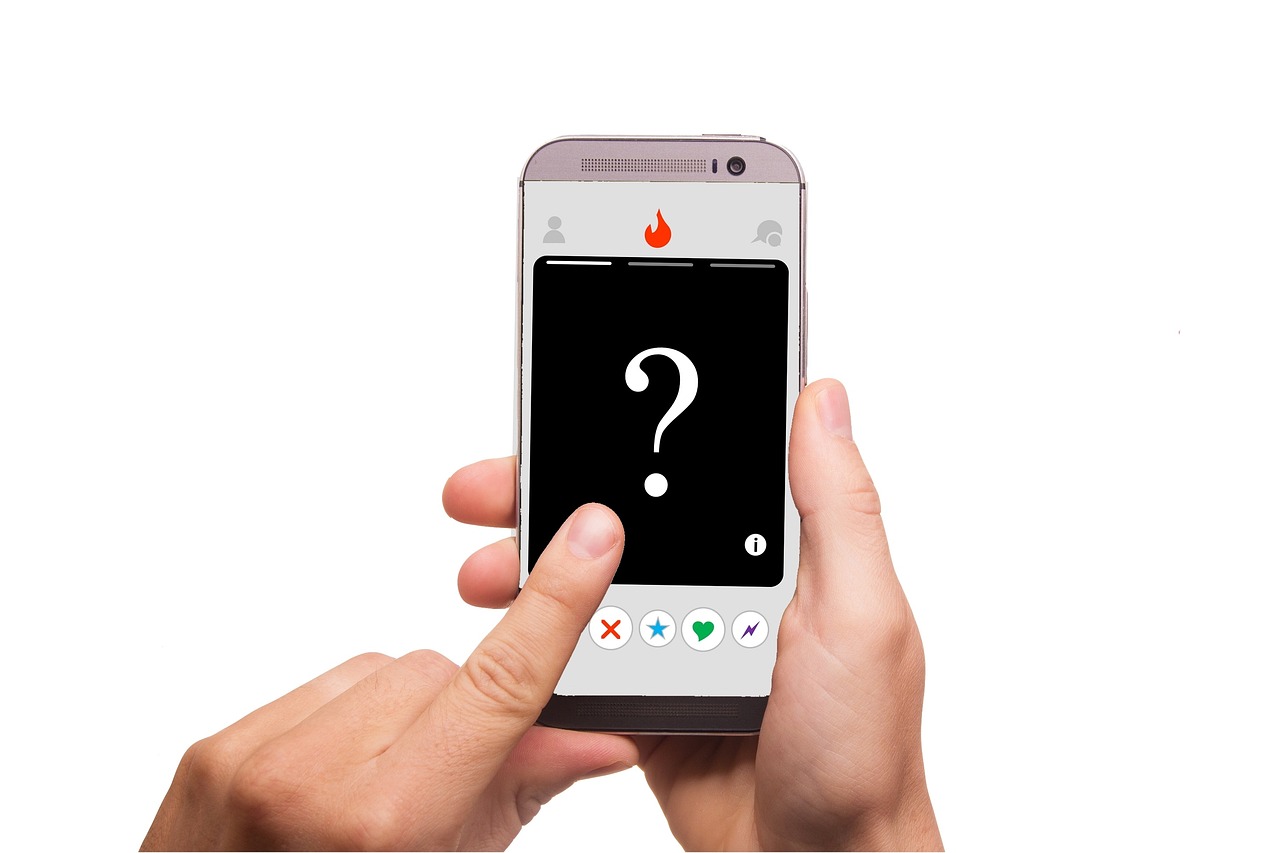
More than half of young people have experience using dating apps. Source: freepik.com

Digital love in numbers

Dating apps have become a symbol of the intersection of technology, psychology, and economics. They are not just places where people meet, but also platforms that generate billions of dollars thanks to premium features, personalized advertising, and subscription “boosts” of visibility. According to current estimates, the online dating market is expected to reach a value of $552.7 million in 2025, with a slight increase to $566.5 million by 2029. The average revenue per user is expected to reach $7.43.

The US will traditionally have the largest share of revenue ($1.43 billion), but Belgium has the highest user base rate (18.5 percent). “The dating market in Europe is developing rapidly due to the shift in consumer preferences towards online platforms and mobile applications. The use of advanced technologies, specialized services and local specific circumstances further contribute to the market growth,” the analyst said .

While it may seem like dating apps are just a digital marketplace for emotions, they are actually a hugely profitable business. According to Sensor Tower data for the second quarter of 2024, Tinder is dominating the market. Its weekly revenue is estimated at $7 million, while it has a relatively stable base of 9.4 million weekly active users.

Bumble came in second, with revenue growing from $1.7 million to nearly $2 million during the quarter. It stands out from other apps by putting women in control of the conversation, creating a stark contrast to the culture of quick swiping. Bumble has around three million weekly active users.

Older names aren’t far behind either. Badoo has seen steady growth over the past year, peaking in the last week of June at around 5.1 million active users and revenue of over $1.3 million. Interestingly, apps focused on specific communities, such as Grindr (1.4 million active users) and Hinge , which is growing the fastest of all, show that the market is diversifying and adapting to different types of relationship preferences.

How has our dating changed?

With the advent of the internet, as we all know, things have become faster and easier. It has also brought us many changes, including those in love. According to Celeste Curington , a sociologist at Boston University’s College of Arts & Sciences, people have the opportunity to meet people they wouldn’t normally meet thanks to access to the internet. “The internet also provides a kind of anonymity that may be missing in their own social circles and the spaces they frequent, and it can also provide a space for community building and belonging,” she added.

The change was also due to the COVID-19 pandemic, when people sought social interaction using the internet, overcoming the boundaries of physical and social isolation. During this time, the number of users of dating apps increased dramatically, in some cases even by 700 percent.

It is also interesting how the classic pattern of online dating users has changed: first establish contact, then text for a while, and finally meet in person. The goal has always been to get the relationship from the digital space to reality, from messages to a real conversation over coffee. However, the COVID-19 pandemic has completely changed this rhythm. Dating has moved to a virtual environment, where video calls have become the new “first date.” People have learned to test chemistry and compatibility through a screen, not because they lack courage, but because meeting in person has become a health risk.

The motivation for using online dating apps varies. Some are looking for true love, others use it out of habit or for fun. Online dating often turns into a game where it’s about attention, not a real connection. Women have a higher match rate on Tinder, at 10 percent, while men have a match rate of around 0.6 percent, or one match for about 40 swipes.

Apps promise to find us the perfect partner using algorithms. In reality, however, these algorithms track how long we spend on the app, not whether we find someone we will be happy with. Love is thus turning into a rational filtering process: height, education, interests, distance. A romantic “chemical” meeting becomes a selection based on criteria. Sociologist Markéta Šetinová (29), who studies partnerships between young people, pointed out that the biggest changes compared to the previous generation are in the area of ​​dating. “Today’s young people usually have a greater number of initial meetings and try out different types of relationships that they do not clearly define and do not necessarily perceive as romantic,” she said.

Women have a higher match rate on Tindry, up to 10 percent. Men only have a match rate of around 0.6 percent. Source: pixabay.com

Online dating sites are not just tools, but also a mirror of a society in which dating is changing from intuitive to systematic and digitally optimized. For young people today, relationships are more of an experiment than a commitment, and digital closeness often becomes a substitute for real-life intimacy. However, as sociological research shows, the desire for real connection has not disappeared. Love in the digital age is not about whether it can be found online, but whether it can be maintained offline.

Shape the conversation

Do you have anything to add to this story? Any ideas for interviews or angles we should explore? Let us know if you’d like to write a follow-up, a counterpoint, or share a similar story.