


Let Yourself Be Bored
The hidden habit of Gen-Z Entrepreneurs
In a world obsessed with entrepreneurship and productivity, we often imagine the next million-euro idea being born behind a desk surrounded by caffeine and deadlines. But what if true innovation doesn’t happen when you’re grinding but when you’re doing nothing at all? For many young founders, breakthrough ideas don’t arrive in boardrooms. They happen on a quiet Sunday walk, during a silent meal, or in those rare moments when the mind finally rests.
Because for Gen Z entrepreneurs, success isn’t about doing more , it’s about thinking deeper.
This isn’t anything new.
Steve Jobs was famous for his long, unplugged walks. He often scheduled important meetings as walking meetings because he believed physical movement and mental idleness created mental clarity. Similarly, Bill Gates still practices what he calls “Think Weeks” , a ritual where he disconnects completely, reads, reflects, and lets his mind wander. Some of Microsoft’s most defining innovations, like the early Internet Explorer, emerged during these quiet, disconnected retreats.
The Neuroscience of Boredom & Creativity
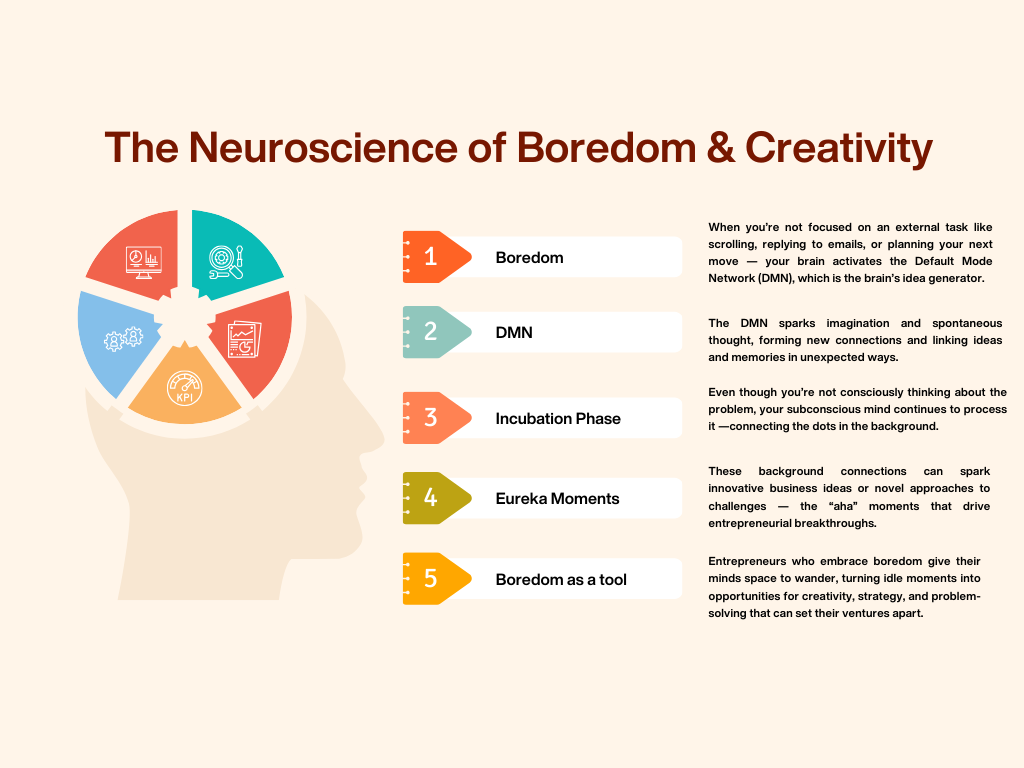
When you’re not focused on an external task like scrolling, replying to emails, or planning your next move — your brain activates something called the Default Mode Network (DMN). This is the brain’s idea generator.
Neuroscientist Roger Beaty and his team (2018) found that creativity depends on the dynamic interaction between two brain systems:
- The DMN (Default Mode Network), which sparks imagination and spontaneous thought,
- and the Executive Control Network, which helps you focus and refine those ideas.
When we’re constantly stimulated, by phones, podcasts, or even background music , the control network takes over, leaving little space for imagination to breathe. But when you allow yourself to be bored, to sit in silence, or take a slow, unplugged walk, the Default Mode Network wakes up. Your brain enters a “resting state” where it starts forming new connections and linking old memories in unexpected ways. That’s why the best ideas often appear when you’re not looking for them. Boredom isn’t wasted time, it’s mental incubation.
The Incubation Phase
After spending time brainstorming or researching – the preparation phase, your brain sometimes hits a wall. That’s when stepping away becomes powerful. During incubation, you might go for a walk, stare out the window, or just rest. Even though you’re not consciously thinking about the problem, your subconscious mind continues to process it, connecting the dots in the background. Then, seemingly out of nowhere, comes the “aha!” moment . Therefore, boredom isn’t the absence of work. It’s the invisible continuation of creative work, just happening beneath awareness.
The Psychology of Boredom & Success
Boredom also plays a psychological role. It’s not just wasted time , it’s emotional feedback. Psychologists describe boredom as a regulatory emotion. It’s your mind’s signal that current stimulation isn’t fulfilling your deeper goals. It pushes you to look inward — to ask: What do I actually care about? What do I want to create next? That’s how boredom becomes a compass for meaningful, self-aligned work.
But here’s the problem: constant stimulation kills that process. Our brains need downtime , like muscles need rest , to consolidate ideas, integrate knowledge, and form new connections. When every moment is filled, no thought has time to grow roots.
Turning Boredom into an Advantage
So, how can entrepreneurs turn boredom into a creative strategy?
Here are ten ways to do exactly that:
- Eat Without Stimulation — Practice mindful meals to reset dopamine and sharpen decision-making.
- Go on Unplugged Walks — Take a mental incubation walk; founders like Jobs and Zuckerberg did it.
- Practice Mono-Tasking — Doing one thing slowly and well builds deep focus which is the foundation of great execution.
- Sit in Stillness for 10 Minutes — Schedule “nothing time” which can be your most creative meeting of the week.
- Write Without a Prompt — Free-write your thoughts; your subconscious might design your next pitch.
- Stare Out the Window — Let your gaze wander; daydreaming fuels big-picture thinking.
- Schedule No-Input Hours — Block white space sessions. Silence boosts strategic clarity.
- Observe Instead of Consuming — Be an observer, not a consumer, that’s how you spot emerging markets early.
- Delay Gratification— Practice micro-delays to strengthen discipline and long-term focus.
- Embrace Transitional Boredom — Protect your in-between moments. Innovation often happens while waiting, not working.
Each of these moments, though simple, activates the same creative pathways neuroscientists have been studying.
Let me tell you my personal experience.
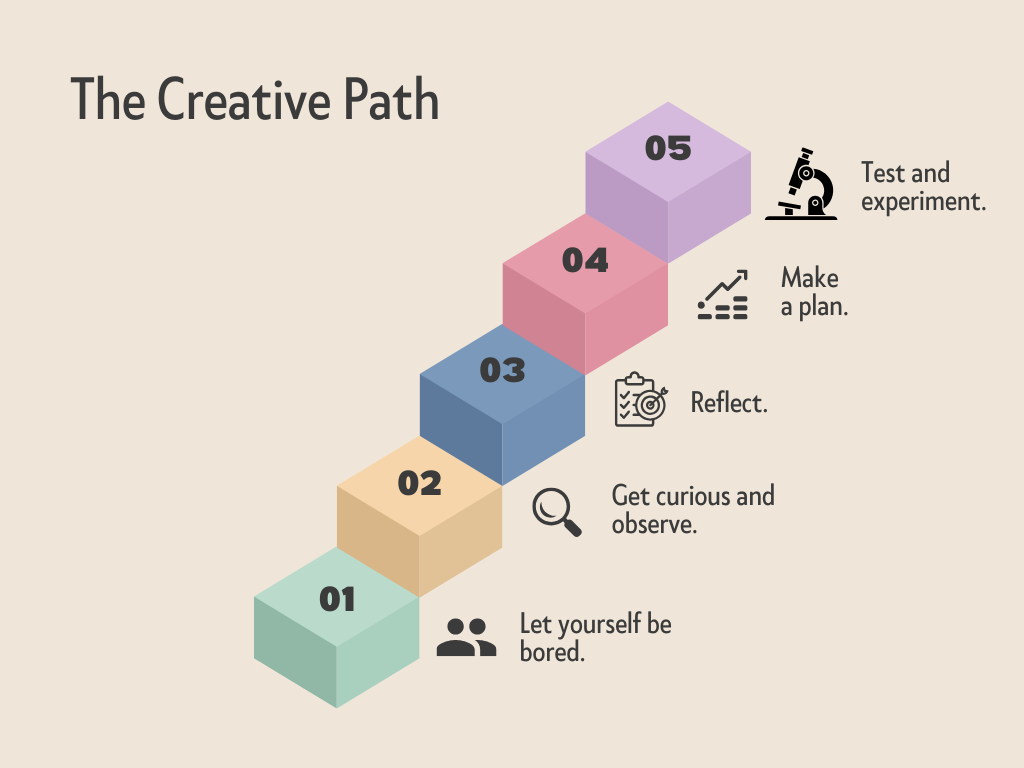
Our Simplex team created an award-winning product, the eco-friendly pill popper designed to make medication access easier for people with dexterity issues and the elderly. But that idea didn’t come from a meeting room. It started at a kitchen table. Two of our teammates were simply sharing tea with their grandmother when they noticed her struggling to open a pill pack. That ordinary moment, a moment of boredom and observation, sparked a thought: There must be and easier way. From that small act of noticing, empathy turned into innovation.
Reframe Boredom as an Entrepreneurial Skill
Treat boredom as a strategic tool, not just a wellness habit. For young founders, mastering stillness isn’t about slowing down , it’s about sharpening perception and creativity. Every great founder needs two gears: execution and incubation. Most of us only train the first. Boredom isn’t wasted time , it’s mental R&D, the space where new ideas form and old ones refine. When you stop filling every silence with input, you create room for insight. In entrepreneurship, your product isn’t the first thing you build, your mindset is. And learning to sit with boredom strengthens that foundation, giving you the cognitive edge to see what others miss.
Closing Reflection
That’s what boredom really is, a space to notice. It’s a reminder that entrepreneurship isn’t just about chasing the next big idea. It’s about paying close attention and becoming intentional.
Melanie Birnbaum, Nestlé’s Chief Marketing Officer, said it best during the 2025 Nestlé Skillathon – the most meaningful innovations come when you’re in tune with people’s lives, routines, close enough to see what they really need.
So next time you feel bored — don’t reach for your phone. That might be your next great idea calling.