The Weidel Ambush: Geopolitics as Rage-Bait
While mainstream politicians were busy drafting formal press releases, Alice Weidel was orchestrating a masterclass in “rage-bait” politics. On January 22nd, 2026, Alice Weidel delivered a blistering speech that would effectively reset the German political conversation overnight. By distilling the complex, multi-year mystery of the Nord Stream pipeline sabotage into a 60-second clip, she didn’t just share a speech—she weaponised a grievance. Her demand that Volodymyr Zelenskyy “pay back” the €70 billion in German aid resonated instantly with a generation of young voters exhausted by the cost-of-living crisis and rising energy bills.
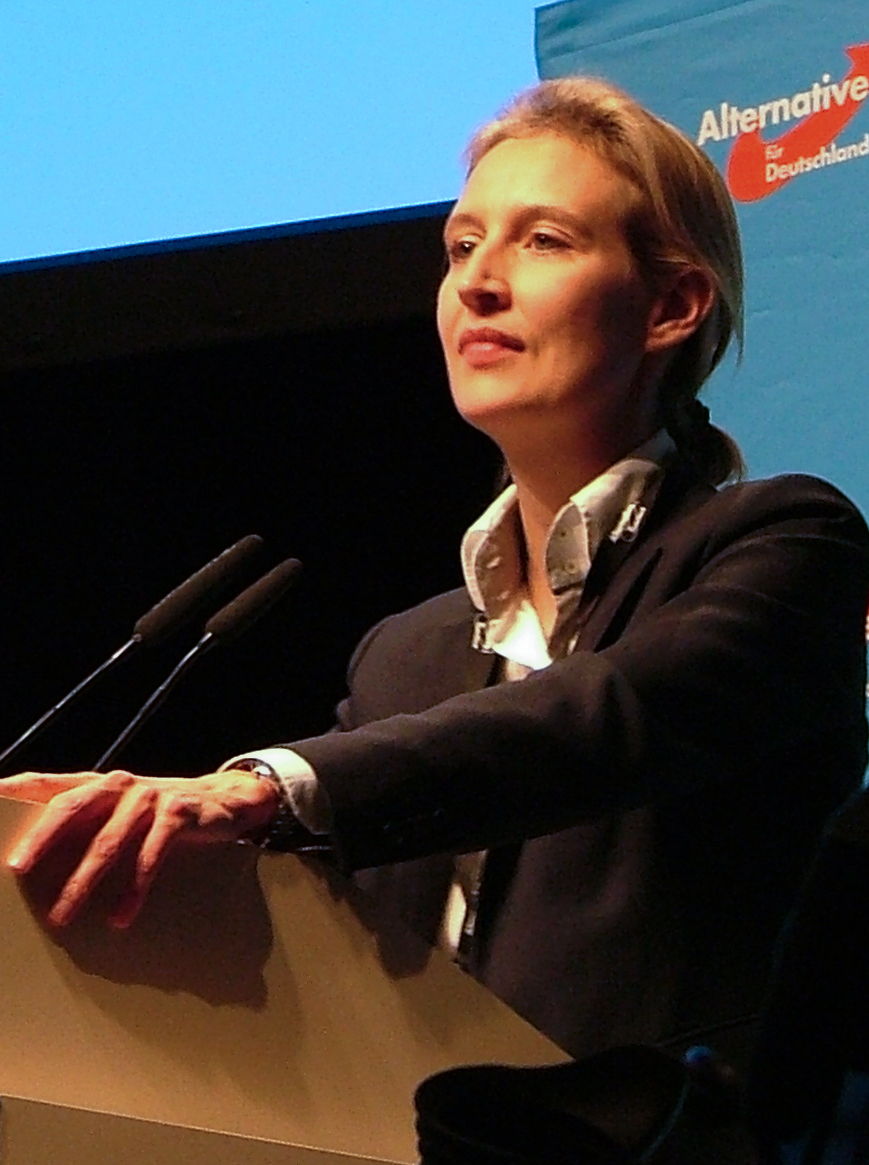
AfD leader Alice Weidel speaking in during an AfD rally. Photo: Olaf Kosinsky via Wikimedia Commons
The true “status quo” moment, however, happened a few days later on January 27, when the “Musk Effect” kicked in. Once the clip was boosted by global tech icons and figures like Viktor Orbán, it bypassed traditional German media entirely, landing directly in the feeds of millions of undecided Gen Zers. This isn’t just about one video; it’s about a broader strategy of “The Flood.” In 2026, the AfD has turned the German Parliament into a content studio, utilising AI-enhanced accounts and participatory “meme contests” to ensure their narrative is the loudest in the room. By the time the mainstream media attempted to add nuance or fact-check her claims, the “Zelenskyy owes us” narrative had already become the #1 trending topic for young men under 25. For a generation that gets its news from the scroll, Weidel’s version of the truth didn’t just feel right—it felt like the only one being told.
The New Counter-Culture: Rebranding the Radical
In Spain and Portugal, the far-right isn’t just a political choice—it’s becoming a fashion statement. Parties like Vox and Chega have successfully ditched the “dusty” image of old-school nationalism and replaced it with an edgy, disruptive energy that appeals directly to Gen Z’s frustration. By positioning themselves as the only ones willing to “speak the truth” about a broken system, they have turned radicalism into the new punk rock. In Spain, recent 2025/2026 data shows an incredible shift: nearly 40% of young men under 34 now support Vox, driven by a narrative that the mainstream has prioritised globalism over local housing and job security. This isn’t just about voting; it’s about an “anti-woke” rebellion that lives in the comment sections of viral videos, where the status quo is mocked and the “sovereign patriot” is glorified as the underdog.
The “Aesthetic” of Sovereignty
The digital strategy in these regions relies on “The Aesthetic of Sovereignty.” Instead of dry policy debates, young voters are served cinematic, high-contrast edits of “trad-life” values and urban security. In Portugal, Chega became the fastest-growing party among young people by bypassing traditional media entirely and building a “shadow network” on TikTok and Telegram. They weaponise the housing crisis—the top concern for anyone under 35—to claim that “outsiders” are the reason you can’t afford a home in Lisbon or Madrid. By framing every economic failure as a result of “globalist betrayal,” they have created a digital ecosystem where complex problems are given dangerous, 15-second solutions. For a generation raised on instant gratification and “hustle culture,” the promise of a hard-line, protectionist future feels more like a lifestyle upgrade than a political shift.