



On 6th March I had the honour of spending International Women’s Day in discussion with the President of the European Parliament, Roberta Metsola, which offered more than just a celebratory moment, it created a space for honest conversations about opportunity, support, and the realities young women face today.
The event brought together students and young professionals for an evening structured around a panel discussion followed by networking. The format encouraged open dialogue, allowing attendees to voice their experiences and concerns before continuing the conversation more informally afterwards.
One of the most striking aspects of the event was its accessibility. In Malta, we are fortunate to live in a country where the distance between citizens and leaders is significantly smaller than in many other places. Events like these highlight that closeness. At the same time, they also reflect something about Roberta Metsola’s leadership style. Her willingness to engage directly with young people reinforces the perception that she is, above all, a people’s person. The fact that she regularly organises similar gatherings shows a clear effort to remain connected with the public.
Beyond the panel itself, the networking session proved equally valuable. Speaking with several university students and young women from different fields reminded me of the importance of community and connection, particularly at a time when many young people are still figuring out their paths. Conversations like these offer reassurance that uncertainty is often shared, and that guidance can come from those navigating similar experiences.
During the panel discussion, one comment in particular resonated strongly with the room. A participant raised the observation that men often support and uplift each other more openly, while women do not always do the same. Responding to this, Metsola emphasised that even small acts of recognition can matter. Not everyone will always be in a position to actively advocate for someone else, she explained, but the least we can do is acknowledge one another, to recognise that someone is present and contributing.
This theme resurfaced repeatedly in conversations after the panel. Several participants noted that opportunities such as internships, traineeships, or travel programmes often seem to circulate among the same group of people. While this is particularly visible within youth organisations, it likely reflects wider patterns that also exist in professional environments.
Another issue raised was the gatekeeping of opportunities, with some women describing situations where information is not always shared openly. These dynamics can foster unnecessary competition rather than collaboration.
Furthermore, a concern raised during the discussion was the growing visibility of more traditionalist or extremist gender ideologies, often reflected in online trends such as the “trad wife” movement. Addressing the topic, Metsola offered an economic perspective. In her view, the emergence of such trends can also indicate a society where many households are financially stable enough that women have the option not to work if they choose to. While the discussion acknowledged that the trend remains controversial, it opened up a broader conversation about choice, economic security, and the different ways women navigate work and family life today
While these discussions highlighted real challenges, they also reinforced an important takeaway: the need for women to be more intentional about supporting one another. Recognition, encouragement, and openness can play a significant role in ensuring that opportunities become more accessible to a wider range of people.
Ultimately, the event served as a reminder that progress is not only shaped by policies and institutions, but also by the communities we build and the support we offer each other along the way.
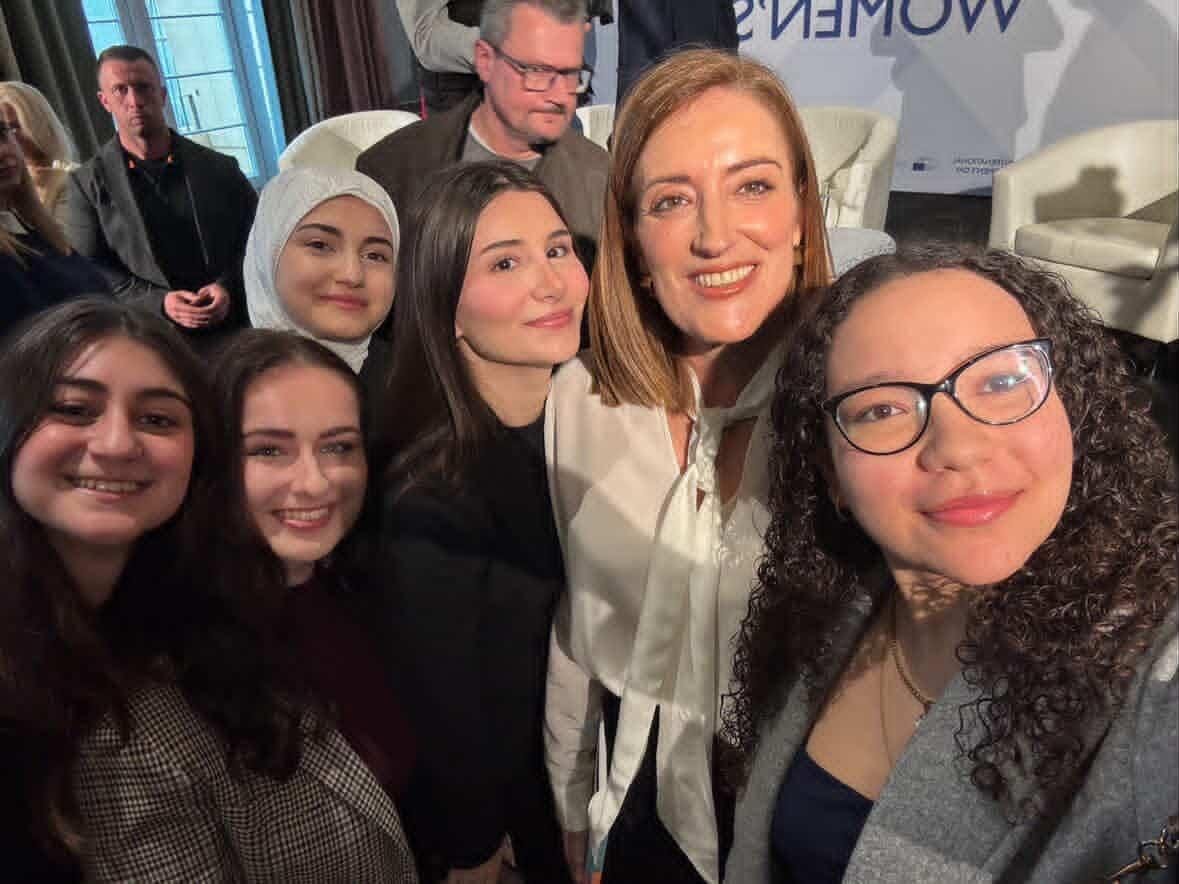
Group Selfie with Metsola