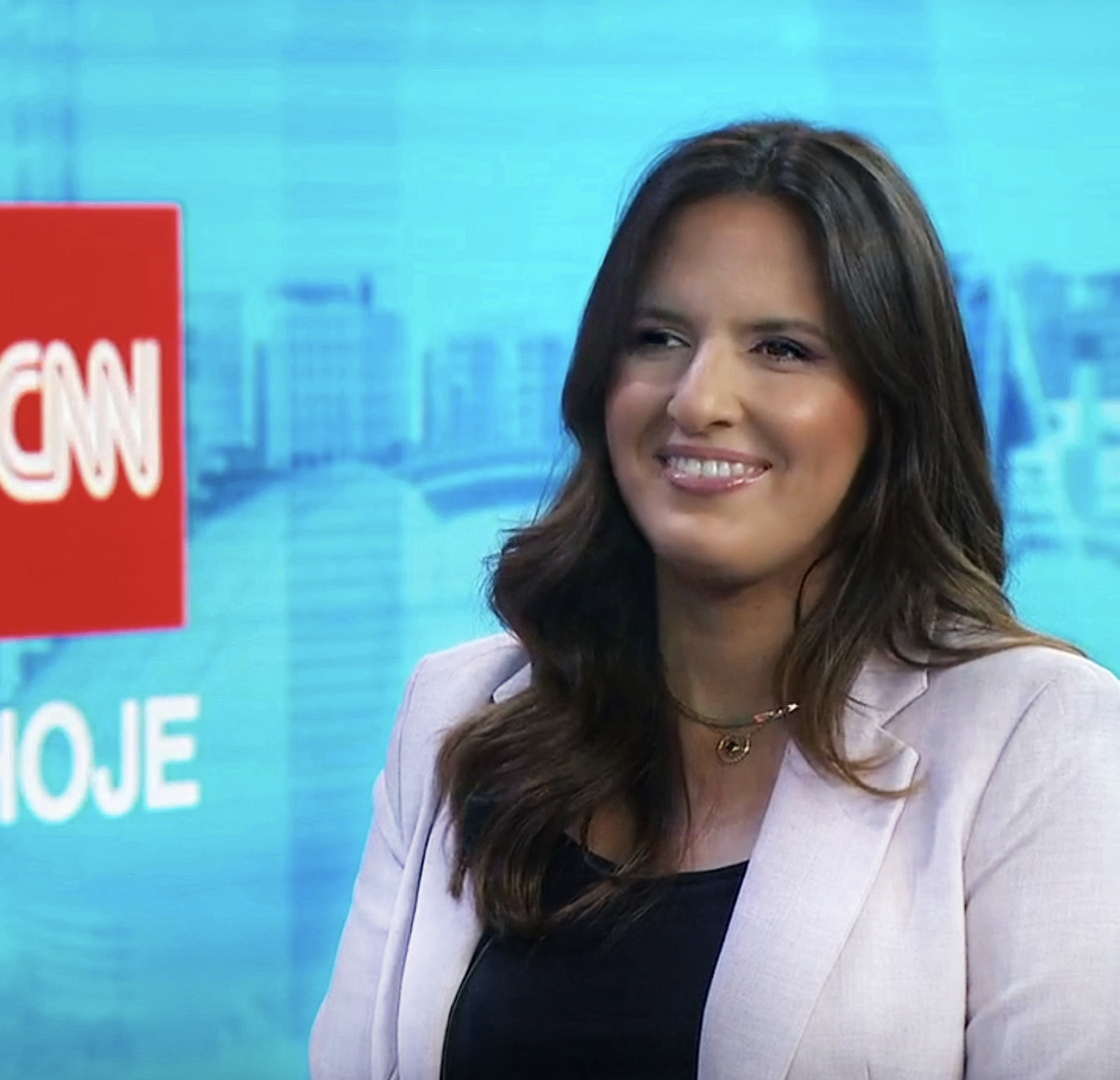
Besides acting as executive director of EU&U, Otilia is an advocate and communicator. Source: Instagram.


Otilia Colceriu works her 9 to 5 in communications and invests her 5 to 9 in the EU&U project as Executive Director. Born out of political turmoil and uncertainty in the last decade, this Brussels-based, pan-European youth network has grown to 60 members across 17 countries, and they empower young people to reclaim the EU narrative through campaigns, workshops and vocal critique on social media.

Whether engaged in Romanian street protests or fighting far-right spin, Otilia channels her rage against injustice into building “the resistance” her generation needs.​

How would you describe yourself?

I’m just a young person who’s very passionate and energised by what’s going on in the world and all the political context. I’m not able to stay quiet or put my head down and be submissive about it. That’s the reason for mostly everything I do. I’m triggered by what’s happening and I’m not the person to say it is what it is. It’s not. We need to fight.

I’ve had lots of talks with myself about this, real introspection to find what triggers me most. It always boils down to injustice. That’s the common denominator for everything that makes me lose my temper in life generally. Injustice covers so much ground because you can translate anything into it. Why do certain countries in the world have it better off than others? Why do some people get exploited while others do not? It pulls in class issues, women and gender relationships, anything really. But that’s the big topic word for me. When I see it, that triggers me. My blood starts boiling right there.


Specifically, what injustice are you trying to fight? And how do you do it?

Injustice across everything, and yes, it is a daily thing. I would bring it back to a very close, visceral example. Imagine you’re in class and there’s this kid who always gets bullied. Everyone sees it happening. They all think, “oh it must suck to be that person”. But nobody says anything because nobody wants to be the next one in line. Of course the bullies end up picking on you too if you speak up. So you shut up, continue your life, not saying a word.

That’s exactly how you fight injustice every single day. You become the person who stands up and says something. You do it because it gives other people courage to join in too and then you’re not alone anymore. It’s easier for bullies to turn against one person, but much harder when it’s twenty or more. The same goes in the workplace. If something unfair happens, like a policy being implemented that I do not like, I’m probably one of the first to say something about it. It works the same way in politics.


How do you encourage people to leave the silent majority and join a proactive fight?

We’re trying to make it cool. Even with the community we’re building, it’s more than just producing social media posts or explaining things. What we’re selling first and foremost is that we are cool. It’s cool to be interested in politics. It’s cool to be enraged by injustice. It’s cool to be the one who says something.

You are not lame or cringe or boring or a nerd for doing so. This is what you should be doing. And there are so many people like you. Look at these people. They are also super cool friends. They have successful lives, good friendships, they inspire you. Then it stops being stigmatised because the audience does not associate it anymore with just hippies or nerds. That’s the whole point of our community.

Is that the reason you joined EU&U? What was the first mission behind it?

EU&U was launched by my colleague Pietro Valetto and his friends in 2018, just before the European elections. They were scared about Brexit back then. It very much coincided with us all becoming politically conscious around the same time.

For me, it was high school when there were some huge protests in Romania. That’s when we went out in the streets and when I remember starting to care about politics. It lined up with Brexit, all the exits that followed, the migration crisis, the far-right rise. But it was also a time when Europe was still doing a lot for human rights. The EU does so many great things and we’re not talking about it because the bad stuff takes over. We wanted to take control of the narrative a bit, first by encourage voter turnout and then into a bigger project.


Now you are the director. How is EU&U changing under your leadership?

Different mandate, different strategy: we want to be a bit more vocal. It is not just about getting people to talk about the EU anymore. The EU gets talked about for very bad reasons even in our circles right now. The problem is not talk itself.

We want to get the right information out there. We want to criticise when there is something to criticise. At the end of it all, we want to take control of the narrative, take control of the future, inspire people to get engaged. It is becoming less about attracting all sorts of people and more about attracting people who want to organize. Who are the people that want to take a step forward? Who will gather twenty people in a bar to come up with an idea for an op-ed? Print some stickers and fill the streets? Collect signatures for an independent mayoral candidate? Who is going to do actual work at grassroots level?


What do you think has been your most successful or impactful initiative?

First of all, I notice it is working when we talk about people. This came from DMs we kept getting, people we do not even know. There was this weird account always messaging that we did not talk about people, that we only talked about high-level politicians or whatever. That person warned that is not Europe and that is not what’s on Europeans’ minds.

At some point I made a couple videos about climate, one where a minister in Romania was suing Greenpeace and taking NGOs to court. Another about austerity measures. Then this person commented again to say that we were finally talking about people and asked us to do more of that. It took us time to understand what they meant, but it clicked. Issues close to people’s heart communicate best. Then we also try to facilitate events where people network, leave with contacts, ideas, almost a work plan ready. They can make a WhatsApp group of the five people around the table and implement it tomorrow. That’s what works.

Do you see EU&U expanding across different member states, maybe with a national or national-plus-EU angle?

Technically we are based in Brussels because we all ended up here, but the origin is supposed to be pan-European. We have people in 17 member states, actually 60 in total. It is cool because we have a mix of nationalities and that’s how we already cover different countries. We stopped just amplifying institutions and started saying something with our voice through our Manifesto. Our core beliefs translate to all content and events.

I do not see it going from member state to member state because each already has their EU&U equivalent, like social media pages talking national politics. Ideally, what I strive for is growing to a map of stakeholders across Europe. They could feed into our content, review policy papers or posts with local intel. Then new projects together could emerge, big campaigns where local organisations in our friendship circle participate. Europe-level but with expertise from all countries.


How open are EU institutions to collaboration? What would you like them to do more of?

Support us financially. There are opportunities but youth space is chronically underfunded and less of a priority than war apparently, so now there’s less to go around. Big organisations get big grants for massive projects because they prove delivery year after year. But we advocate for smaller grants with less liability, less reporting for small and local projects. You want to start a podcast? Take 5000 euros, get a laptop, two microphones, do your thing. Like Solidarity Corps but even more resources available.

I work with funding at my job so I understand procedures but someone in rural Romania would not have those skills. Making applications faster and easier would let the committee for traditional dances in some village get funding for a cultural project. That would be fantastic. We have good cooperation with EU institutions because they see us as influencers, not lobbyists. We also get invited to tables with big orgs like OBESSU and other forums.


Your manifesto contains seven chapters. For those not reading it, what Europe does it describe?

Three big phrases I always tell people. I want a Europe that protects democracy and human rights. A Europe that protects and fights for the green transition. A Europe that protects the social pillar, the social model of economy where you put people first. That’s the manifesto in three lines. Everything flows from there.


If we’re having this exact conversation ten years from now, what will we be discussing?

The next few years will be bad. We will probably have to hit rock bottom before we finally learn. I think that around 2030 we will be forced to wake up because human rights will be in a very dark place. Then it will be the time to rise up and put our foot down. From my generation, that is when the new leaders will emerge. The ones who are already active and vocal now will be the people we turn to when everyone else is running around like headless chickens.

People with good ideas and good intentions today will eventually get the resources they need, because institutions are always reactionary. The projects and movements being built in 2025, 2026, 2027 will be the ones that scale up with this new funding. A whole generation, scared by how bad things got, will help with the reconstruction. I want us, when we are older, to look back at our twenties and say: we were the resistance in Europe. Just like there was resistance in the 1940s, we were that for our time.

Shape the conversation

Do you have anything to add to this story? Any ideas for interviews or angles we should explore? Let us know if you’d like to write a follow-up, a counterpoint, or share a similar story.