



This was the second time I had attended the event. The first time was in mid-December 2023 at the University of Trento, where I studied. This time, I presented alongside three other members of the Academic Freedom in Post-Soviet Countries research and advocacy group, focusing on Ukraine, Russia and Belarus, as well as the advocacy campaign for the release of Marfa Rabkova. Our work was presented alongside that of other students, researchers and professors engaged with the topic of academic freedom. Our group’s work was published on the European Society of Academic Freedom website, which is affiliated with the University of Trento, and a photo of our presentation is still available online. I am very grateful to my thesis supervisor, who is researching the topic of academic freedom from a migration and sociological perspective. This allowed me to attend the event alongside this year’s BA students on the Academic Freedom course.
Exploring the Notion of Academic Freedom
Academic freedom is generally considered to be primarily a negative liberty, meaning freedom from interference by the national government and university administration. It typically includes freedom of teaching and research, as well as freedom of expression within and outside academia. However, it has also been categorised as a positive liberty, encompassing the responsibility to ensure the practical implementation of academic freedom. In recent years, there has been growing recognition of the importance of establishing an academic community that can provide practical support to imprisoned scholars and support their work and activism upon their release. According to Scholars at Risk, an NGO that campaigns for the release of imprisoned academics, this is essential. Furthermore, academic freedom is interconnected with democratic values and rights, and advances scientific progress with the aim of improving societal well-being while taking scientific and societal implications into account.
Participants Involved
Several universities from across Europe and beyond participated in the two-day conference. Over nearly thirty-five students attended, representing the University of Innsbruck (Austria); the Universities of Padua and Trento (Italy); Linköping University (Sweden); the University of British Columbia (Canada); Monash University (Australia); Ruhr-Universität Bochum (Germany); and the University of Bergen (Norway).
All participants were enrolled at BA or MA level and presented research and advocacy work on behalf of imprisoned scholars, primarily those for whom SAR actively campaigns through student seminars at the university, legal case clinics, and other activities open to students. What united them was not only their shared commitment to academic freedom, but the fact that each had engaged with the topic through a specific university course.
In my own case, as mentioned earlier, I attended both the 2023 edition and this year’s conference as an alumni student on Academic Freedom: A European and International Perspective, an interdisciplinary BA course offered jointly by the Department of International Studies and the Department of Comparative Legal, European and International Studies at the University of Trento.
Other participants came to the topic through more varied academic pathways. Daniela, from Monash University, attended a course called Activism for Academic Freedom as part of her BA in Global Studies, a more directly focused programme that reflects how some institutions have begun embedding advocacy training within their curricula. Francesca, an MA student in Ethics and Migration Studies, took a different route, engaging with the topic through an elective called Special Readings in Migration Studies, which incorporated the SAR Student Advocacy Seminar as a core component.
At the University of Bergen, Sophie approached academic freedom through the lens of Gender Studies and Queer Theory, a course which she attended, a disciplinary perspective that adds an important dimension to the conversation, particularly given how gender studies programmes have themselves become targets of political interference in several European countries. At the University of British Columbia, Liliana participated through Engagementship, which is a structured engagement project consisting of weekly meetings, during which students collaboratively developed their own advocacy campaigns in partnership with the university’s Office of Regional and International Community and Human Rights.
Together, these varied pathways illustrate that there is no single route into academic freedom advocacy. Whether through dedicated courses, elective seminars, or institutionally supported projects, students across disciplines and continents are finding ways to translate academic engagement into meaningful action.
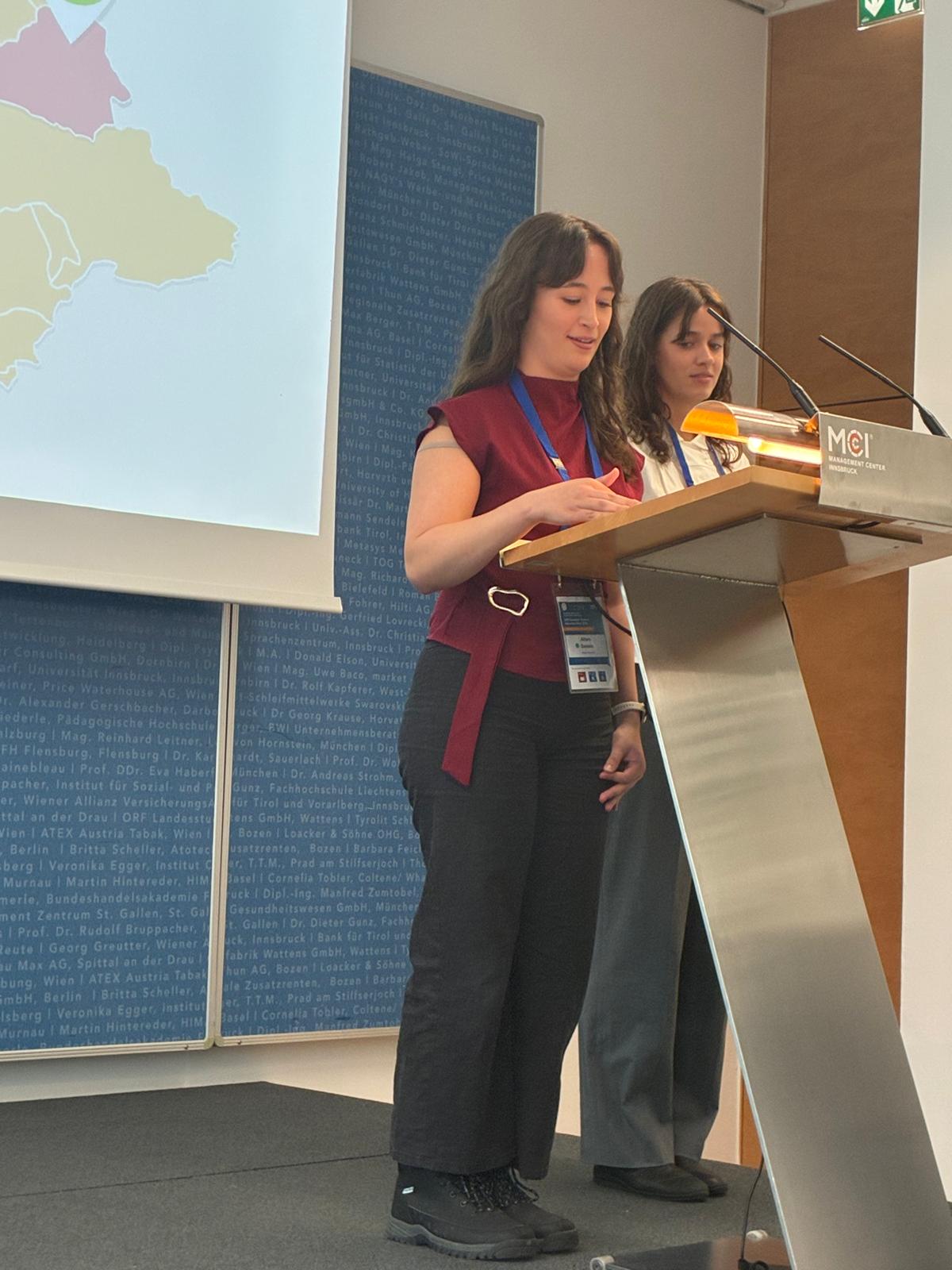
Source: Federica Capitani
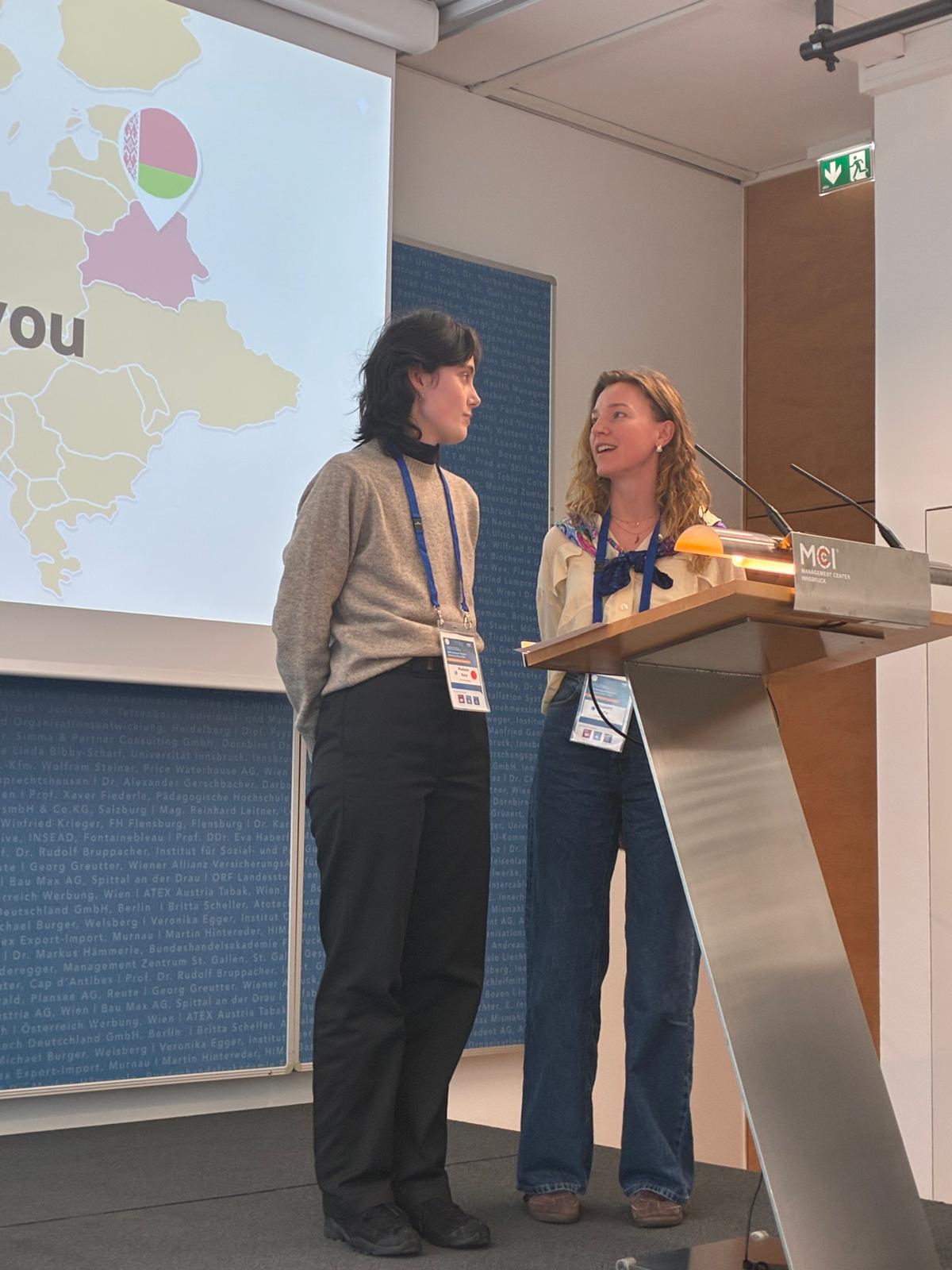
Source: Federica Capitani
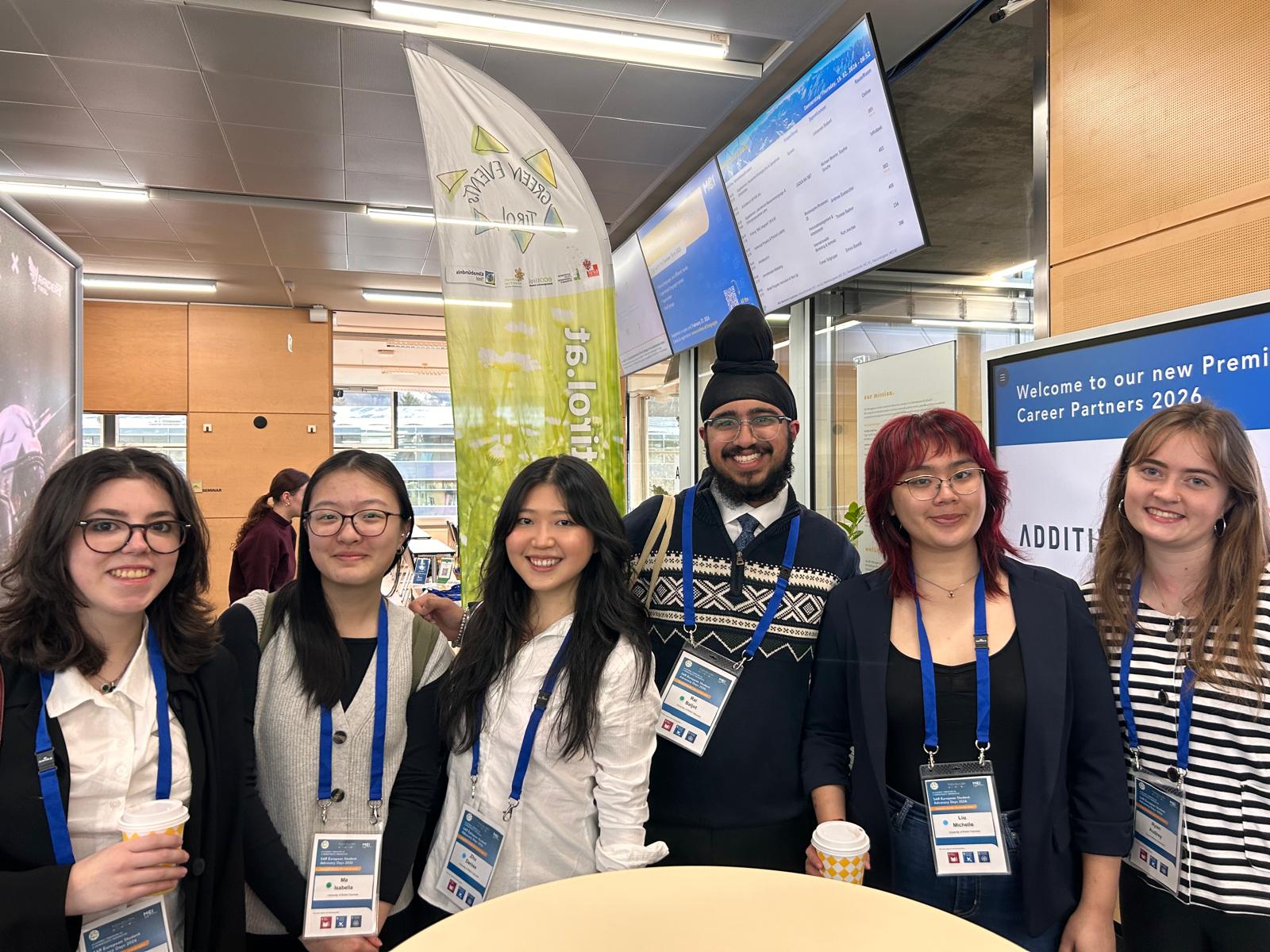
Source: Federica Capitani
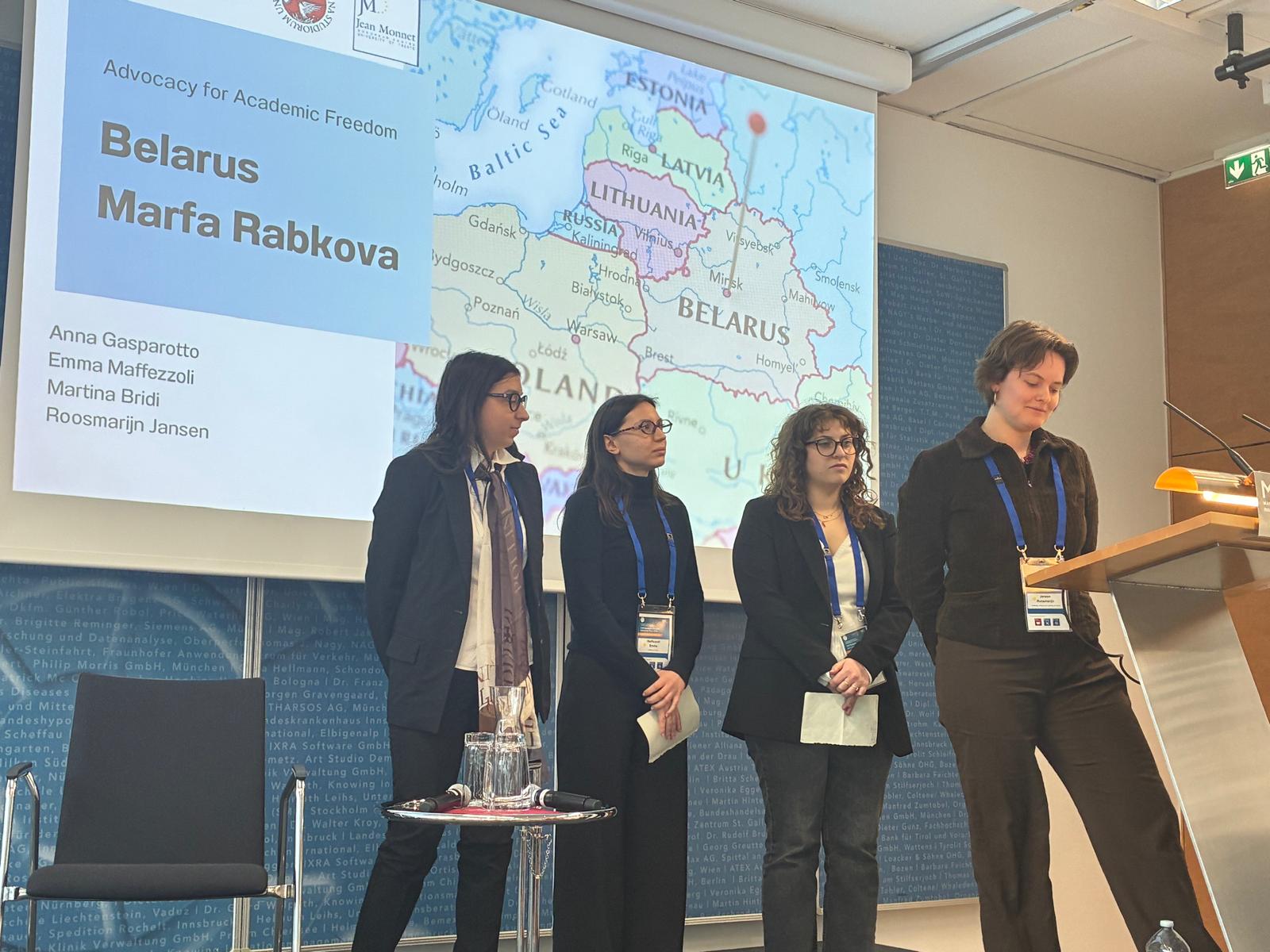
Source: Federica Capitani
The activities of these two days conferences
Dr Othmar Karas, President of the European Forum Alpbach and former First Vice-President of the EU Parliament, opened the conference with a keynote address titled Our Role in Defending Democracy. The speech was intended to focus on how the EU could strengthen its ability to protect academic freedom beyond a few articles in existing reference guidelines.Instead, it promoted the creation of a liberal, federal Europe and a unified market. Most strikingly, Karas made no mention whatsoever of the genocide being carried out by Israel in Gaza. This genocide is recognised under international law, and has directly targeted universities, scholars, students and the entire educational infrastructure of Palestinian society. Some of the participants, who were also university professors, raised questions about this . For a keynote speech delivered at a conference explicitly dedicated to defending academic freedom and threatened scholars, this silence was not an oversight. It was a political choice, and a deeply troubling one. Nor did he address how students from non-EU universities might engage EU politicians in diplomatic efforts to secure the release of imprisoned scholars.
The frustration with Dr Karas’s keynote was not mine alone. Every participant in the room shared the same reaction. Following the keynote, all participants presented their advocacy and research projects in turn, which they will be described in-depth in the next paragraph
Later that day, we all took part in a guided tour led by Professor Dirk Rupnow of the Department of Contemporary History at the University of Innsbruck, exploring the establishment and organisation of the university during the National Socialist period. The most striking moment of the tour was discovering two paintings of Hitler in the main hall on the second floor of the Ceremonial Hall: one depicting him as chancellor alongside preserved Nazi symbols, and another depicting him as a medieval knight. Rather than removing totally all the painting with members of the university administration of the time with Nazi symbol as well as honorary placards of the time, some of them have been retained as part of the university’s ongoing effort to confront and acknowledge its institutional involvement with the Third Reich, prompting a thoughtful discussion among participants about the relationship between historical memory, institutional responsibility, and the ongoing relevance of that history to academic freedom today.
Following the tour, I attended a workshop facilitated by Audrey Ryan, Laura Feith González, and Tererai Obey Sithole (it was pleasant to meet him again after our first meeting at Utrecht University last summer), which explored how to organise student advocacy for academic freedom both within and outside academia around three agents: student community, university administration, local municipality and national government. It was a particularly valuable session, not least because it brought together students from very different institutional contexts to reflect on shared challenges and practical strategies.
The following morning, Oleksandr Shtokvych spoke about the experience of relocating Central European University from Budapest to Vienna following sustained political interference in its curricula. He addressed in detail the deliberate dismantling of gender studies and other disciplines under Viktor Orbán’s government, a process that stands as one of the most well-documented cases of state-led erosion of academic freedom in recent European history.
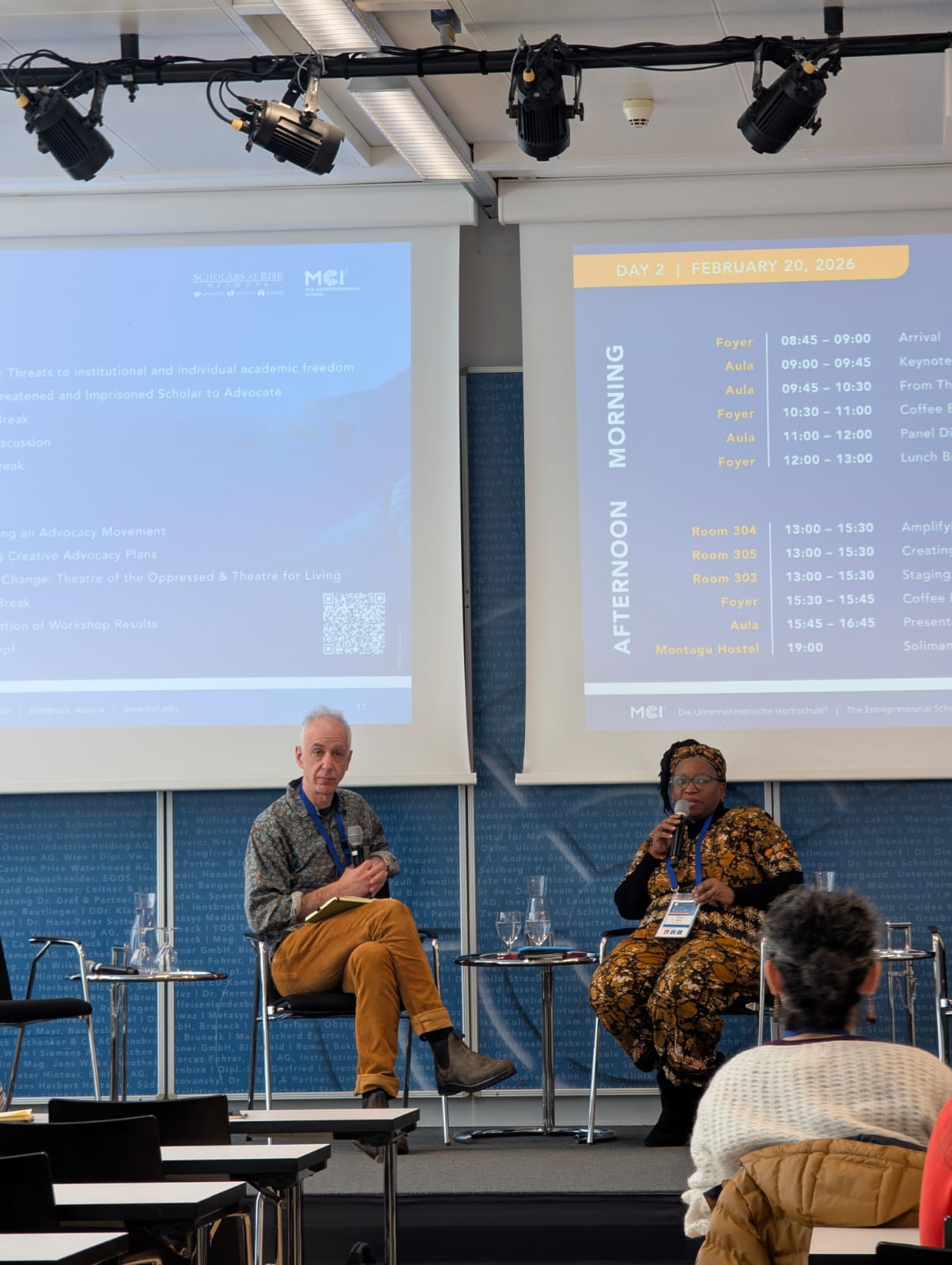
Later, Adam Braver led a discussion with Stella Nyanzi, a Ugandan academic and poet who was imprisoned and dismissed from her teaching position at Makerere University for her advocacy work, and tried on charges of insulting the president. She spoke about the strategies employed by students and academic professionals around the world to campaign for her release. She also addressed the deeply troubling terms of a scholarship offer to relocate to Sweden, which would cover her alone and exclude her children and husband, before settling with her family in Germany. For Nyanzi, accepting such an offer raised profound questions that went beyond her own safety: what does protection mean for a scholar who is also a mother, and what does exile cost when it demands the separation of a family?
Source: Federica Capitani
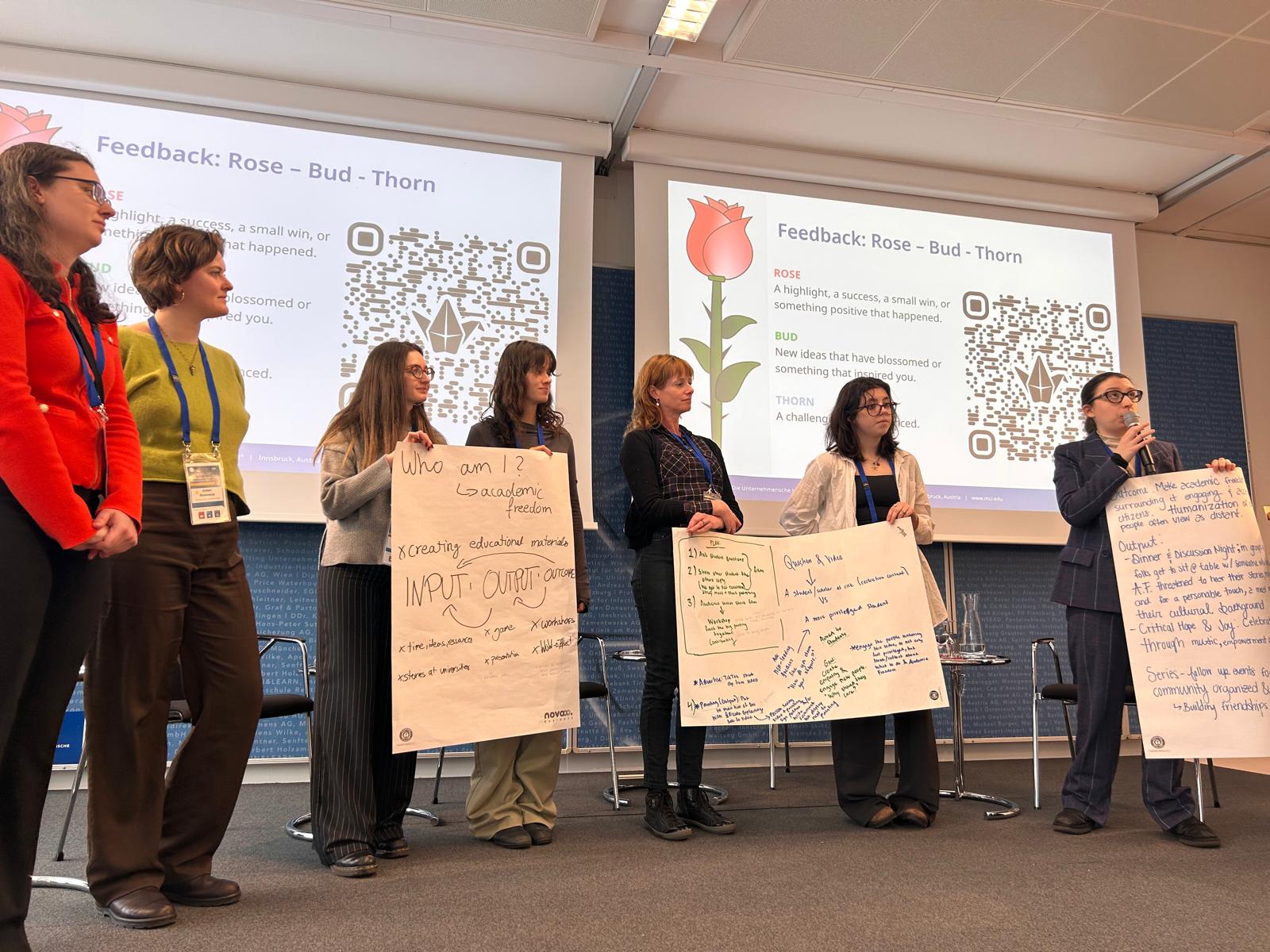
After lunch, we split into three groups to attend one of three afternoon workshops: Amplifying an Advocacy Movement, Creating Creative Advocacy Plans, or Theatre of the Oppressed and Theatre for Living. I attended the second session, led by Professor Iris Vernekohl of Ruhr-Universität Bochum, which focused on developing creative and impactful advocacy strategies to promote academic freedom and support at-risk scholars. Through hands-on exercises and collaborative discussion, we worked on crafting effective awareness-raising initiatives, culminating in the development of a shared framework for a potential advocacy campaign.
Source: Federica Capitani
Brief Presentation of the Projects Presented
Following Dr Karas’s keynote, all participating students presented the advocacy and research projects they had been developing throughout the academic year. Nearly all of the participants have built their work around advocacy campaigns for three imprisoned scholars for whom Scholar at Risk has been actively campaigning in collaboration with their families: Marfa Rabkova, Ilham Tohti, and Ahmadreza Djalali. A central principle guiding all of these campaigns is the importance of developing advocacy strategies that do not place the scholars in further danger, that keep them and their families informed, and that resist the tendency to reduce their identities to their imprisonment alone.
Marfa Rabkova is a Belarusian student of International Law at the European Humanities University in Lithuania and former coordinator of the Volunteer Service at Human Rights Center Viasna. She was arrested on 17 September 2020 for her activism against the Lukashenko regime and sentenced to fifteen years in prison in September 2022. Student advocacy campaigns across European universities made her case one of the most prominent in the SAR network.
Ilham Tohti is a professor of economics from the Central Minzu University in Beijing, imprisoned since 2014 and sentenced to life for his evidence-based advocacy on behalf of the Uyghur minority. His case has been widely condemned as politically motivated. As of early 2026, he is held in an undisclosed location with severely restricted family contact. Student advocacy projects focused on raising awareness of both his scholarship and the broader suppression of Uyghur academic and cultural life that his imprisonment represents.
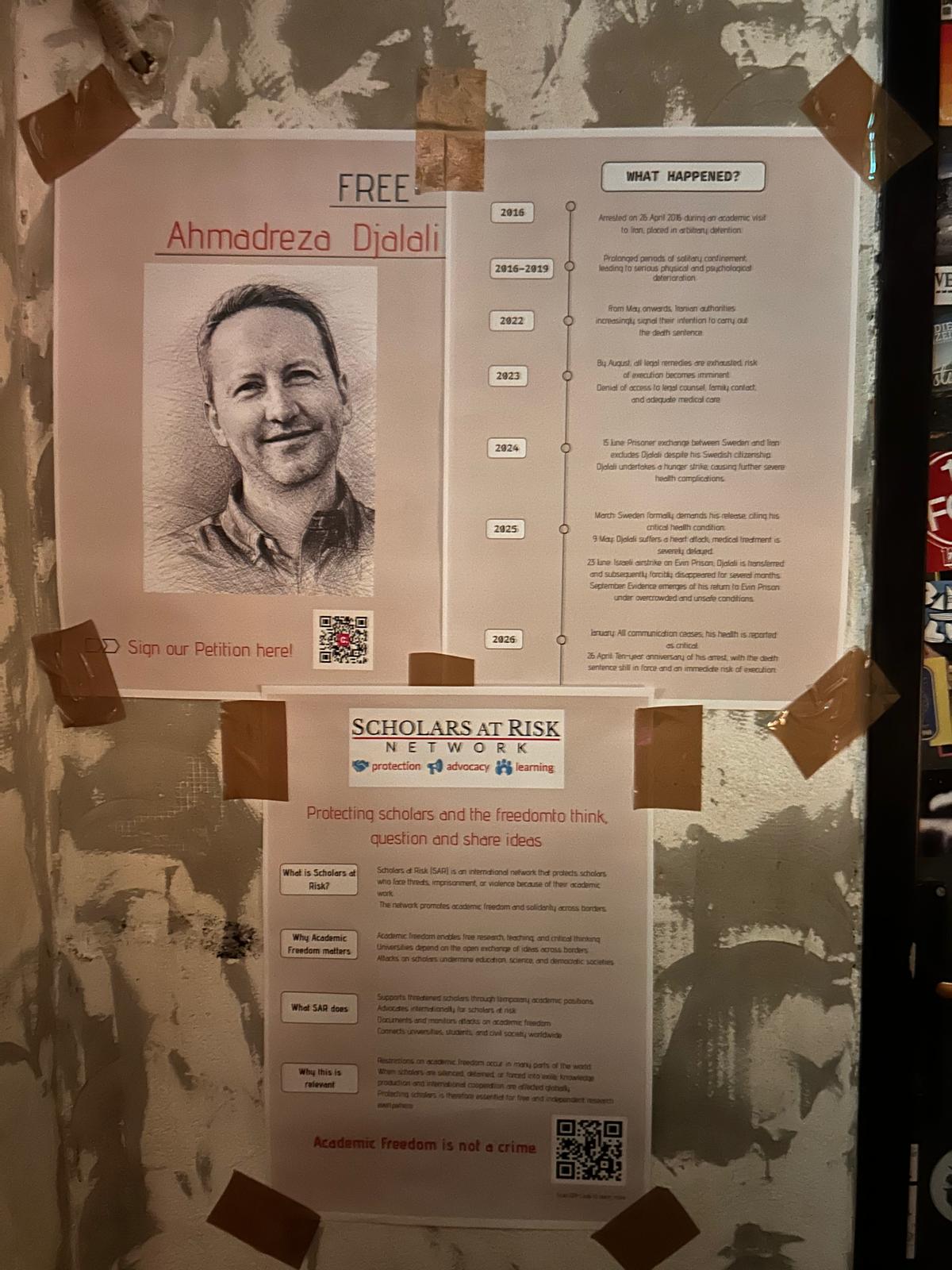
Ahmadreza Djalali is a Swedish-Iranian physician and disaster medicine researcher, formerly affiliated with the Karolinska Institutet in Stockholm. He was arrested in Iran in April 2016 while attending academic workshops at the invitation of Iranian universities, subsequently convicted of espionage on the basis of a confession widely believed to have been extracted under torture, and sentenced to death. The sentence remains in force. In May 2025 he suffered a heart attack while detained in Evin Prison. Advocacy campaigns centred on the urgency of his situation and the international medical community’s responsibility to demand his release.
Source: Federica Capitani
In these projects, students have been involved in community-based events, the creation of a podcast series, and the production of new episodes of existing podcasts created by students, as well as social media campaign by creating Instagram profile built around this campaign advocacy.
As Daniela and Liliana reported, their group’s advocacy strategy has mainly focused on community-based events within the university and editorial projects. Daniela told me that they had organised a barbecue, a student competition around SAR’s annual report freedom to think, an advocacy night, and a podcast series on academic freedom and their advocacy campaign, as well as creating a podcast series and managing a social media campaign. Liliana told me that they had aimed to reach a broader audience, including people outside the university, through interactive advocacy stations, an open mic and an art exhibition, all of which took place recently the last week of this month.
Students from the University of Padua created a podcast series on the interconnection between human rights and academic freedom for their advocacy campaign on Marfa Rabkova, specifically focusing on women rights. Students from the University of Trento arranged an advocacy report on the situation of academic freedom in Belarus and are (re)planning a cineforum at the University of Trento of a documentary called Courage by Aliaksei Paluyan (2021), documentary routed around the 2020 protests in Belarus and how the fight against unfair elections led to violence, human rights violations, and ongoing state repression.
Students from Bergen University and Linköping University presented also two research case studies. As Sophie described, they conducted a comparative case study of the Russian and American contexts, as Bergen University had collaborated with the University of Florida, which stopped due to pressure from the state of Florida discouraging professors from attending seminars and courses on LGBTQ issues in Norway. This pressure will unfortunately be further reinforced in Europe, albeit in different ways. The latter was conducted through documentary analysis and interviews with members of well-known NGOs such as Amnesty International, revealing the ongoing decline in academic freedom in Sweden, not only due to reduced funding and the precarisation of Higher Education system, but also due to increased political interference, particularly with regard to Sami research and discussions on the ongoing Israeli-Palestinian conflict. The report included a section on advocacy activities planned throughout the year, such as seminars and an advocacy campaign for Ahmadreza Djalali and the creation of an Instagram page.
Challenges of Involving the Student and Local Communities
During the training session, we discussed how to navigate the challenges of addressing sensitive topics within an advocacy campaign, and how to engage not only the student community but also university administrations, local municipalities, and the broader public.
Several interconnected challenges emerged from the discussion. The first concerned the ethical handling of sensitive information relating to scholars themselves, including health conditions, political opinions, and personal circumstances, and whether and how such information should be incorporated into advocacy campaigns. Daniela reflected that her course, Activism for Academic Freedom, had been formative in teaching her how to engage ethically with sensitive cases, particularly those involving scholars whose safety could be compromised by poorly managed public attention. Liliana raised a related but distinct concern: the emotional toll that this work can take on students themselves. Engaging seriously with cases of imprisonment, torture, and exile carries a psychological weight, and she emphasised the importance of finding ways to remain genuinely committed without becoming either overwhelmed or, conversely, performative in one’s response to others’ suffering.
A second challenge is the difficulty of extending advocacy beyond the Humanities and Social Sciences. As Francesca noted, human rights issues tend to engage students in these fields far more readily than those in STEM disciplines, despite the fact that STEM scholars are equally subject to restrictions on academic freedom and are in some cases specifically targeted because of the strategic or political implications of their research, as the case of Ahmadreza Djalali clearly illustrates. This disparity is compounded by limited resources, bureaucratic obstacles within universities, and a broader lack of institutional awareness of these issues. A further and perhaps more structural obstacle lies in the political landscape of student representation itself. Student organisations and movements frequently operate within specific ideological frameworks, which means that academic freedom campaigns may not align with their current priorities. As a result, engagement often remains superficial, confined to sharing a post on social media or signing a petition, without translating into the kind of sustained, meaningful action that cases like those of Tohti and Djalali urgently require.
A third challenge, raised by both Daniela and Liliana, concerns the difficulty of translating these issues into something accessible and tangible that can build a genuine sense of community around the interconnection between human rights, democratic values, and academic freedom. Daniela observed that academic freedom tends to be perceived as an abstract institutional principle rather than a practical issue with direct implications for everyday life and that overcoming this perception requires not only creative communication strategies, but also the willingness to confront institutional and bureaucratic resistance both within and outside the university.
Together, these challenges point to a common underlying problem: academic freedom remains insufficiently embedded in the everyday culture of universities, both as a concept and as a lived practice. Until advocacy work succeeds in making that connection felt across disciplines, beyond ideologically aligned student movements, and outside the walls of the institution, it will continue to reach only those who are already convinced.
Reflections from Participants
Beyond the sessions and workshops, I asked several participants to reflect on what this experience had meant to them personally and how their advocacy work had evolved over the course of the year. Their responses revealed a shared sense of growth that went well beyond the acquisition of technical advocacy skills.
Liliana from the University of British Columbia described the experience as one that had shifted her group’s entire understanding of what advocacy could look like, moving away from traditional formats such as panels and policy-focused work towards creative approaches centred on participation, emotional engagement, and accessibility. As she reflected, that shift fundamentally changed not only how they thought about impact, but also who gets to participate in advocacy in the first place. Sofie echoed this, noting how valuable it had been to meet students from across the world facing similar difficulties when trying to engage their universities, and how much the group had learned, not only about the countries and cases they were researching, but about how to work together effectively as a team without having known each other beforehand.
Francesca described the experience as genuinely empowering, and particularly meaningful in the sense that it confirmed how many people out there are actively committed to social justice and acting on it. She also offered a candid update on her group’s Instagram campaign: while the volume of posts has decreased, a real community has formed around it. The seminars and webinars her group organised have since concluded, but she described them as a highlight, providing an opportunity to share their work both within their own university community and beyond, and to open up broader conversations about academic freedom and what can still be done.
For Daniela, the experience had been eye-opening in the most practical sense: it pushed her to think critically about her role as both a student and an advocate, and reinforced her conviction that advocacy does not have to be large-scale to be impactful. She also noted that her approach had become more strategic and intentional over time, moving from simply raising awareness to thinking more carefully about engagement, storytelling, and long-term impact, and developing a deeper understanding of how to balance creativity with responsibility when advocating for real people and real issues. Her observation that political issues are too often discussed in abstract terms in the classroom and that this experience gave her a way to engage with them in a more tangible and grounded way, connects directly to one of the central arguments of this article: that academic freedom must be felt as a practical reality, not merely understood as a theoretical principle.
Why does it still matter to advocate for academic freedom?
Because it works. On one evening in March, Audrey sent a message to our WhatsApp group: Marfa Rabkova had been released from prison. Everyone cheered. It was a small notification on a phone screen, but it represented years of coordinated research, campaigning, and advocacy by students and scholars across Europe and beyond.
Attending this event for the second time, I left Innsbruck with something more concrete than I had brought with me: the knowledge that advocacy is not an abstract exercise but a practice built from the specific, sustained efforts of specific people. Daniela taught me that ethical engagement with sensitive cases is itself a skill, one that must be learned, practised, and continuously questioned. Liliana reminded me that caring about these issues has an emotional cost, and that acknowledging that cost is not a weakness but a condition for doing the work honestly. Francesca sharpened my awareness of how much advocacy still fails to reach beyond the Humanities and how much work remains to be done in convincing STEM students, ideologically selective student movements, and university administrations that academic freedom is their concern too. Sofia showed me that rigorous research, comparative case studies, documentary analysis, interviews with NGOs, is itself a form of advocacy, one that gives campaigns an evidentiary foundation that no petition alone can provide. Audrey, Laura, and Tererai demonstrated that the most valuable thing a facilitator can do is create the conditions in which students find their own answers.
I do not exempt myself from the criticisms raised during the training sessions about superficial engagement. As a former member of my university journal, I could have promoted more of these initiatives when I had the platform to do so. That is a lesson I carry forward along with a promise to continue attending every seminar, every event, and every gathering where students are doing this work seriously.
Academic freedom matters because democracy requires it, because imprisoned scholars deserve it, and because as Marfa Rabkova’s release reminds us sustained, unglamorous, student-led advocacy can actually change things. The question is not whether to advocate. It is whether we are willing to do it well.