



Amid ongoing security and defence debates, developments such as the MERCOSUR agreement and shifts in the EU’s stance, reflected in reforms of the Common Agricultural Policy and the budget reductions, suggest that food security tends to be overlooked, even as it supports the stability and resilience the EU seeks to protect.
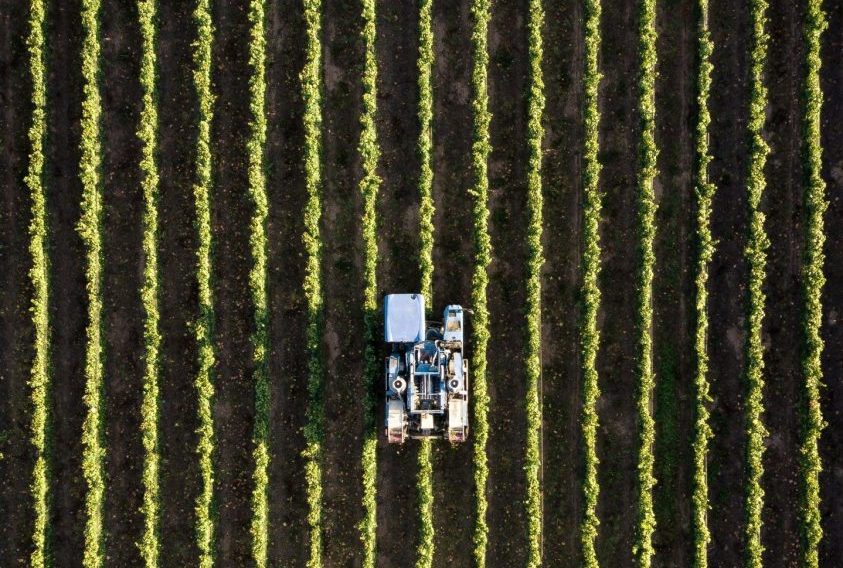
Photo by Tomas Anunziata, pexels.com
A short history of the Common Agricultural Policy
In practice, the CAP operates as a balancing mechanism between multiple, and often competing, objectives: maintaining agricultural productivity, ensuring food quality and safety, supporting farmers’ incomes, and promoting environmentally sustainable land use. Its evolution expresses the changing challenges facing Europe, from post-war scarcity to today’s pressures of climate change, market volatility and geopolitical uncertainty.
The importance of food at the European level is reflected in the early creation of the Common Agricultural Policy (CAP) in 1962, one of the first common policies of the European project, designed to help rebuild the continent after the Second World War.
Its foundations lie in the Treaty of Rome, which established the European Economic Community (EEC) among Belgium, Germany, France, Italy, Luxembourg and the Netherlands with the aim of fostering economic integration through a common market. Within this framework, agriculture was placed at the centre of European cooperation, showcasing its strategic importance for both economic recovery and social stability.
From the outset, European agricultural policy was tasked with a clear set of objectives: increasing productivity, stabilising markets, ensuring a reliable food supply, and securing a fair standard of living for farmers, while keeping food accessible and affordable for consumers.
The CAP emerged as the main instrument to achieve these goals; a shared policy, financed at the European level, supporting farmers while balancing how food is produced and distributed across the Union.
Over time, its role has expanded significantly. While food security and farmer support remain at its core, the CAP has gradually integrated new priorities, including
environmental sustainability, climate action and rural development. Today, it plays a central role in broader EU strategies such as the European Green Deal, linking agricultural production to goals like biodiversity protection and more sustainable food systems.
CAP reforms: Budget integration and prioritising competitiveness, security and defence.
The EU’s agricultural policy budget structure is being significantly redefined. Under discussions for the next Multiannual Financial Framework (MFF) for 2028–2034, the European Commission is proposing a shift in how agricultural funding is structured and delivered. At the centre of this proposal is a move towards more “integrated” planning, through what are described as National and Regional Partnership (NRP) Plans. The European Parliament Think Tank clearly stated in its briefing that the European Commission “proposes a shift in spending priorities, from traditional policies such as the common agricultural policy or cohesion towards competitiveness, security and defence. It drastically changes the budgetary structure, motivated by an intention to increase flexibility in EU funding.”
In principle, this approach aims to bring together different EU funding streams such as agriculture, regional development and cohesion funds, into a unified, more flexible framework. Rather than allocating money through separate, sector-specific instruments, the idea is to allow member states to design coordinated investment strategies tailored to their regional needs.
This marks a continuation, and an intensification, of a broader trend already visible in the current Common Agricultural Policy (2023–2027), which granted member states greater flexibility through national strategic plans. The stated objective is to improve efficiency, reduce administrative burden, and ensure that different policies reinforce one another on the ground.
However, while the logic of “integration” suggests coherence, it also introduces a degree of opacity.
Merging funding streams makes it more difficult to clearly track how much support is specifically allocated to agriculture, as opposed to other policy areas. Direct comparisons with previous budgets become less straightforward, as structural changes merge categories that were previously distinct.
This lack of clarity is already reflected in diverging interpretations of the proposed budget.
While official communication emphasises efficiency gains and “synergies” across policy areas, external analyses suggest a different picture. Investigations have indicated that the share of the EU budget dedicated to agriculture could decrease significantly in the next cycle. Euronews’s deeper investigation into the CAP reform numbers showed that in reality the allocated budget for the 2028-2034 is cut by half from 32,3% of the current budget to 16,5% for the upcoming one.
At the same time, Christophe Hansen, Commissioner for Agriculture and Food, posted that although embedding agricultural support within a broader, integrated framework, overall support to agriculture will be maintained through “fewer rules, less complexity, more results”.
Farmers exiting the profession
Across Europe, the farming sector is growing older, literally. According to the latest Eurostat data, over 88% of farmers today are over 40, and a significant share are approaching retirement age. At the same time, far fewer young people are stepping in to replace them.
This situation is part of a global trend that reflects how the profession is perceived and sustained. Globally, the number of people employed in agriculture – although the number of farmers could be harder to estimate due to reasons such as family members helping unofficially – has reduced from 43% in 1991 to just 26% in 2025. Across Europe, land is increasingly concentrated in fewer hands, a structural shift that is reshaping the continent’s food production. According to Eurostat data, almost two-thirds of EU farms are smaller than 5 hectares, yet they operate only a fraction of agricultural land, while just 7.5% of farms, those over 50 hectares, control around 68% of the EU’s utilised agricultural area.
These patterns exist across both southern and eastern Europe, where small-scale farming remains widespread but structurally marginal in terms of land control. As economic pressures mount and older farmers retire without successors, land is often sold or leased to larger agribusinesses, accelerating consolidation.
Local economies and family-run farms
Small and medium-scale farms play an important role in holding Europe’s food system together.
Despite controlling a smaller share of the land, they are deeply embedded in local economies and ecosystems as they often maintain diversified crops, shorter supply chains, and closer relationships with their communities.
In many regions, particularly in southern and eastern Europe, they act as a buffer against rural poverty, providing both income and subsistence where alternatives are limited. At the same time, these farms sustain social structures by keeping rural areas inhabited, empirical knowledge, and food cultures rooted in place.
Unlike large-scale commercial operations that focus on optimising yields, the majority of EU farms, approximately 93%, are family-owned enterprises where at least half of the labor is provided by family members. For these farmers, the land is practically a “family heirloom” passed down through generations. This connection to the land comes along with a profound sense of responsibility; farmers care for the soil quality and management because they intend to leave it in a better state for their children. This can translate into highly sustainable practices, such as implementing innovative techniques that, for example, absorb atmospheric pollution rather than contributing to it.
Furthermore, family farms serve as repositories of “past wisdom,” where empirical knowledge inherited from parents is combined with updated education to drive resilience and better adapt to future demands and evolutions. Particularly during the pandemic, farmers proved a remarkable capacity to adapt and innovate. By maintaining closer ties to local ecosystems and utilizing traditional knowledge, they offer a decentralized, resilient alternative to industrial farming, ensuring that European food security is rooted in biodiversity and stable rural communities.
The importance to invest in agriculture
The decline in farming has direct implications for food security. A reduced and increasingly concentrated farming base can make food systems more vulnerable. Fewer producers mean less diversity in production, supply chains that are more exposed to disruption, and a greater dependence on external inputs or imports. In a world marked by climate change and geopolitical instability, such dependencies can easily translate into disruptions to food security.
Recent crises have already illustrated these vulnerabilities. During the Covid-19 pandemic, disruptions in transport and labour exposed the fragility of food supply chains. Similarly, Russia’s invasion of Ukraine highlighted Europe’s reliance on global markets for key commodities, with immediate consequences for prices and availability.
In this context, the resilience of Europe’s food systems depends not only on technological innovation or global trade, but also on the continued viability of its farming communities. Investment in agriculture, therefore, is not simply a matter of supporting a sector but a strategic choice.
This includes financial investment through subsidies, risk-sharing mechanisms and infrastructure, but also investment in knowledge, education and generational
renewal. Many farmers rely on inherited, experience-based knowledge, which remains valuable but must increasingly be complemented by access to new technologies and sustainable practices, such as precision agriculture.
Equally important is recognising the role of farmers as stewards of the land. Unlike more industrial models of production, many European farms, particularly smaller ones, are closely tied to local ecosystems and communities. Their long-term relationship with the land can incentivise practices that preserve soil health, water resources and biodiversity, all of which are essential for sustained food production and local ecosystems.
Failing to support this transition accelerates existing dynamics: fewer farmers, more concentrated production, and a food system that becomes less resilient over time.
In a period where Europe is reassessing its strategic priorities, the question is not whether it can afford to invest in agriculture but whether it can afford not to.