


Do you have anything to add to this story? Any ideas for interviews or angles we should explore? Let us know if you’d like to write a follow-up, a counterpoint, or share a similar story.
Four years of war: how Ukrainian youth continue their studies in Europe
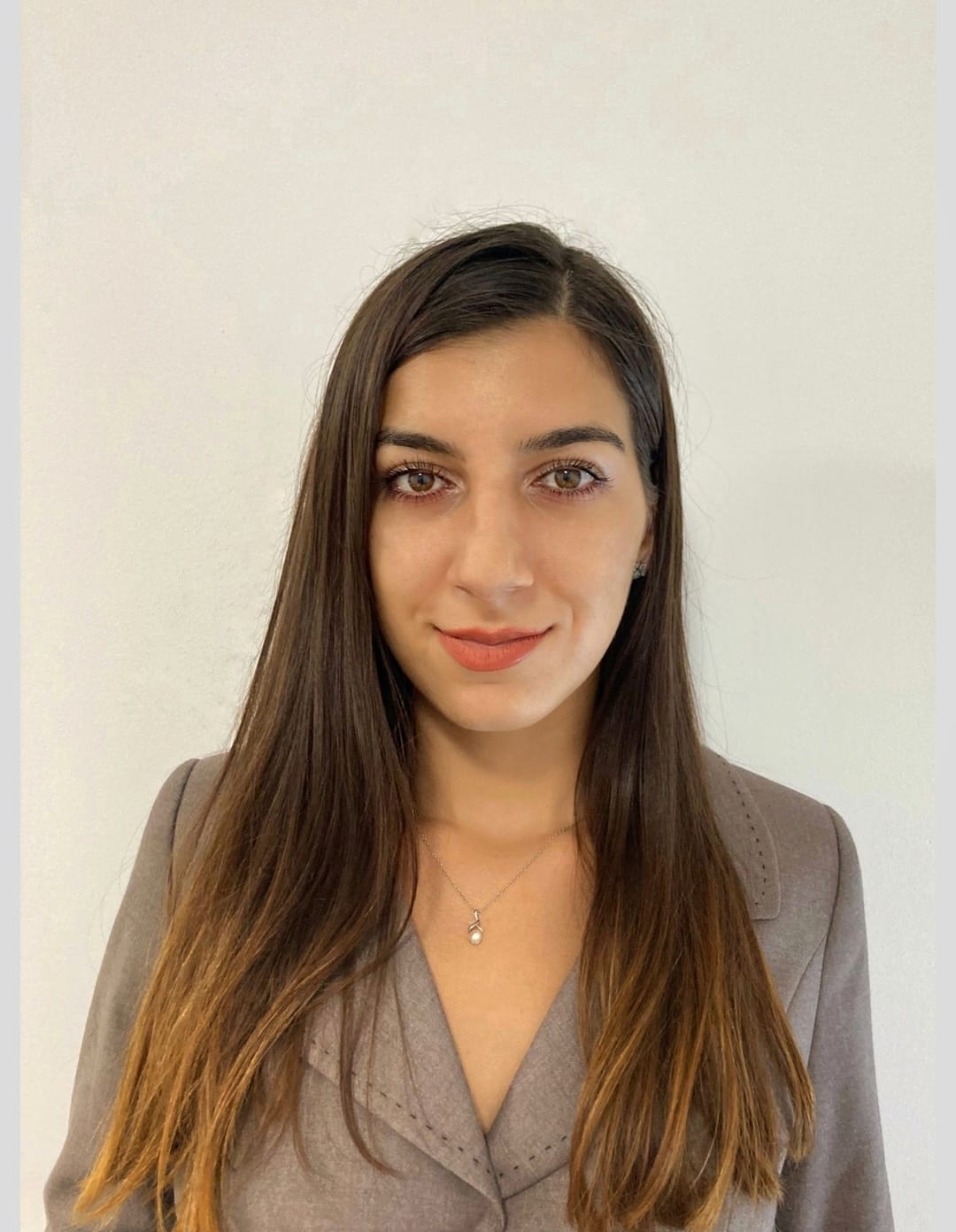
Romania: how to learn to be an adult at 17
Going abroad is, for many young people, a step planned for years. For Yaroslava Asarzhy, this moment came in 2023, at the age of 17, when she decided to go alone to another country. Today, at 19, she is a third-year student at the Faculty of Business Administration within the University of Bucharest. She chose Romania because it was close to home, but also because the degree from this program, as she says, “opens doors to a good future.” Yaroslava did not get to study in a university in Ukraine – she came directly to Romania immediately after finishing high school. But comparing it to what she knows about the Ukrainian system from friends and relatives, she notices major differences. “In Ukraine, I think more responsibility is required. Here it is much freer, the choice is yours – you want to come to classes or not,” she explains.
Another aspect she discovered in Romania is the important role of student organizations. She says that these organizations not only exist but are actually part of the university’s organizational system and have a say in many decisions. Also, she finds it very valuable that the university and faculty listen to the opinions of these organizations, and students have the feeling that their voice can reach the dean and the professors. As an international student, Yaroslava receives a scholarship and free accommodation in the dormitory. It sounds good, she says, but the reality is more complicated. “It is not enough. Most of my colleagues work part-time or full-time. The state pays a portion, but it doesn’t cover everything,” she confesses.
The cost of living in Romania, she says, depends a lot on lifestyle. For a student who stays in a dormitory and cooks for themselves, expenses are relatively moderate compared to other European countries. However, once outings in the city, clothing shopping, or other unplanned expenses are included, the monthly budget can increase quite quickly. Leaving home at 17 sounds adventurous in theory. In reality, it was devastating. “When you are 17, you think the world is at your feet. But when you arrive alone in a foreign country, without family, without friends… it’s very hard,” she says. The first obstacle was the language. She had some basic knowledge, but the reality was completely different. Then came loneliness – that overwhelming feeling that you are completely alone, with no one who knows you or cares about you. The first six months were so hard that she repeatedly thought about giving up everything and returning home. “At one point I understood that the choice to move to another country is mine. And that if I don’t help myself, no one will. That didn’t let me go home,” she explains.
Over time, she discovered that Romanians are much warmer than she expected. She tells emotionally about her first week in Bucharest when she got lost in the subway. She approached a man who was wearing headphones. “He dropped everything, didn’t leave with the subway anymore, showed me where to go, went with me to that station to make sure I didn’t get lost. I think it was at Romana or in that area, I don’t remember exactly,” she says. A small gesture, but one that remained etched in her mind as a symbol of the kindness she found in Romania.
The war in Ukraine remains always present in her life, like a wound that never completely heals. Her family is at home, while she is safe. She admitted that, especially in the first years, she felt guilt, but she realized that this feeling does not help those left there and that her parents would be more at peace if she lived her life freely in Romania. However, there are also more painful moments, especially when locals, instead of showing solidarity, make mean jokes. “There were moments with jokes directed at us, related to the war, to ‘khokhols’ (a derogatory term used for Ukrainians). There were moments when I was sitting in class, for example, and from the back someone would sing ‘Katyusha’ (a Russian folk song, often associated with the Soviet army and used here ironically) or they would send us insulting messages. They avoided us or ignored us. There were also moments when they told us directly that we are not welcome,” she confesses. Her reaction is a dignified one: “I don’t answer. If a person allows themselves to joke like that, why would I want to communicate with them? I don’t want to lower myself to their level.”.

“On the streets of Bucharest”. From the personal archive of Yaroslava Asarzhy, 2025
Questions about the war came from professors rather than from colleagues. She says that professors were interested, they cared and wanted to know if the students were okay, while colleagues did not ask any questions and seemed to completely avoid the subject. She explains that the professors always showed themselves to be supportive and encouraging, sometimes even gentler with Ukrainian students than with Romanian ones. What she misses most about home is not a thing, but a feeling. “I miss my people. There are no people here who fit you. You try to get to know Romanians, but you are very different. Even if the mentality is sometimes similar, the level of communication, the jokes, everything is different. It’s hard to enter their circle, to become ‘one of theirs.’ I miss the Ukrainian vibe,” she explains.
Another cultural shock for her was the different pace of life. She said that in Ukraine, everyone was always in a hurry, and at first it annoyed her to see people sitting for hours at terraces with coffee; it seemed like they were doing nothing. Over time, however, she understood that this is a sign of the quality of life and that this exact rhythm contributed to her healing. “For me, the 17-year-old, coming with all the stress of the war, this rhythm saved me, even though at first it drove me crazy.”
The negative part of her experience in Romania was the bureaucracy. She explained that in Ukraine, things are clearer and more predictable, but in Romania, at 17, when she needed documents or certificates, everything was a nightmare because, being a minor, no one could help her without her parents. She added that she expected everything in Europe to be more automated and faster, but the reality was completely different, and this experience was more difficult than learning the language. Regarding the perception of Ukrainians, she often feels she is seen only as a “refugee,” not as a person with her own ambitions. She emphasized that many people perceive Ukrainians only as refugees, and she wants them to be recognized as people who fight for their future, especially the youth. She talks with passion about how volunteers get involved and about the shops and cafes that remain open even during sirens, to show that Ukrainians are strong and not victims. Also, she is bothered by the stereotype that Ukrainians came to Europe only to not work, mentioning examples such as beauty salons and small businesses opened by Ukrainian women to highlight that they actively contribute to society and build.
Yaroslava is categorical when she speaks about returning to Ukraine. “I don’t see any future there for young people, unfortunately. No matter how painful it sounds.” For the next few years, until she finishes college, she will stay in Romania. What follows after, she doesn’t know. “I haven’t thought about what country I would like to reach. I only know that in the next few years I want to build something here, in Bucharest. Then, when I am fully formed, I will understand where I want to go.” At the end, when she was asked what she would tell the 17-year-old Yaroslava, she replied: “Don’t be afraid. Fear is normal, it doesn’t make you weak. It only makes you more careful. But don’t let fear paralyze your curiosity. Move forward, don’t stop, no matter how hard it is. And don’t blame yourself for mistakes. It will pass. You will be fine.”
Between Ukraine and Great Britain: Maria’s perspective
Another European experience is that of Maria Shtelmakh, a third-year student of International Relations at the National University of “Kyiv-Mohyla Academy.” She applied for an academic mobility program and is studying in the second semester of the 2025–2026 academic year at the University of Glasgow, Scotland. Maria explains that her university has cooperation agreements with several educational institutions abroad, including the University of Glasgow. For the period of mobility, she chose the Central European Studies program. She chose this program because she wanted to analyze Central and Eastern Europe from a Western perspective and to improve her academic experience in an English-speaking environment. “I chose Glasgow because the university has a very good reputation for international programs and for the support offered to students from abroad. It was important for me to be in a safe and supportive environment,” Maria motivates her choice.
The first interaction with the Scottish academic system was a surprise for her. Instead of numerous courses and exams, which she was used to in Ukraine, in Great Britain everything focuses on fewer courses but with large projects, essays, and presentations. “Here I don’t have as many courses, but each one requires a lot of time. You have to think critically and argue every point of view,” Maria explains. She also observes differences between the evaluation method in Ukraine and Scotland. According to her, in Ukrainian universities, active participation in courses and direct interaction with professors matter a lot. “It is important how often you answer in class and how you participate. Professors can give you points based on how they see you throughout the semester, and that can influence the final grade,” she explains. In contrast, at the University of Glasgow, written works are checked anonymously, with professors not having access to students’ names, but only to a code assigned to each—a practice almost unimaginable in the Ukrainian system, where the direct relationship with the professor can often influence the final grade.
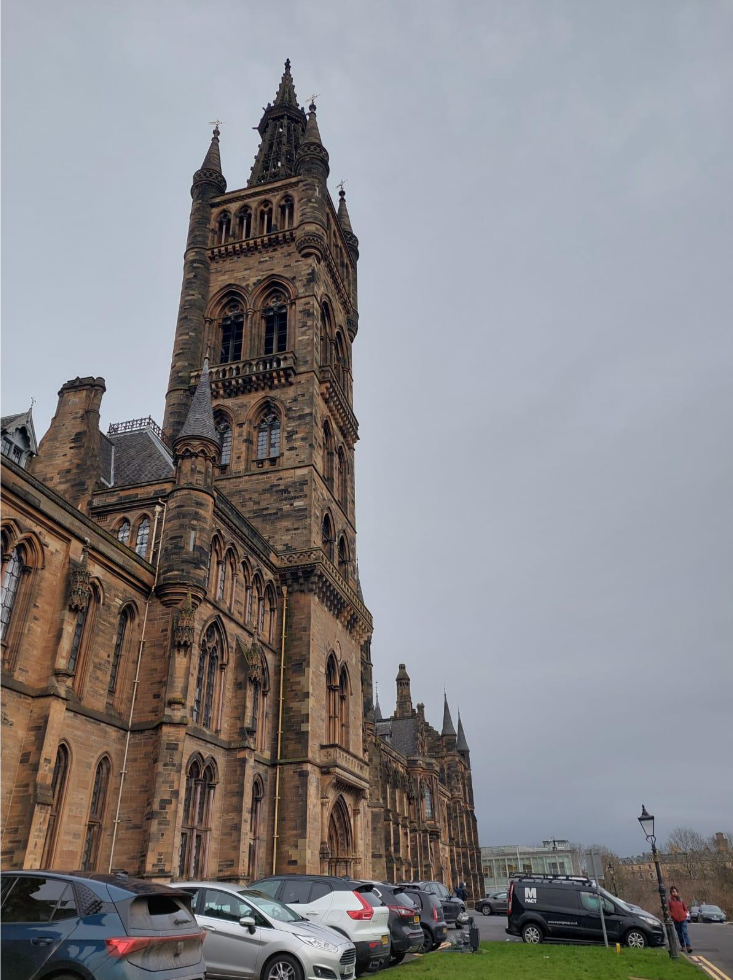
University of Glasgow, 2026. Photo: personal archive of Maria
During her academic mobility, Maria benefits from financial support in the form of a scholarship, which covers her basic expenses during her stay in Scotland. Additionally, the agreement between the universities offered students the possibility to benefit from free accommodation for the entire duration of the mobility. In her opinion, the level of expenses in Great Britain depends largely on the lifestyle chosen by the student. She considers that, in general, life in Scotland is not significantly more expensive than in Ukraine. Some products have similar prices, and others even lower, so the differences are not always very obvious. “If we talk about coffee, this is my sensitive point,” she says smiling. “Here a coffee costs about four pounds, which is several times more than in Ukraine.” Otherwise, however, the price differences are not as significant as one might think. Regarding dormitory payment, the agreement between universities offered students the possibility of free accommodation throughout the period of academic mobility.
A factor that contributed to faster adaptation was the fact that she already had a circle of acquaintances among Ukrainian students, which gave her a sense of familiarity. Also, the university organized a series of activities for international students to help them familiarize themselves with the campus and the university system. “There were very well-organized orientation events. It was explained to us how the university works and various activities were organized where we could meet other students on mobility,” she explains.
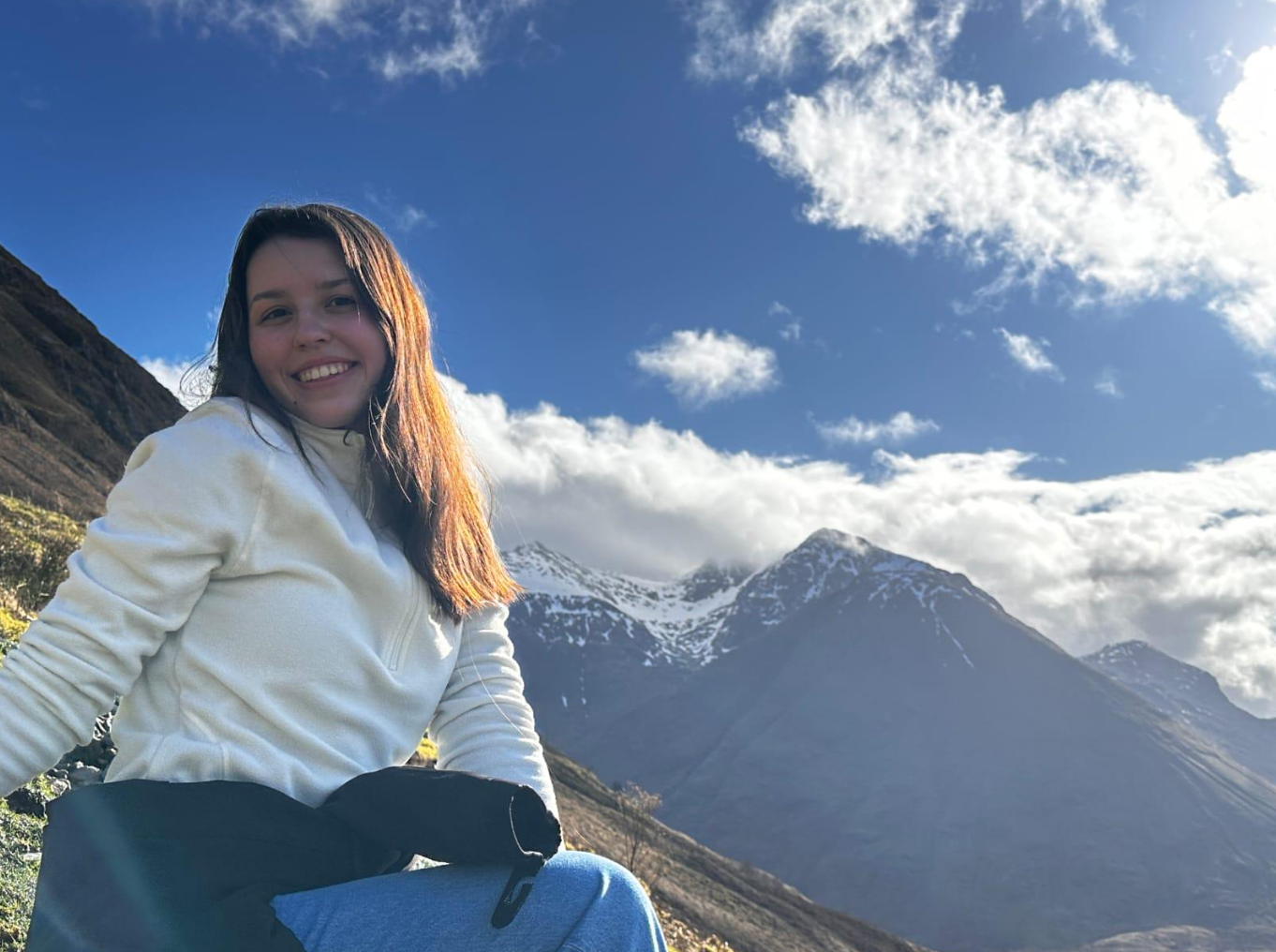
Maria in Scotland, during a trip. Photo: personal archive.
Despite being in a safe environment, the war in Ukraine remains a constant concern for Maria. She follows the news daily and tries to stay in contact with family and friends left at home. “We have a two-hour difference and, many times, when the bombings start in Kyiv, I am still not sleeping. I write to my friends and ask them if they are okay,” she tells. This situation creates a permanent feeling of anxiety. Even in Scotland, certain sounds can scare her. Maria says that sometimes loud noises remind her of sirens or the anti-missile system. “When I hear a loud sound or a plane, I automatically react. For me it is still unusual to see that planes can fly normally here,” she explains. At the same time, she says she lives with a feeling of contrast between the safety of life in Scotland and the reality that those close to her in Ukraine are going through. “It’s hard to realize that you have light, water, and normal living conditions, and at the same time your friends are sitting at home in the cold and trying to charge their phones from an external battery,” she says. These experiences sometimes create a feeling of helplessness. Distance does not reduce the emotions related to the war, and the fact that she is far from those close to her can accentuate this state.
Maria does not limit herself only to academic life. She participated in a solidarity event for Ukraine held on February 24, to mark the beginning of Russia’s full-scale invasion of Ukraine. “On February 24 I participated in a peaceful action that marked the beginning of the full-scale war. At the end, a representative of the local authorities expressed sincere support for Ukrainians. A lot of people came, even local students who were not Ukrainian; they came with placards to support us. For me it was a pleasant discovery,” Maria tells.
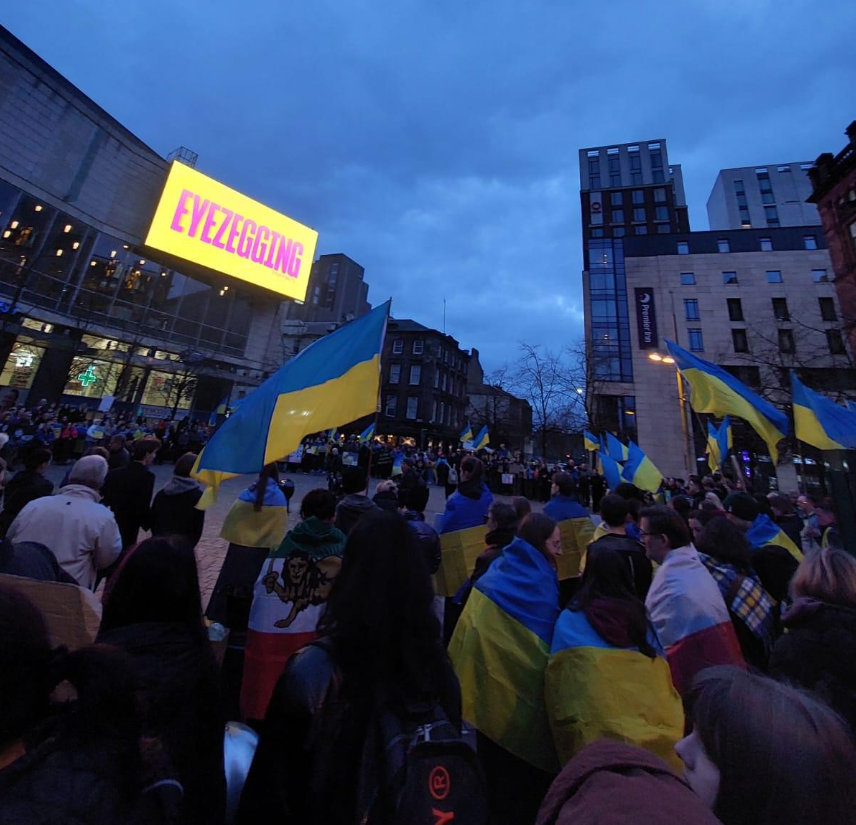
Event dedicated to supporting Ukraine, Glasgow, Great Britain, February 24, 2026. Photo: personal archive of Maria Shtelmakh.
Academic mobility, however, has a limited duration. According to the program conditions, Maria must return to Ukraine to finalize her studies. However, she admits that if there were a possibility to stay longer, she would take this option into account. “If we talk about desire, I feel comfortable here. I like the system of studies. So, if the same financial conditions existed, I would like to stay,” she says. For now, this experience remains an important stage in her academic formation and an opportunity to get to know another university culture, which she hopes to capitalize on after returning home.
Germany: studies and work as part of a system
After the war started, many Ukrainian students chose different countries to continue their studies, depending on personal circumstances, possibilities, and academic objectives. Among the Ukrainians who chose Germany is Elvira Asarzhy, who in 2022, at 18, moved to Nienburg, a city in the west of the country. She had chosen this destination because she had relatives who could help her with accommodation and settlement. In Ukraine, Elvira studied finance and banking at the University of Economics in Odesa, and after moving to Germany she wanted to continue in the same direction. However, the admission process to German universities proved to be much more complicated than she expected. To apply, not only a C1 level of German was necessary, but also additional documents and very good academic results. “You must have excellent grades because there is high competition not only between foreign students, but also between Germans. Also, many documents are required, and student life and university studies are quite expensive,” she explained in the interview.
Under these conditions, the Ausbildung system, which combines studies with practical work, became a more realistic and accessible alternative for Elvira. Within this system, students are employed directly by companies, which offer them both professional experience and a salary, a model that Ukraine does not have. “With us there is no such thing – the concept of a company that employs you and trains you for free, and at the end you receive both a salary and a certificate that allows you to work in the field,” she tells. Besides the advantage of gaining experience and a salary, the Ausbildung program also offers the opportunity to combine work with theoretical learning in a structured way. Elvira tells that exams consist of three parts: the first covers themes studied in that year, the second continues with other subjects and influences the last part, which is oral – a 30-minute dialogue, simulating real situations from the bank. This practical approach differs significantly from the traditional university system in Ukraine, where the emphasis is more on theory and evaluation through standardized grades.
In Germany, grades go from 1 to 6, where 1 is the best, and every exam also includes a percentage component; for example, a project or an essay can represent 20% of the final grade. “It is a combination between theory and practice. It is more complicated than it seems, but also more useful for the career,” she says. Support received from the state, in the form of help for Ukrainians (Bürgergeld), gave her the necessary security to continue her studies and integration. Elvira benefited from this support for two and a half years, during which time she learned the language from zero and adapted in Germany. After she started the Ausbildung, her main income became the salary received from the bank, which covers daily expenses. “The money from work helps me pay the rent, buy food, and cover the costs of daily life. It’s not like a full salary, because I work only 20 hours a week, but it’s enough… for the most part,” says Elvira. The salary level depends on the company and the chosen specialization, and the bank where she works offers a good income compared to other companies.
Life in Germany is, however, more expensive than she expected. Prices have risen a lot in recent years, and rent, food, and medical insurance have become quite expensive. She specifies that many foreign students complain that the money is not enough. The experience of language courses was for Elvira also an encounter with cultural diversity in Germany. Most of her colleagues were, like her, foreigners from different countries. “All those who learned German together with me were from other countries – from Turkey, Syria, Iran, the Republic of Moldova, or Ukraine. It was interesting because we could communicate among ourselves in several languages, but also in German,” she tells. According to Elvira, the professors were always open and eager to help, trying to support students as much as possible, including in preparing for exams.
Regarding the attitude of the locals, her experience was mostly positive. “I personally almost did not face discrimination,” she says. However, she admits she has heard about such cases—situations where other foreigners received negative comments because of their nationality or language—and that she did not expect this, as Germany is a very developed Western country.

From the personal archive of Elvira Asarzhy, 2025
Away from home, Elvira says she misses her family and friends most. “First of all, I miss mom and dad, because I came here without them. I miss their support and the fact that they are not next to me,” she confesses. The war in Ukraine remains a constant concern, which strongly affects her psychological state. “It is very hard from a moral point of view. You live thousands of kilometers away, but your family is there and you read the news every day about what is happening in your country and your city,” she explains. According to her, locals in Germany speak openly about this subject and try to be solidary. “Germans ask me quite often about the war. They follow the news and want to understand what is happening. Usually they are very understanding and say they are ready to help.”
Despite the difficulties related to adaptation and distance from home, Elvira says she never had a moment in which she wanted to give up and return. “I liked every day I lived here. I liked learning the language, starting to work, and meeting new people,” she tells in the interview. These experiences motivated her to continue building her future in Germany. “I like the country where I live now very much and I want to continue here to work, to study, and to build my life.” At the end, she mentioned that she would have liked to hear these words before departure: to never give up, to not fear the problems that may appear and to not stop, because only that way can she obtain what she wants.
This article was produced by Karaheorhi Natalia, 1st year Master, Thematic Journalism
- #AcademicMobility
- #AusbildungGermany
- #CulturalAdaptation
- #EuropeanUniversities
- #FutureAspirations
- #HigherEducation
- #InternationalEducation
- #LifeAbroad
- #StudentExchange
- #StudentLife
- #StudentStories
- #StudyAbroad
- #UkrainianStudents
- #UnitedKingdom
- #UniversityOfBucharest
- #UniversityOfGlasgow
- #YouthPotential
- GenZ
- Germany
- PulseZ
- resilience
- romania
Written by
©2026 PulseZ. Design & developed by Matrix Internet Opens in a new tab