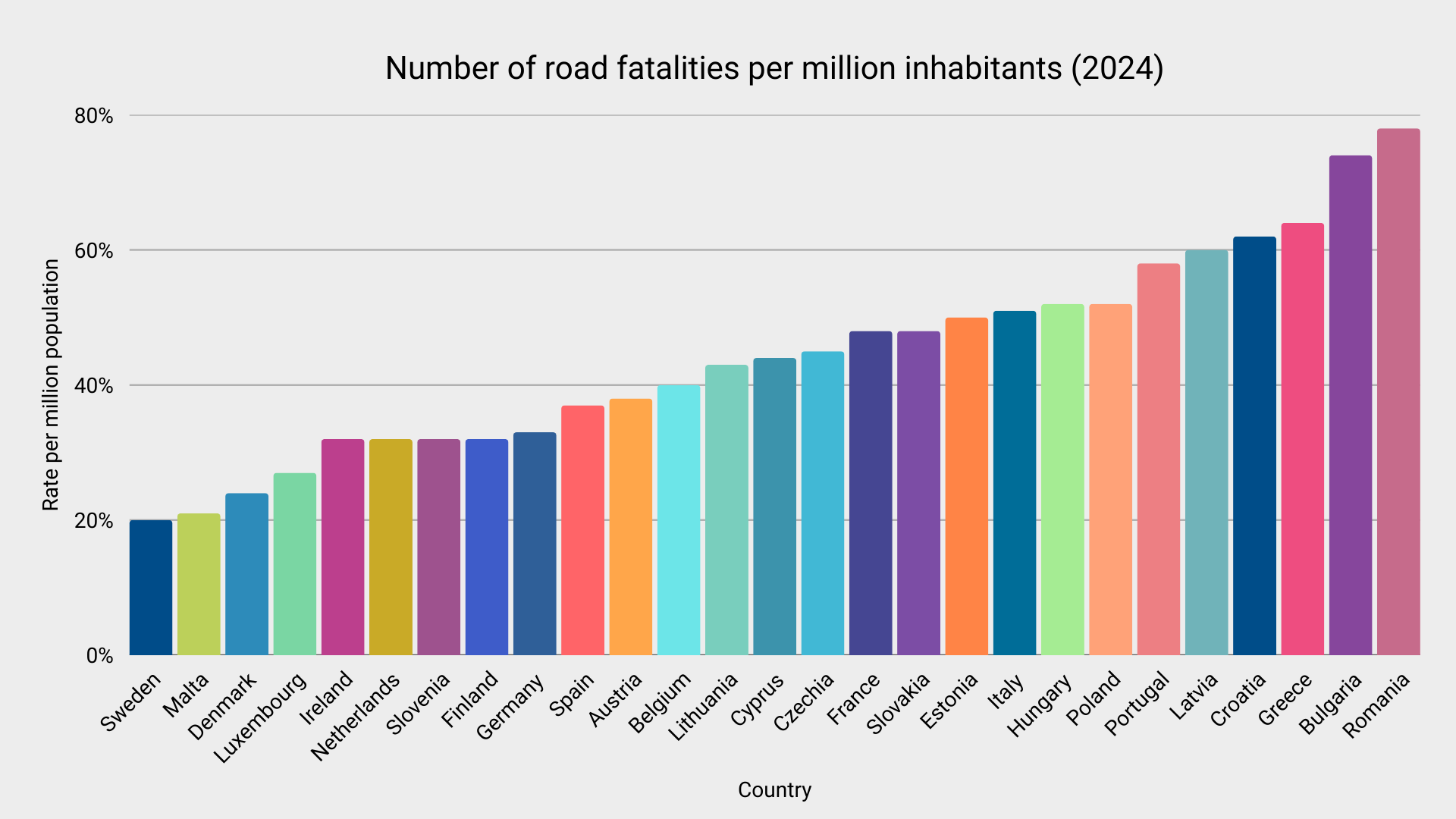
While the numbers show modest progress, the European Commission warns that the EU’s goals remain extremely ambitious: cutting road deaths by half by 2030 and reaching zero fatalities by 2050.
With 45 deaths per million inhabitants, the EU remains one of the safest regions in the world. But progress is uneven. Lithuania achieved a striking 22% reduction in fatalities, followed by Latvia (–19%) and Austria (–13%), largely thanks to targeted safety reforms. By contrast, Estonia (+17%) and Cyprus (+21%) recorded increases—though from relatively small baseline numbers.
A closer look at Member States reveals a persistent divide. Sweden (20 deaths per million) and Denmark (24) remain at the top for road safety, while Romania (78) and Bulgaria (74) lag far behind. Poland, despite a 35% improvement since 2019, still reports 52 deaths per million—above the EU average.
Experts stress that infrastructure alone is not enough. Social factors—road safety education, driving culture, and strong enforcement—are equally important. Data from the CARE database confirms that technology can help, but lasting change depends on people’s behaviour.
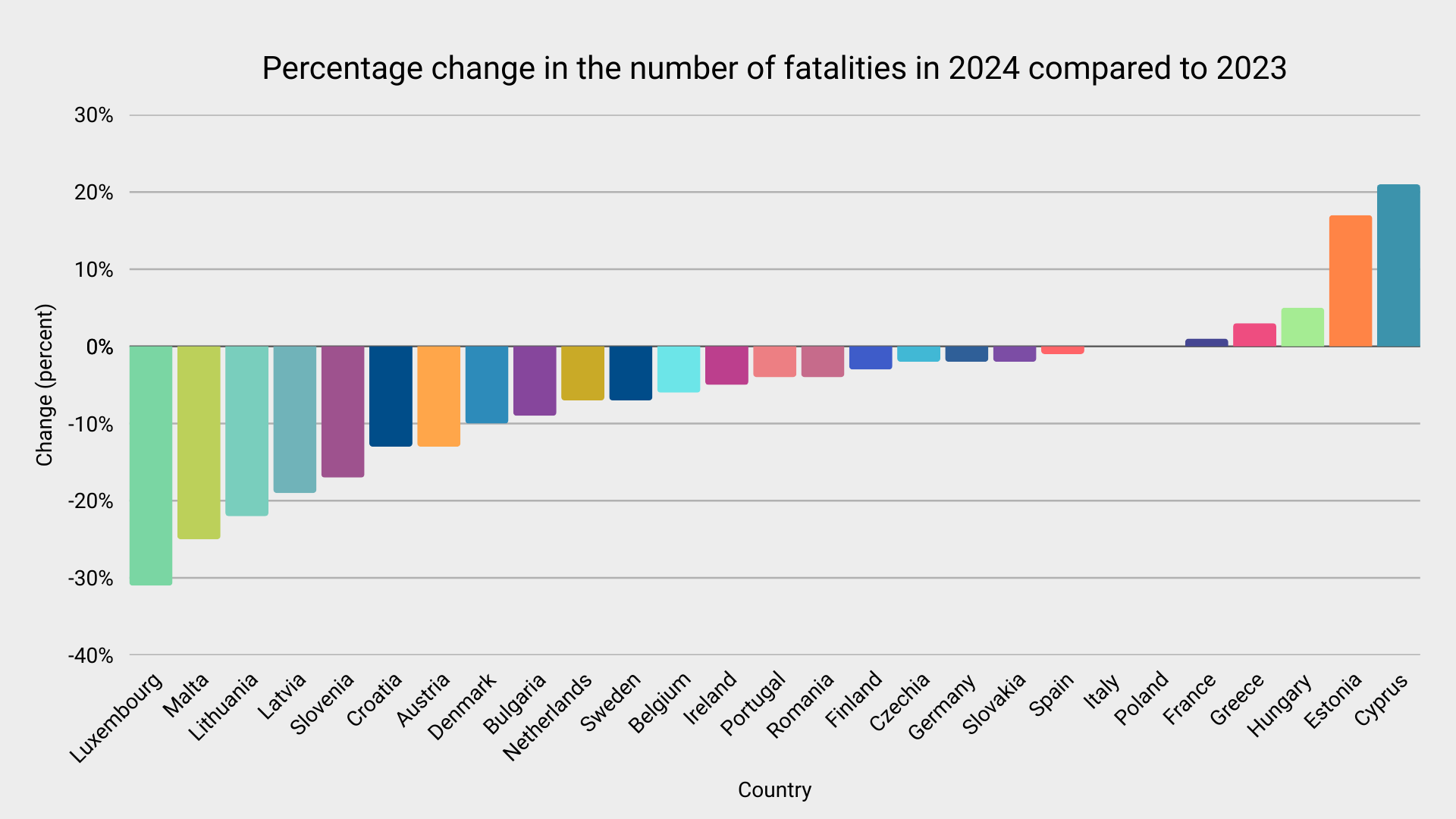
Own work based on: https://transport.ec.europa.eu/news-events/news/road-safety-statistics-2024-progress-continues-amid-persistent-challenges-2025-10-17_en