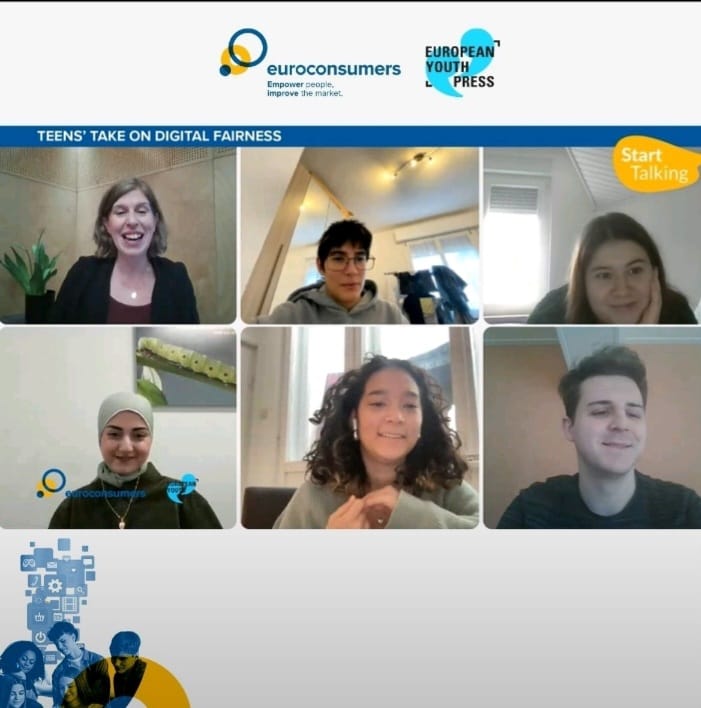
Euroconsumers, a European consumer organization dedicated to protecting the rights and interests of consumers, recently hosted a webinar on digital fairness that brought together teenagers from across Europe. The discussion focused on a space that shapes much of our daily lives: the internet we grew up with and are now expected to navigate responsibly.
For the young people involved, the webinar was more than just a panel discussion. It was an opportunity to challenge assumptions, question existing systems, and highlight the realities that teenagers experience online. As a participant in the panel, I had the chance to share several key perspectives on digital fairness and the role young people play in shaping a safer and more transparent digital environment.
Influencers: Selling Products or Selling an Identity?
One of the biggest points raised was the role of influencers.
Today, they don’t just sell products, they sell identities. Perfect lives, perfect bodies, perfect routines. This curated world hits vulnerable teenagers the hardest, pushing some to extreme lengths just to imitate what they see on a screen. The argument was clear: if influencers are shaping teen identity, then their content needs stronger regulation and accountability.
“Teens Spend Too Much Time Online” — A Lazy Assumption
Another debate revolved around whether teens are “always online.” My take? It’s too simplistic. The data never tells the full story. Technology is part of school life, part of work, part of socialising, it’s not just “screen time.” It’s daily life. Blaming teenagers ignores the reality that society itself is digital.
Addictive Design & Anti-Social Behaviour
A point raised by another panelist focused on addictive design: apps engineered to keep people scrolling, notifications designed to create dependency, and features that subtly push anti-social behaviour. It sparked an important conversation about whether tech companies prioritize engagement over well-being, and how much of that burden falls on young people.
Should Social Media Be Restricted for Teens?
Elodie brought up how 13-year-olds look older than their age, partly due to social media pressure and online performance culture.
My take?
Young people will always find a way to use social media. Restricting access alone won’t solve anything.
What we actually need is:
– media literacy in schools,
– education about online risks,
– awareness of how content manipulates us.
Restrictions may be a start, but not the only solution.
Data: Collected, Tracked & Used Against Us
One major concern raised: There are not enough laws protecting young people’s data. Corporations collect everything, what we watch, what we click, how long we pause on a post. This data is then used to influence behaviour, target insecurities, and shape decisions without us realizing. The message was clear: Young people should know where their data is going, and they deserve laws that actually safeguard them.
AI in Our Lives — Harm or Help?
I shared how I personally use AI: as a tool, not a replacement.
AI helps me draft, refine, organize, and automate, but I stay in charge of my creativity. It’s an assistant, not the author.
Then came the big question:
Will AI steal our jobs?
Just like the internet created new roles (hello data analysts), AI will create new ones too. The problem isn’t AI… it’s whether we adapt and learn how to use it.
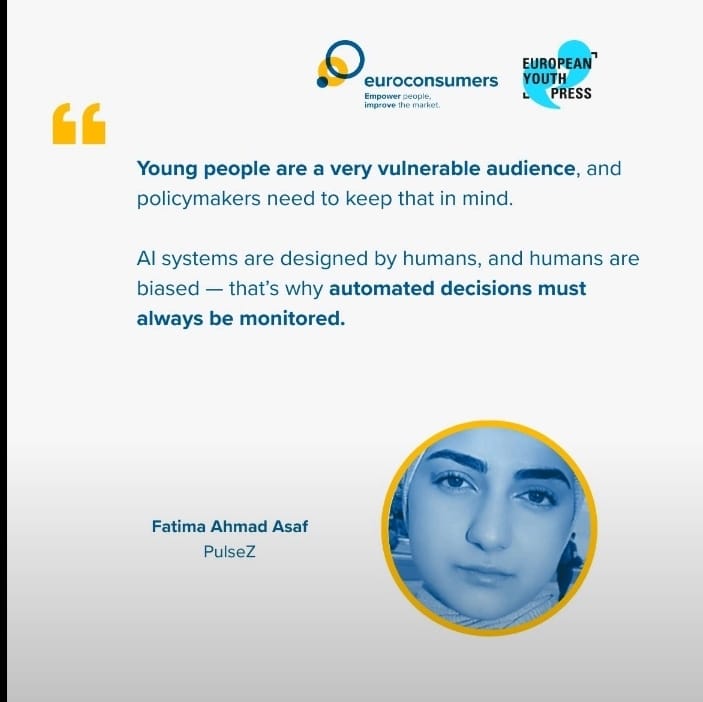
I also pointed out AI bias: humans are biased, and any machine they create and program will inherit that bias. That’s why diverse perspectives are crucial in shaping AI responsibly.
My Experience on the Panel
The webinar was more than a discussion, it was a dynamic exchange of perspectives.
I listened, learned, challenged ideas, and strengthened my own public speaking skills.
It pushed me to reflect on questions I had never deeply considered before:
What is digital fairness?
Who protects young people online?
And how can we create the internet we actually deserve?
Final Thoughts
Being part of this panel reminded me of something powerful: Teens aren’t passive users of digital spaces, we understand them better than anyone. And when given the platform, we’re more than ready to speak up. My message to policy makers was that they must put citizens—and especially young people, at the heart of the discussion. Youth voices matter, and we’re keeping our doors open.