


Mark Petrovic, known by the stage name Thompson, is the biggest musician in the world that many people will have never heard of. A deeply controversial figure, the Croatian artist holds the record for the largest amount of concert tickets ever sold when he played the Zagreb Hippodrome in July 2025, with an astonishing 485,430 fans paying to attend.
However, his rise from popular musician to record-breaking mega-star has left a marked concern in the Balkan region, especially because of his tendency to use fascist symbols and slogans often linked to former Nazi collaborators, the Ustasha. One of his biggest hits begins with an Ustasha chant, “For the homeland — Ready!,” while his fans have been seen displaying support and imagery of the former fascist organisation that ran Croatia between 1941 and 1945 after the invasion of Yugoslavia by the Nazis.
Croatia’s Constitutional Court has ruled that the phrase “is an Ustasha salute of the Independent State of Croatia [which is] not in accordance with the Constitution of the Republic of Croatia”.
Thompson, who adopted the nickname due to his use of a Thompson submachine gun in the Croatian War of Independence in the 1990s, has embraced his role as a far-right figure, using the slogan as a call and response with the crowd. Rehabilitating the image and iconography of the country’s genocidal WWII regime is alarming for a number of reasons, not only because of the obvious emboldening of revisionist far-right forces.
The behaviour has led to a cultural and political shift in Croatia, which has largely been a model member of the EU since it joined in 2013. WWII has a mixed legacy in Croatia, both representing a time of horrific suffering and unspeakable crimes and a time when Croatia was at its territorial peak with the Ustasha controlling much of Bosnia-Herzegovina and parts of Serbia as part of a Nazi-backed ‘Greater Croatia’.
While attempts to revise Croatian history have horrified many in the country, Thompson’s popularity has meant old ultra-nationalist sentiments have bled into the mainstream, including Croatian politics.
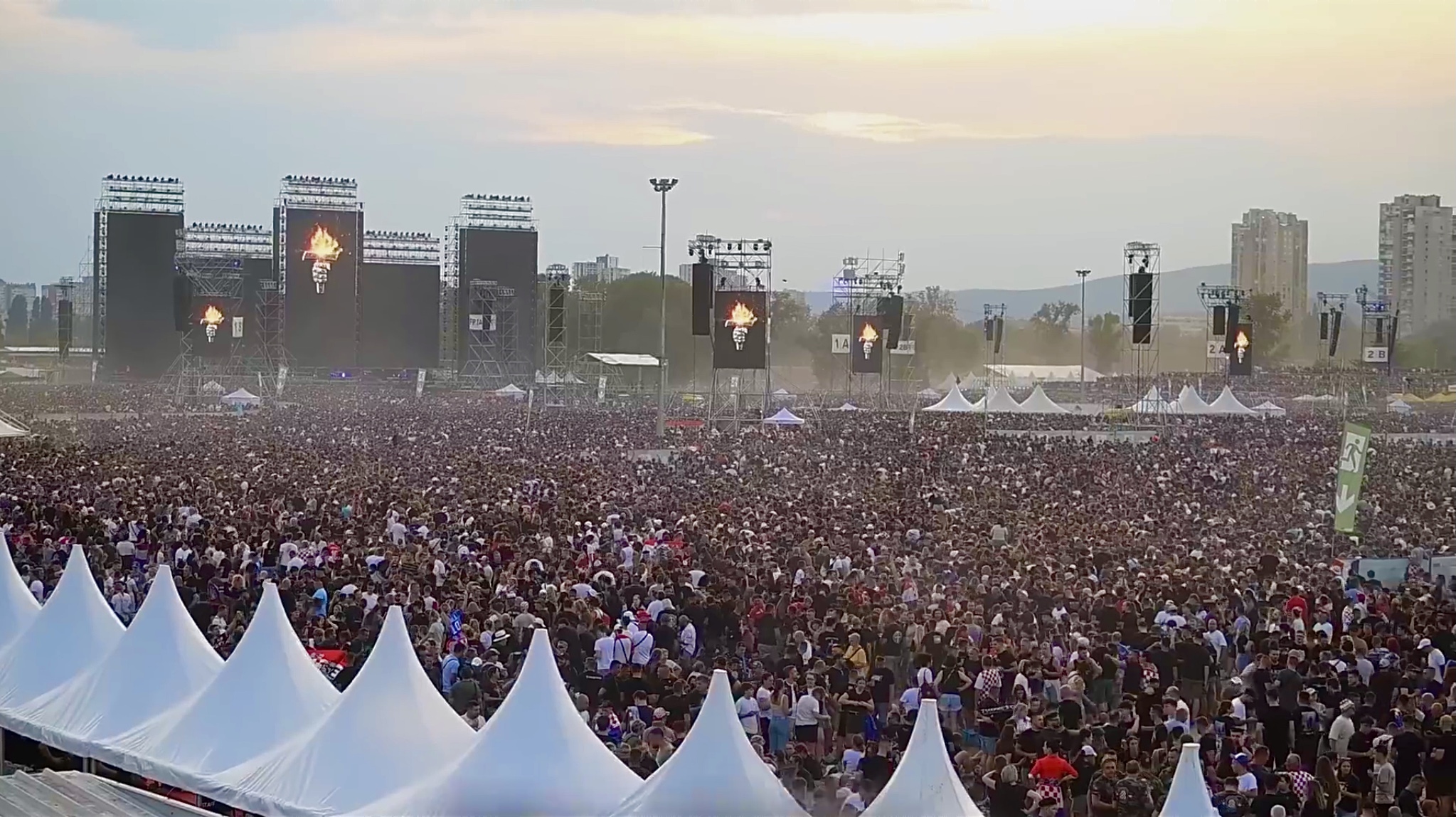
Hundreds of thousands were though to have attended the gig. Credit: Wiki Commons
Tena Banjeglav of Documenta – Centre for Dealing with the Past, an organisation focusing on reconciliation through factual history, commented on the impact of the July gig in August. “This has opened Pandora’s box,” she told the BBC, “You’ve now got politicians in parliament screaming ‘Za dom, spremni’. On the streets, kids are singing not only that song, but other songs Thompson used to sing, which glorify mass crimes in World War Two.”
“The government is creating an atmosphere when this is a positive thing. It is creating a wave of nationalism which could explode into physical violence.”
Indeed, even the country’s Prime Minister Andrej Plenkovic has been accused of playing down Thompson’s rhetoric, describing it as “part of Thompson’s repertoire” and posing for a photo with the singer the day before the Zagreb gig.
What followed was exactly what Banjeglav feared. Reports of violent acts by Croatian nationalists against the country’s Serb minority population have become more brazen, with a number of attempts to shut down Serb cultural events happening in November.
This included reports of black-clad members of the Torcida Split football fan group violently disrupting a folklore and theatre evening in Split, which was part of the wider Days of Serbian Culture festival. Something similar happened a few days later when masked individuals tried to prevent the opening of an exhibition at the Serbian Cultural Centre. In both cases, the slogan “For the homeland — Ready!” could be heard being chanted by the perpetrators.
Growing concerns around rising fascist sentiment in Croatia have led to a backlash by those unhappy with the direction the country is going in. Several thousand people held rallies in four cities across Croatia, including its capital Zagreb, at the end of last month to protest acts by the far-right and historical revisionism.
While the battle for the political soul of the country continues to rage, Thompson is planning another gig in Zagreb in late December, sparking more concern and controversy within both Croatian society and its political establishment.