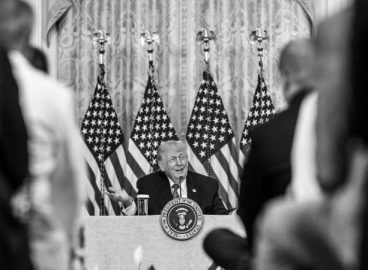
“No One Is Above the Law”
The danger to democracy does not begin with dictatorship — it begins when the law becomes negotiable. From undermining Congress to dismissing elections and due process, this article explores how constitutional boundaries in the United States have been tested by the US President, and why civic engagement remains the last attempt of defense.
How do young people in Slovakia use social networks?
Social networks are an integral part of young people's lives. According to surveys, they spend 3-5 hours on them daily. The results of the first Slovak survey show which networks teenagers in Slovakia use most often.

Podcast – Social Media, where’s the truth ?
This podcast discusses social media, its reliability today, and its potential future significance in the media world. Will it be our main source of information? Can we really trust it? Who should we believe? These are the questions addressed in this podcast, through interviews with young people aged 20 to 25.
Why conspiracies never feel new
Umberto Eco’s The Prague Cemetery is a deliberately difficult novel. It is dense, repetitive, often uncomfortable, and at times actively unpleasant. This is not a failure of craft. It is the core of Eco’s argument.

Russian disinformation: Are propagandists ‘grooming’ ChatGPT and Gemini?
In recent years, a new form of Russian disinformation has begun to take shape. Instead of targeting users directly, researchers have found that Russian news networks have started to flood...

Who writes the news and how to know what is trustworthy – an interview with Peter Palovič
In the next episode of the PulseZ podcast I spoke with the editor-in-chief of the news department of Rádio Expres, Peter Palovič.

“Trust without believing”: How Azerbaijani youth consume media they don’t trust
“I don’t trust the media.” Among Azerbaijani youth, this sentence is not a provocation or a political statement.
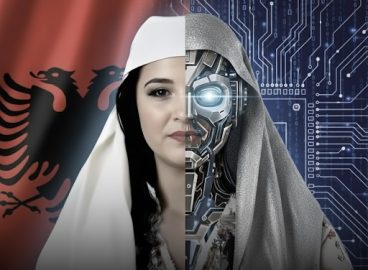
Diella, Albania’s AI Minister, Can an Algorithm Fight Corruption
Albania has introduced an AI ‘minister’ to oversee public procurement, promising a future free of corruption. But can algorithms deliver fairness and accountability, or do they risk replacing democratic choices with opaque code.