


The hills that surround Sarajevo are places torn by the dichotomy of history and geography, of a past of war and a present of tranquillity. To stand atop those hills is to be both greeted with the beauty of the sprawling city below and reminded of the horror that befell three decades past.
Reaching the summit of Trebević, a ridgeline demarcates the city boundaries and the border of a formerly impassable frontline, complete with mines, gunner nests, and most poignantly, sniper outcrops.
It is hard to escape a feeling of sorrow as the vista opens out in front of you, as you realise with dread that this is the very view that the Bosnian Serb army had as they besieged the capital for an excruciating 1,425 days, as they shelled buildings and sniped at civilians.
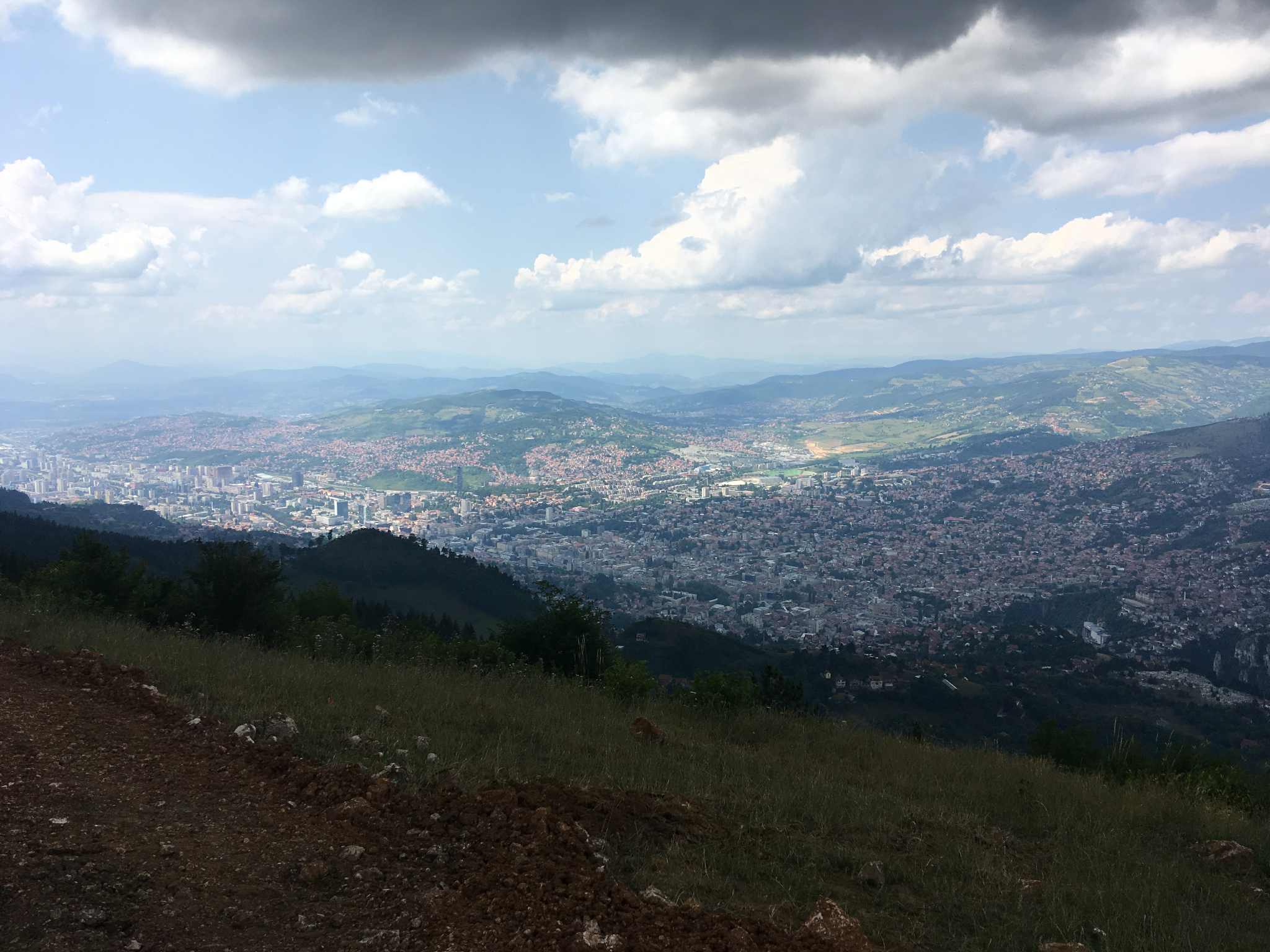
It is hard not to have mixed feelings when standing on the hills surrounding Bosnia’s capital. Credit: Rory Bennett
Worst still, is to realise that the length of the siege allowed for not just the Serb forces the liberty of open sight lanes and advantageous artillery positions but the ability to invite sympathetic foreigners to partake in the killing.
Many might have seen the infamous video of Russian poet and politician Eduard Limonov praising war criminal Radovan Karadžić, before firing a heavy machine gun into the city from the very spot that tourists now stand to take in the view.
Some might have heard about what academics such as Jordan Kiper refer to as ‘weekend warriors’, those Serbians or Bosnian Serbs who would work a normal job during the week and then flock to the Sarajevan hills in their spare time to take pot shots at pedestrians; but rarely has the topic of so-called ‘sniper safaris’ been discussed, often because of a lack of evidence.
In 2022, “Sarajevo Safari”, a documentary film by Slovenian director Miran Zupanic alleged that ‘sniper tourism’ committed by people from the US, Russia, and Italy had taken place, with visitors paying to ‘hunt’ civilians.
In November, journalist Ezio Gavazzeni made international headlines after he filed a complaint with a Milan public prosecutor, accusing “very wealthy people” from Italy of partaking in “manhunts” from the safety of Serb military posts, many miles away from their victims.
These victims could vary, with the rich individuals allegedly paying “to be able to kill defenceless civilians”, with different rates charged for men, women, and children, according to the BBC.
The four-year siege of Sarajevo left over 11,000 people dead, with many others left in terror due to prolific amounts of sniping. The practice was so common that inhabitants began hanging large sheets of tarpaulin across exposed streets to block the view of shooters, giving birth to the term ‘sniper alley’.
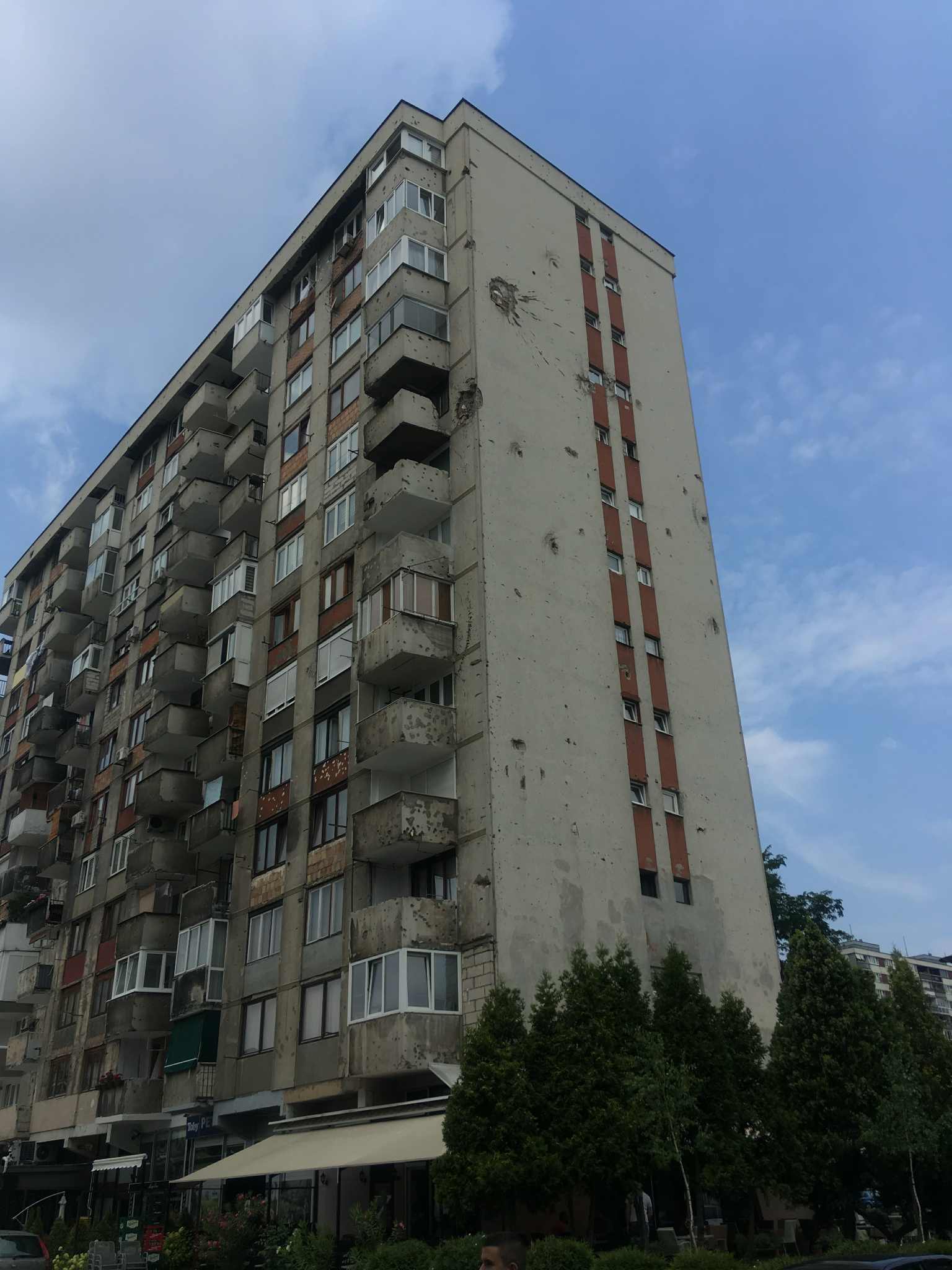
Parts of Sarajevo still bear the marks of the war. Credit: Rory Bennett
While much of the case is yet to be proven in court, the evidence amassed by Gavazzeni includes the testimony of a Bosnian military intelligence officer and sheds light on the process of how these ‘safaris’ might have taken place.
Participants were believed to have travelled from northern Italy to the border city of Trieste before being transported to Bosnians besieged capital.
Speaking to Italy’s La Repubblica newspaper, Gavazzeni alleges that “at least a hundred” Italians took part, paying up to €100,000 in modern money.
The scheme was alleged to have run from late 1993 until early 1994, when Italy’s military intelligence agency, Sismi, was informed by Bosnian intelligence of what was happening and stopped more trips.
Gavazzeni handed a 17-page file to Milanese prosecutors in February, said to include a report by former Sarajevo mayor Benjamina Karic.
Early this month, prosecutors decided to investigate the claims, which, if proven, would carry a murder charge.
Serbia’s president, Aleksandar Vucic, has been accused by Croatian journalist Domagoj Margetic of being involved in “sniper tourism” during the siege. An accusation he labelled as a “lie” earlier this week.