


Visa-free access, ease of travel, and the right to work all factor into these rankings with EU passports, which enable a holder to enter the Schengen area, work or study without a visa, and have no time restrictions on stays in other European nations, often meaning they sit near the top.
However, there is one peculiar type of passport that bucks this trend, a passport issued in the Baltic region but without any of the benefits of an EU ID. The välismaalase pass issued by Estonia in dower grey colour and the nepilsona pase issued by Latvia in a cheerier violet hue are what is known as Alien passports, and they only exist because of a very particular historical context that helps to explain their rather bizarre existence.
The Alien Passport is the two countries’ shaky legal solution to a minority group that does not conform to standards set by their governments in the post-Soviet period. Although slightly different in how the rules were enforced and what standards needed to be met, both ended up with a chunk of their populations ineligible for citizenship in 1991due to them often being defunct Soviet citizens who had moved there during the Baltic’s time as part of the USSR.
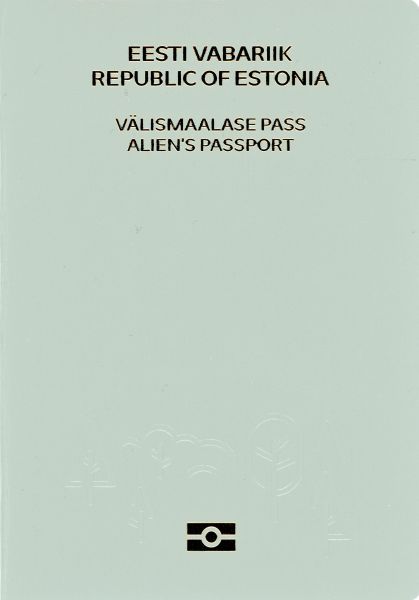
The grey passport of the Estonian Aliens. Credit: Eesti valitsus (Wiki Commons)
For example, in Estonia, the government granted citizenship to people who could prove they had resided in the country before its annexation by the Soviet Union in 1940, as well as to their descendants.
However, there were a decent number of people who did not have evidence to prove they resided in the country before 1940 or had arrived after 1940. These people could still claim Estonian citizenship if they could prove a knowledge of the country’s history and proficiency in the Estonian language. Roughly 125,000, mostly Russian speakers, either refused to take the tests or failed them.
While some of these people were offered Russian passports, mainly were left effectively stateless, leading to the production of the grey Alien passport. Although obscure and very rare, the passport had around 69,000 holders as of 2021, according to Estonian news site Buller.
While other countries issue Alien passports, with Latvia having a very similar system in place to Estonia, the Baltic states have a much more permanent population of non-citizens compared to other countries that issue Alien passports. A country like Finland, for example, provides passports to those ‘in need’ when they cannot get a passport from their home country. Rather than a temporary or isolated solution to an individual problem, the rules around citizenship in Latvia and Estonia mean that there are endemic ‘stateless’ populations that have potentially lived in the country for multiple generations as soviet citizens.
This has created concerns amongst minority advocacy groups, which found that almost a third of Latvian Russians are given non-citizen/alien status, and thousands of children were born as aliens. In 2020, Latvia passed legislation to improve the situation, automatically granting citizenship to children born in Latvia, even to non-citizen parents.
So, with all that said, what does the Alien passport get you? Where would it sit on the much-contested passport power rankings? Well, unfortunately for holders, it would probably rank very near the bottom.
The vast majority of nations which provide visa-free entry to Estonian citizens do not allow visa-free entry to holders of the Estonian alien’s passport. They cannot enjoy the benefits of the Schengen area, are restricted to 90 days of European travel within a 6-month period and cannot work in the EU without a permit. The same applies to Latvian non-citizens.
One difference between Estonian and Latvian passport holders and their alien counterparts is that alien passport holders have visa-free access to Russia and Belarus.
While the number of Estonian Alien passport holders is dropping year on year, and Latvia is reforming its citizenship rules to ensure the non-citizen status is slowly phased out, the Baltic alien passports remain an odd quirk of post-Soviet Europe.