



Photo by Daniel Kružík: pexels.com
In 2021, Europeans turned to the EU for economic recovery and a framework of solidarity to coordinate knowledge, resources and collective response during and after the pandemic.
Today, they look to it for protection in a much broader sense. As negotiations begin for the 2028–2034 budget, a comparison with public opinion now and before the previous financial framework reveals a transition from crisis-driven expectations of economic protection to a broader demand for security, stability and control in an increasingly uncertain world.
A comparative look at the European public opinions
As the European Union prepares its next long-term budget for 2028–2034, public opinion serves as a revealing snapshot of how citizens understand the world, set priorities and expectations for the European Union.
It is also an opportunity to compare how this understanding and goal-setting has evolved between the two budget cycles.
A broader definition of protection
What emerges clearly as a main point in the European public opinion is that protection is no longer confined to military defence but extends to economic resilience, energy security, digital safety, and the capacity of institutions to respond to overlapping crises. More specifically, the majority of Europeans state that they are ‘highly worried’ about a range of security and safety-related issues, starting with active conflicts and wars near the European Union (72%), terrorism (67%), natural disasters worsened by climate change (66%), cyber-attacks from non-EU countries (66%) and uncontrolled migration flows (65%).
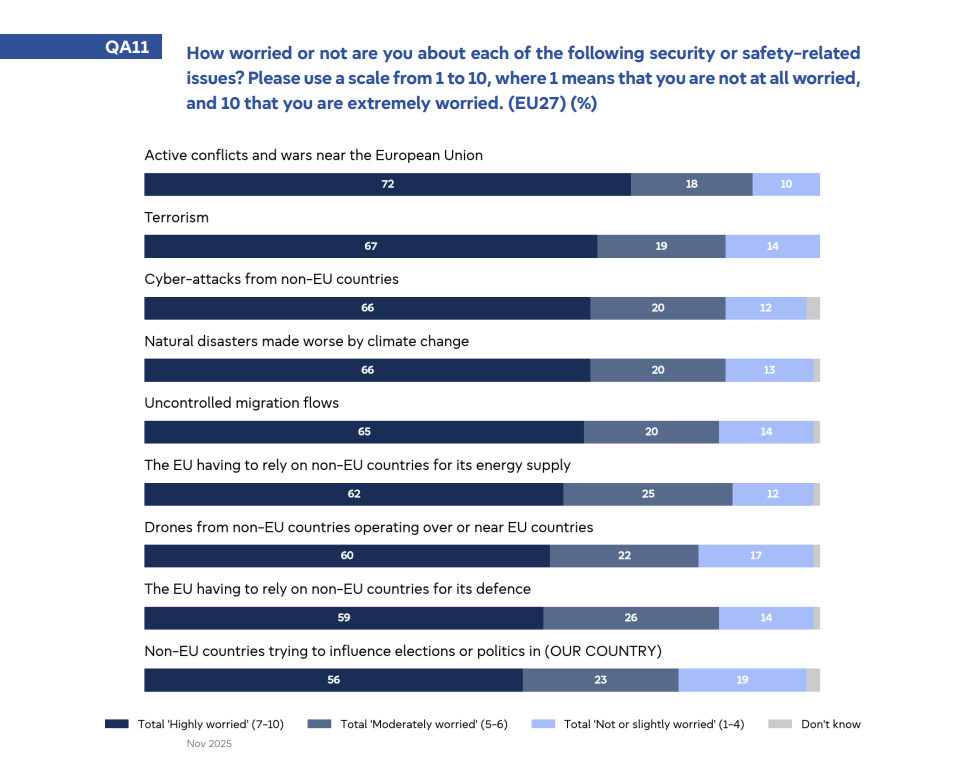
Source: Eurobarometer EP Autumn 2025 survey
The latest 2025 Eurobarometer reflects a Union operating in a markedly different environment than it was five years ago. Where the previous budget cycle was negotiated under the shadow of a global health crisis, today’s discussions happen amid geopolitical instability, economic uncertainty, and a more fragmented information landscape.
Citizens’ priorities have moved accordingly. Security in its broadest sense now dominates public concern. A majority of Europeans want the EU to play a greater role in protecting them against global crises, with affordability, economic competitiveness, and defence and security identified as key areas for action.
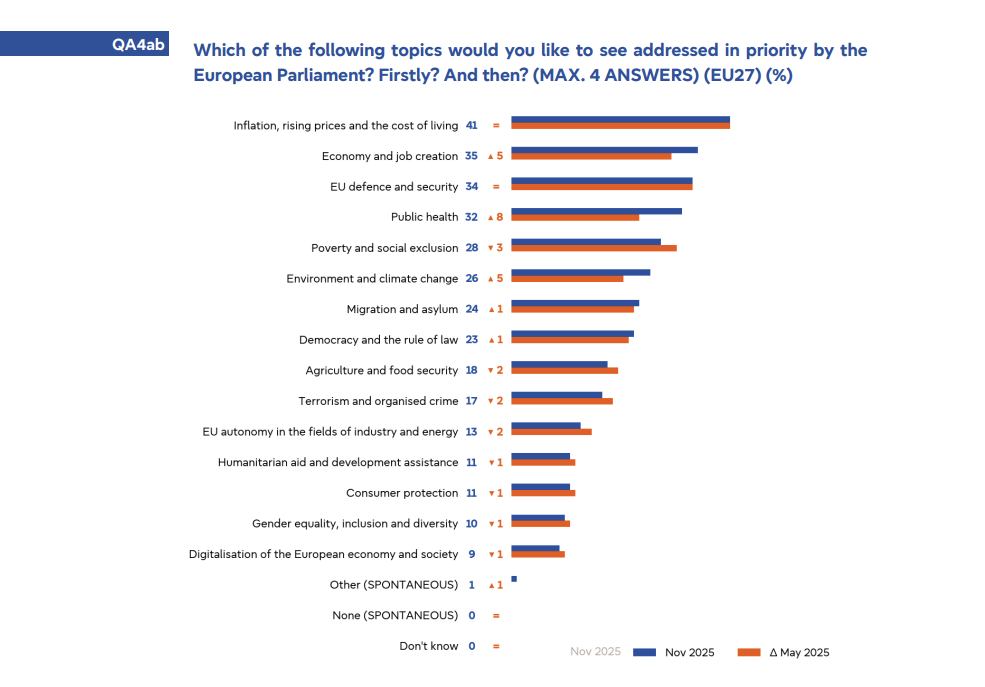
Source: Eurobarometer EP Autumn 2025 survey
The rise of the ‘digital’
At the same time, the nature of perceived threats has expanded. Beyond traditional concerns such as conflict and terrorism, citizens express equally high levels of concern about disinformation (69%), hate speech (68%), fake AI-generated content (68%), and data protection (68%). These figures point to a growing awareness that security is increasingly connected to the digital field and that the EU has a role to play across all these dimensions.
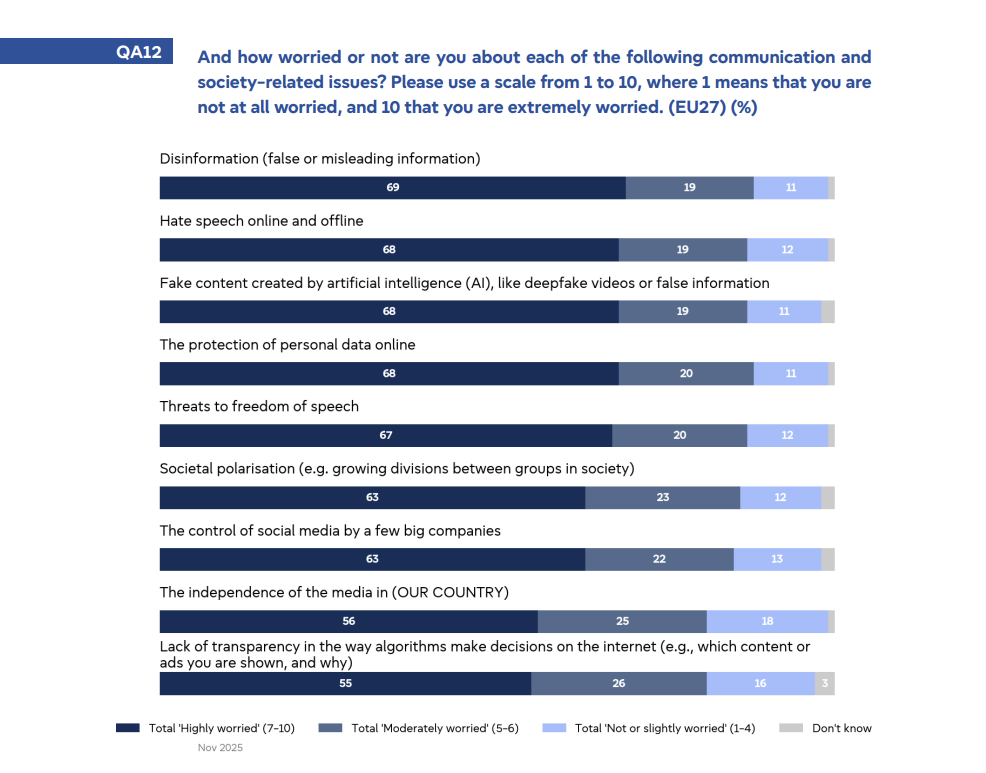
Source: Eurobarometer EP Autumn 2025 survey
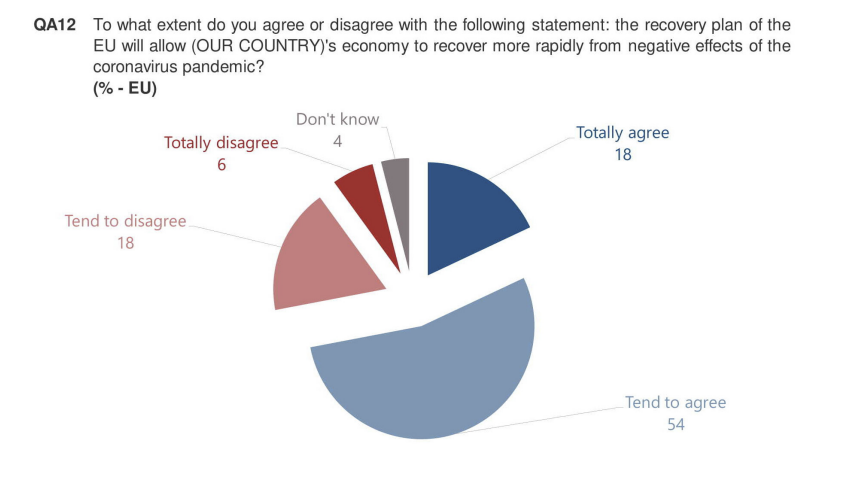
This contrasts sharply with the context of the previous Multiannual Financial Framework (2021–2027). In late 2020, public sentiment was shaped overwhelmingly by the Covid-19 pandemic. Economic anxiety dominated, with 53% of Europeans expecting their national economy to worsen. The EU’s response, particularly the €1.8 trillion recovery plan, was therefore central to public expectations, with 72% believing it would support economic recovery.
Source: Eurobarometer Parlemeter 2020
From solidarity to united European voice
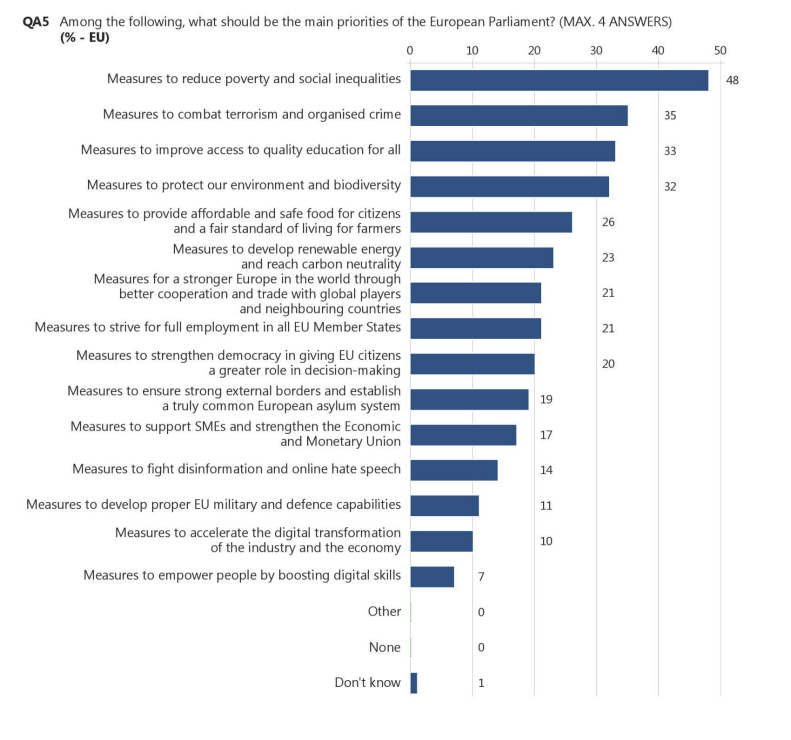
During the pandemic, solidarity and social protection were at the forefront. Citizens identified the fight against poverty and inequality (48%) as the European Parliament’s top priority, while support for EU membership reached historic highs. The crisis reinforced the perception of the EU as an economic stabiliser, a role that strengthened its legitimacy.
Source: Eurobarometer Parlemeter 2020
Today, that economic dimension remains important, but it is no longer sufficient on its own. The variation in priorities reflects a broader transformation: from a Union expected to protect livelihoods during a health emergency to one expected to navigate complex, interconnected risks. The war in Ukraine, instability in neighbouring regions combined with volatile energy markets, such as the war in Iran and the rise in energy prices, and hybrid threats have redefined what citizens see as urgent.
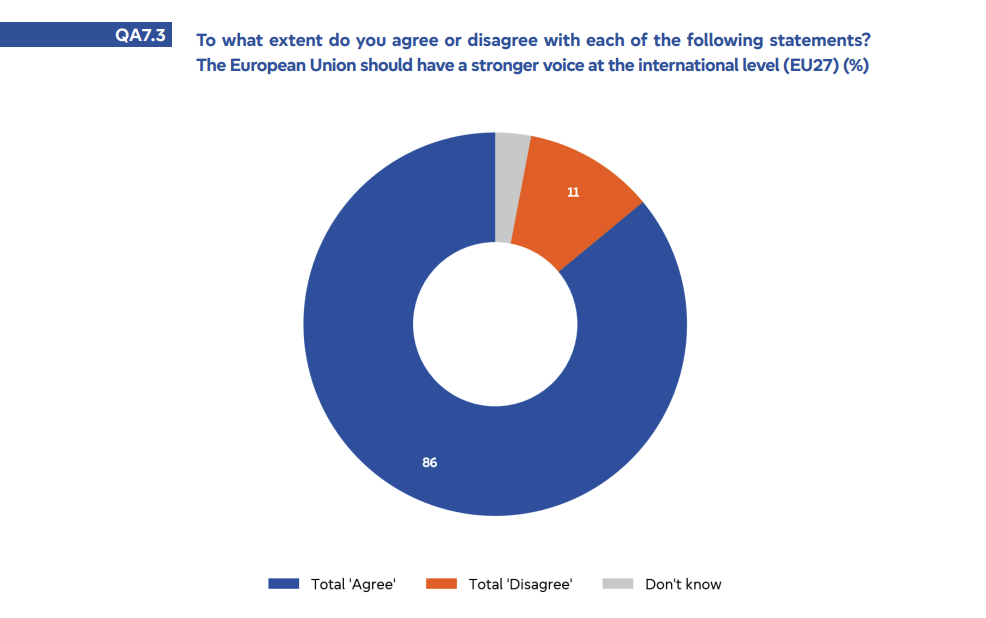
Despite this shift, one element remains consistent across both eurobarometers: a strong call for unity and assertiveness as 89% believe member states should act more cohesively, while 86% want the EU to assert a stronger voice globally.
Simultaneously, trust in the Union remains relatively strong, with 62% viewing membership positively, on the same levels as the historically high pandemic levels of support, and young Europeans in particular continuing to express high levels of support and optimism.
Source: Eurobarometer EP Autumn 2025 survey
What this means for Europe’s next budget
Taken together, the comparison between the two Eurobarometers reveals a shift in the very definition of security. In 2020, protection meant economic recovery and public health. In 2025, it encompasses defence, information integrity, energy stability, and institutional trust.
For policymakers, this evolution presents a clear challenge: aligning the next EU budget with a public that sees the links between crises and places them in a broader equally interconnected landscape, one that demands both immediate action and a framework for long-term resilience.