Just a few days ago, the European Commission announced a new proposal for an EU-wide company framework designed to make it easier to start and scale startups across Europe. The idea is simple: less bureaucracy, faster company registration, and a more startup-friendly environment across all EU countries. The policy aims to encourage innovation, entrepreneurship, and economic growth — and on paper, it sounds like a great step forward.

But the announcement also raises a bigger question: what happens if everyone is encouraged to start a company? If entrepreneurship becomes the goal for everyone, who keeps society running?

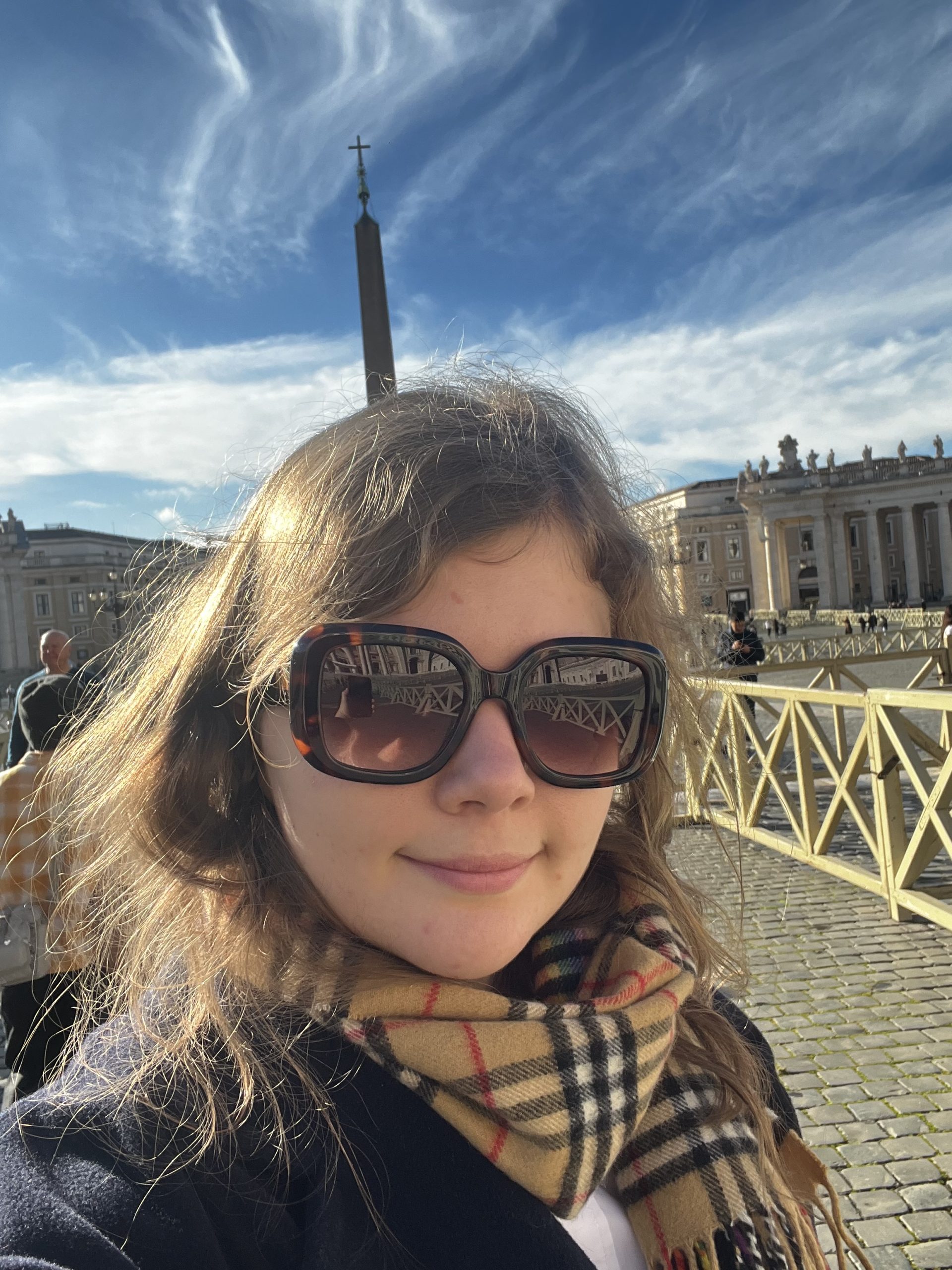
You scroll on your phone and it seems like overnight everyone has become an entrepreneur — selling courses, dropshipping, freelancing, becoming a founder. And they all seem to do it from a beach, a huge house in LA, a mansion, next to a Ferrari, while I’m here, an aerospace engineering student, trying to solve calculus exercises and call it a productive day, waiting for a company to tell me that maybe one day I will make good money.

Somewhere along the way, social media created the feeling within our generation that working for someone else is a failure, while working for yourself is ambition. But can anyone actually be a founder?

Startup culture used to be the tool that drove society forward, propelling innovation, risk-taking, and solving real problems. Companies such as Airbnb, Spotify, Apple, Microsoft, SpaceX, and Google all started as startups, and today they shape how we communicate, work, travel, shop, and access information. Without startups, many of the technologies and services we take for granted would not exist. Entrepreneurship, at its core, was never just about making money — it was about building something useful that didn’t exist before and moving society forward.

I hope that one day I could build a business that solves a real problem in my own field. But I also understand that I first have to research the problem I want to fix before creating the solution.

However, social media has slowly changed the meaning of the word entrepreneurship — from building products and solving problems to building personal brands and chasing views. And this is where the logic of “being independent” starts to fall apart.

Who Keeps Society Running?

The problem is not entrepreneurship itself, but instead, it is the culture where everyone is trying to escape employment and higher education at the same time, to chase the fastest way to make money. Because if everyone wants to be the boss, who is left to do the actual work that keeps society running?

This cultural shift is visible in the data. Surveys show that between 60 and 80% of Gen Z say they want to start their own business or become self-employed at some point, and nearly half say they would prefer self-employment over a traditional job. Independence has become the definition of success. But a society cannot function if everyone wants to be independent at the same time, because nobody is fully self-sustainable.

The pandemic showed us something that we very quickly forgot. When the world stopped, society did not depend on influencers, dropshippers, or people selling online courses about passive income. It depended on healthcare workers, teachers, engineering, construction workers, researchers, logistic workers, and people working in food supply chains. These were the people who kept hospitals running, cities functioning, and supply chains working.

During COVID-19, many countries started using the term “essential workers”. According to OECD reports, roughly 30%  of the workforce was classified as essential — meaning that nearly one third of society was doing work that could not stop, could not go remote, and could not be replaced by a personal brand and a laptop on a beach.

At the same time, many of these essential sectors are now facing worker shortages across Europe. Healthcare, engineering, construction, and technical professions are among the sectors with the largest labor shortages, according to European Commission labor market reports. Thus, jobs that keep society functioning are often the jobs that fewer and fewer people want to do.

This is where the glamorised idea of everyone becoming an entrepreneur falls apart as a society cannot function if everyone wants to be the boss, but no one wants to be the engineer, the nurse, the teacher, the technician, or the builder. A society cannot run solely on founders, consultants, and content creators.

Encouraging entrepreneurship is good policy. But a society also needs people who do not start companies — because without them, there would be no companies to run.

Medical personnel training in intensive care procedures during COVID-19 response operations. Wikimedia Commons – U.S. Marine Corps photo by Staff Sgt. Jordan E. Gilbert (April 24, 2020).

Running Towards Freedom or Away From Employment?

It is also important to understand the reason for this shift to happen. Many young people are not choosing entrepreneurship just because of social media, but because traditional employment no longer looks as stable or as attractive as it did for previous generations.

In many countries, wages have grown very slowly while the cost of living — especially housing — has increased much faster than incomes. Real wages in many OECD countries are still below their pre-2021 levels after inflation. At the same time, around 52% of Gen Z live paycheck to paycheck, and many struggle to cover their monthly expenses. Surveys also show that around 60% of Gen Z believe a traditional 9-to-5 job will not help them reach their financial goals.

In this context, entrepreneurship starts to look less like a trend and more like a reaction to economic pressure and unsteady work conditions.

Young people are not lazy, and they should not be scrutinised for wanting flexibility, independence, and better work-life balance. The problem is not that too many people want freedom. The problem is that we started to believe that entrepreneurship is the only way to achieve it.

The Appeal of Being Your Own Boss

Knowing the uncertainty of traditional 9-to-5 work life, entrepreneurship can be incredibly attractive. It offers independence, the ability to schedule your own time, personal growth, opportunities to develop new skills, and the possibility to work on something you actually care about. Instead of building someone else’s company, you build your own. Instead of waiting for a promotion, you just work more hours of the week and earn more. For many people, entrepreneurship is not just about money — it’s about autonomy, creativity, and the desire to have control over your own time and work.

Entrepreneurship also forces people to learn fast. When you run your own project or business, you are not just doing one job. As entrepreneur Mark Cuban once said, “When you start a business, you have to learn everything — sales, marketing, finance, operations. You don’t get to say ‘that’s not my job.’”In this sense, entrepreneurship can be one of the fastest ways to develop professional skills and gain real-world experience.

It is also not surprising that many young people are attracted to this path. Surveys show that more than 72% of Gen Z value flexibility and independence over traditional career stability, and many say they would prefer to be their own boss rather than work in a corporate hierarchy. Entrepreneurship promises exactly that — control, flexibility, and the feeling that your work directly benefits you.

At its best, entrepreneurship is about building something meaningful, solving problems, and creating opportunities not only for yourself, but eventually for others as well.

However, this is only one part of the story.

The Side of Entrepreneurship No One Posts Online

Entrepreneurship is presented as freedom on social media — freedom from bosses, schedules, and corporate jobs. But what social media doesn’t show is that when you work for yourself, you don’t escape work — you take more of it. You are the boss, but you are also the employee, the accountant, the marketer, the manager, and the person responsible when everything goes wrong.

Financial instability is one of the biggest challenges of entrepreneurship. Reports show that around 90% of startups fail, which means that for most people, entrepreneurship does not end with a beach and a Ferrari, but with debt, stress, and starting over. When you work for a company, the risk is spread across the organization. When you work for yourself, the risk is concentrated entirely on one person — you.

At the same time, around 62% of Gen Z say they are either already running a business or plan to start one, and only about 47% of Gen Z entrepreneurs have a university degree. Some succeed on this path. But for others, this decision means taking a very big risk without a safety net. If the business fails and they have no degree, no formal qualification, and no work experience to fall back on, starting over can be very difficult. Entrepreneurship is not only about what you gain, but also about what you risk losing.

There is also a psychological side to entrepreneurship that social media rarely talks about. Studies show that people who become self-employed report around 24% higher stress levels than those who remain employed, and research shows many entrepreneurs experience burnout, anxiety and constant pressure. When you work for a company, you can leave work at the office. But when you work for yourself, the work follows you everywhere — because the business depends entirely on you.

At the same time, social media has made it easier to make a business from home, while adding another layer of pressure. Many modern businesses do depend on appealing to social media algorithms to get their product seen by as many people as possible. Algorithms decide what people see, what they click on, and ultimately what makes money. This creates a dangerous situation where some entrepreneurs stop building products to solve real problems and start building content to survive the algorithm. In that world, success is no longer measured by how useful your product is, but by how visible you are online.

Entrepreneurship can therefore become another kind of trap. You leave the 9-to-5 to avoid working for a boss, but you end up working for something much more unpredictable — the market, the clients, and even the algorithm.

Employment may give you stability but limit your freedom. Entrepreneurship gives you freedom, while removing your stability.

Conclusion

Entrepreneurship was never the enemy. It is still synonymous with innovation, new ideas, and breakthroughs that move society forward. Many of the companies that shape our world today wouldn’t exist without entrepreneurs who wanted to solve real problems and show their version of what reality could be. Entrepreneurship still could offer the opportunity to be free in your own craft, and it is understandable why so many young people are drawn to it, especially when traditional employment feels unstable, underpaid, and restrictive.

But the problem begins when entrepreneurship stops being idea-driven and starts becoming an expectation. Social media has created a culture where working for someone else is seen as a mediocre life, even classified as failure, while working for yourself is the only possible form of success. In reality, both roles are needed for society to function properly. One cannot exist without the other.

Thus, the goal should not be that everyone starts a company, but to provide every working individual with fair salaries, job opportunities, and meaningful work — whether they work a 9-to-5 or for themselves. Because a successful society is built when people can pursue their passions without the weight of a paycheck.

Maybe success is not about working for yourself, but about doing work that is valuable — no matter who you work for.

Written by

Shape the conversation

Do you have anything to add to this story? Any ideas for interviews or angles we should explore? Let us know if you’d like to write a follow-up, a counterpoint, or share a similar story.