
Tell EU stories, develop your journalism skills, and make your voice heard!

If you’ve been active on social media over the last few years, you might have picked up on the sentiment that your new phone takes worse photos than your previous one. Whether you’re on Instagram or TikTok, you can easily find tutorials on “how to escape bad camera quality on your iphone” or “how to stop the iPhone auto edit.”

However, ‘quality’ is extremely subjective, so what exactly is ticking people off? A common complaint is that the image preview in your camera app doesn’t exactly match the outcome, but there is a good reason for this and in order to explain it, we need to take a step back into history.

What does it mean for a photo to be not only digital but computed?

Traditionally, photographers used film cameras that had little to no digital input. Light would travel through a lens, momentarily hit a film and it would later be developed manually. Digital cameras changed this by using a sensor instead of film. Light similarly hits the sensor, but instead of the image being chemically and permanently burned, a tiny chip calculates how much light each pixel is exposed to and translates those values to a range of numbers that later create an image.

This is to say that digital cameras have always done some form of “computation”. However, the term “computational photography” became popularized in the mainstream around 2016, largely by the work of Marc Levoy at Google and his work on High Dynamic Range (HDR) algorithms.  One of the biggest challenges in photography is accurately capturing images where there is a lot of variation in light levels, and in cameras this is measured by dynamic range, or the range of brightness from the lightest to the darkest parts that a camera can capture in a single shot. Consequently, an HDR image is one that has been processed to have as much dynamic range as possible. While smartphones – and even regular cameras – have been able to take HDR photos for quite a while, Marc and his team developed an algorithm, where from the moment you opened the camera app it began automatically taking photos in the background. Whenever you tapped the shutter button the camera would stop taking photos, take the last few frames and merge them into one “super image”. The results  were not just obvious but universally praised as having better detail, lower noise, and, yes, higher dynamic range. At the same time, because this processing was done after the photo was taken, it meant the viewfinder didn’t exactly match the final output and it served as more of an estimation.

You may ask, why is all this processing needed, when traditional camera manufacturers such as Sony and Canon could achieve better results with less reliance on software. Well, this is because smartphone cameras are relatively cheap. You might scoff at the idea of a device that can cost over a thousand euros being “cheap”, but take into account that the camera is by no means the most expensive component of your phone. According to TD Cowen, the camera sensors on an iPhone 16 makes up less than 20% of the parts cost, and this includes all 3 of the cameras, instead of just the main one.
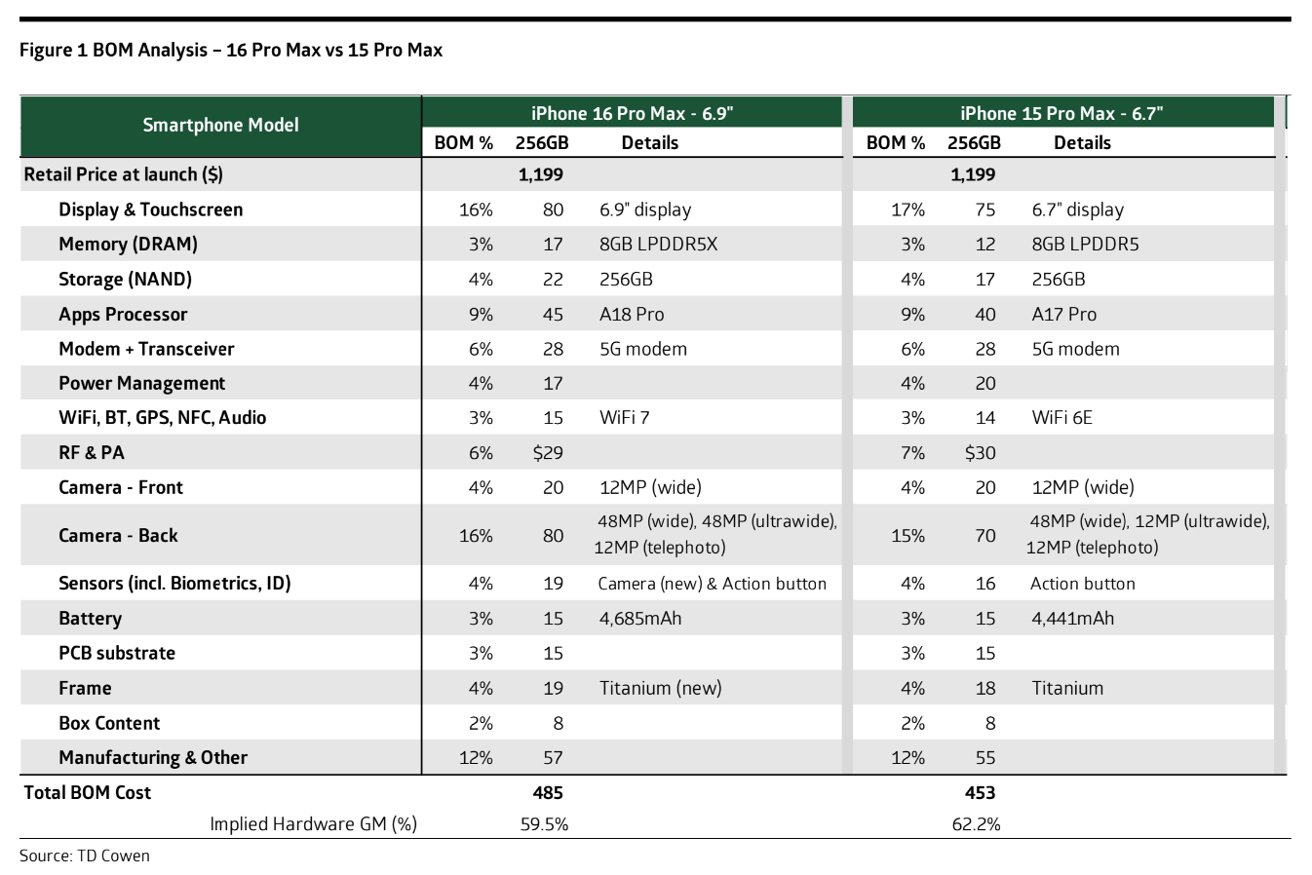
 

Table comparing the bill of materials of the iPhone 16 vs iPhone 15.

Comparison between the bill of materials of the iPhone 16 and 15.

(Image from TD Cowen and Apple Insider.)

Contrast this to traditional, single-purpose cameras and lenses that can easily cost upwards of thousands of dollars and you will see that your phone camera sensor is incredibly small, and indeed cheap.

In order to bridge the gap between these traditional and phone cameras, manufacturers have had to resort to tricks such as the previously mentioned HDR merging, night mode, dynamic color temperature settings, etc. But the question remains, why has the sentiment that photos are getting worse risen so suddenly?

Stuck between a rock and a hard place.

A major factor to consider is the user base. When Sony makes a high-end camera it has an incredibly niche demographic in mind, a group of people that it can trust will learn how to best use the product. When Apple or Google release a smartphone, they have to cater to a group of people spanning cultures, socioeconomic classes and generations – in short, everyone. Smartphones are so prevalent that according to a Eurostat report  in many EU countries, nearly 100% of individuals, ages 16-74 use one to access the web.
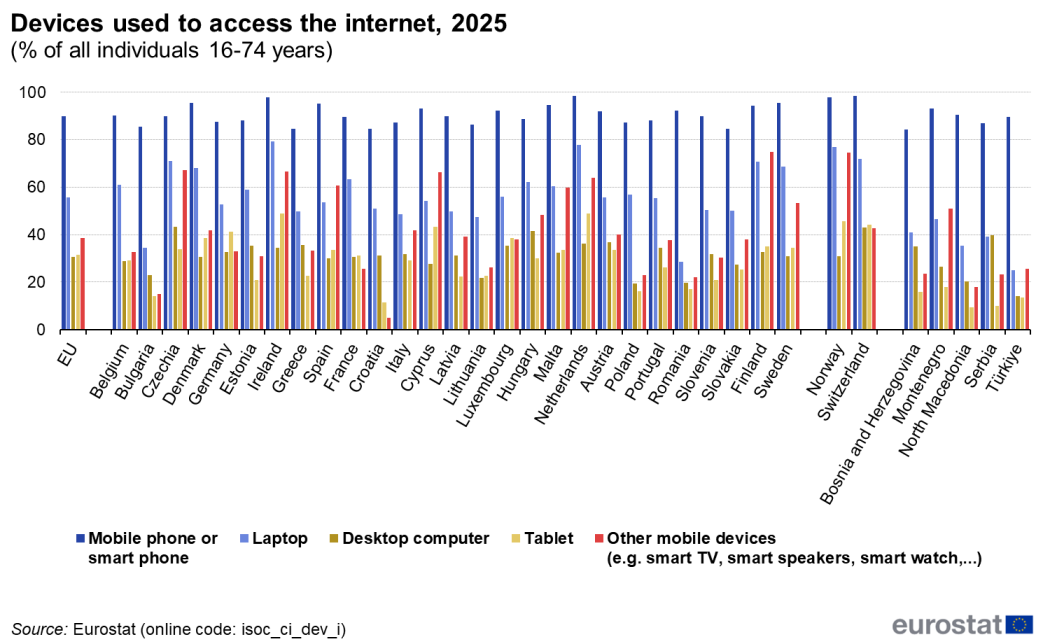
Chart Comparing device types used to access the internet in the EU, grouped by country.

Chart comparing device types used to access the internet in the EU, grouped by country.

This means, that your phone camera has to be the best camera for a 16 year-old highschooler  who is taking pictures of the whiteboard during their lesson, it has to be the best one for your grandparents to capture their vacation, for your parents to take family pictures on the holidays and finally for you to navigate your everyday life. It has to work all the time and any time, even in traditionally challenging situations such as backlit photos, or nighttime shots. 

Simply put, it is impossible to educate a user-base so large, thus manufacturers are constrained, having to create a camera that will take the “best” photo even when it is being captured by someone who does not know about the basic rules of photography. This is not necessarily a bad goal, and if anything it serves as a democratic way to create an interest in photography. 
But what do the people using these cameras think?

In order to get a wide perspective, PulseZ interviewed three people on their history with photography and videography, and what role smartphones have played in it. For the purpose of this article, they were asked to self-identify as either an amateur, enthusiast or professional photographer, and here are their stories:

The enthusiast

Meet Shubi (they/them), an artist who also happens to be a tech and photography enthusiast.  

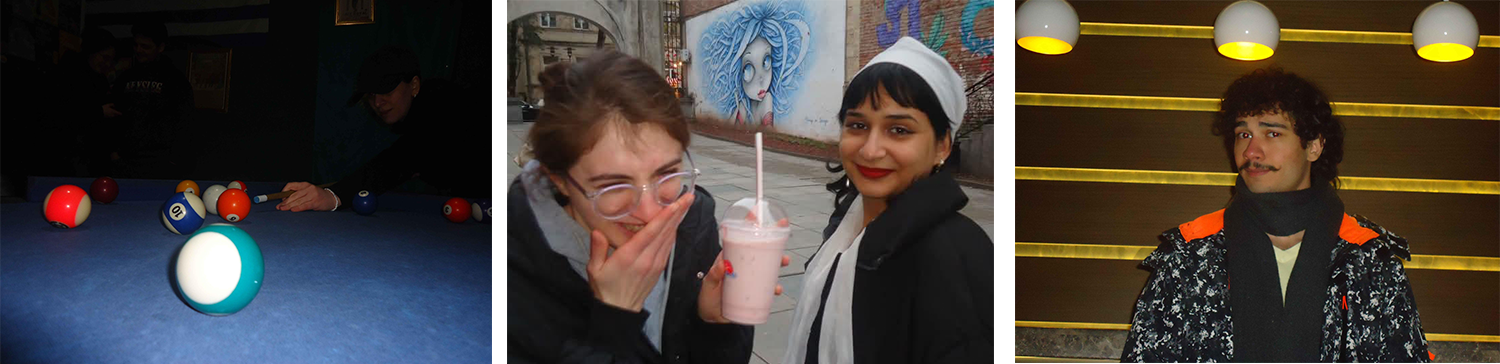
Three of Shubi's favorite images, featuring his friends.

Some of Shubi’s favorite photos (@shurdulie on Instagram).

Phones have always played a part in Shubi’s life, they recall using a blackberry and a pre-android Samsung phone to snap random shots, but the first time they realized they “were in the photography zone” was when they used a Nokia Lumia 630 to capture an image of their cat in the golden hour.  

Nowadays Shubi is still using a variety of cameras – they say that they mostly use a 2011 Sony Cybershot, sometimes a Samsung Galaxy Camera from the same time period and a Xiaomi Redmi 9T for quick iNstagram snaps. “I genuinely prefer using a digital camera, …  I get very rich colours and subject matter, I really like noise,” Shubi told PulseZ.

They believe that images shot on flagship devices from 2022 onwards have a hazy look, recalling the story of a friend buying a Samsung Galaxy S25 and disliking the camera to the point of having to resort to downloading a 3rd party app. Shubi also commented on the ‘HDR look’ of modern images, noting the loss in highlights and shadows, with little to no subject separation.

Overall, they are against the use of generative AI in images, and wish that phones captured and preserved more detail.

The professional

Next we interviewed Ana Maria (she/her, @_anna_aivazova_ on Instagram), a self-described semi-pro videographer. 

Ana Maria recalls how her dad always wanted to be a photographer, and how early her interest in the field developed. Her first camera was a Sony Camcorder, which she used to capture landscapes and scenery. Her interest in the field naturally translated into a career, and she has used various cameras over the years. Nowadays, she owns a Sony a7 III and an iPhone 16 pro which she uses for both commercial and personal uses, with a notable addition of a few film cameras that aren’t used for shoots.

Her attitude towards phone cameras has gradually changed over years, especially since she switched to an iPhone. As a lover of street photography, she identifies the strong suite of phones as convenience, but when asked about the overprocessed look she told us that 

“since the phone flattens the lighting, everything lacks contrast, shadows and highlights are on the same plane and I think it is the cause of netflix lighting.” Netflix lighting is a term used to describe a type of low-contrast, brightly lit scenes usually present in shows on the streaming platform. 

Interestingly, Ana Maria does not expect to shoot photos the same way she takes them with a professional camera, nor does she expect to get the same look. For her it is necessary to work with the limitations that accompany phones. One way to tackle them is by using a third party camera app, and Ana Maria uses DAZE CAM, which has fast lens switching and advanced presets.

“When you are shooting on film, and you have a limited number of shots you can take, you pay attention to different things. You are much slower, intentional and more detail-oriented. You will stand for as long as it takes to get the shot, while with a phone I know that I can tap the shutter button 50 times and at least one shot will be usable,” she commented when asked to compare the experience of shooting digital vs analog.

Finally, we wanted to know how she integrates her phone into a professional workflow, and we discovered that she only uses it when the end product is not intended for printing, but for social media. 

The amateur

Last but not least, we talked to Keso, an amateur photographer and a last-year student of electronic and computer engineering.

A few of Keso’s favorite images (@keesanech on Instagram).

Like our other interviewees, her interest in photography started out early, her first subject being random scenery that she’d shoot with an old Nikon digital camera.

In her later years, phones became her primary camera, and she made her buying decisions based on how well they could capture photos. For years she stuck to Samsung phones, but since she values color science as the most important quality of a camera she switched to an iPhone 16 pro.

Interestingly, she believes that her old Galaxy S22 took better photos, and recalls her experience the first time she shot a photo on her new iPhone – “I  genuinely didn’t understand what happened, before I shot the photo it looked great, but later an overly processed version of the scene ended up in my gallery.” Despite this initial sense of dissatisfaction, she sees the value in certain features like night mode and cinematic video. She also tries to use the raw mode and photographic styles her phone provides to get closer to the look she wants.

2-3 years ago Keso bought a film camera, and she fell in love with the process of shooting film. Compared to photos from her phone that can be too perfect, and not grounded in reality, film looks like a warm memory.  Nowadays, she usually uses film to take pictures of her friends and family, reserving her phone for more professional situations.

Keso believes that phones can eventually replace her beloved film cameras, but only if there is a specialized mode for it. As of now she is worried about the use of AI. While she likes features such as “clean up,” which allow her to remove any distractions from the background of her photos, she views photography as a creative outlet and doesn’t want AI to make her lazy.

So, what now?

The sentiment is clear – people are in conflict with the default look of their photos, but consider the fact that everyone found something different that they liked about their phones. Whether it be the portability, convenience, or specialized shooting modes your phone is undoubtedly able to do more and address a bigger audience now, than it could before. This is the democratization of photography.

Take into account that when you buy a phone you are buying a ready-made product. If you walk into a store looking for a perfectly fitted sweater, you are unlikely to find it. However what you can do is find a sweater you love and take it to the tailor to get it just right. 

Similarly, you should customize your camera experience. Apple and other manufacturers have gradually given users more control over the camera, but you should try to use 3rd party camera apps such as Halide or Moment to find the perfect look for you. Photography is about experimenting and finding your unique voice, so push yourself and the limits of what your phone can do.

Shape the conversation

Do you have anything to add to this story? Any ideas for interviews or angles we should explore? Let us know if you’d like to write a follow-up, a counterpoint, or share a similar story.
