A New Player in the Game
A major new development in this election cycle is the political move of Rumen Radev, who, following his resignation, has initiated the creation of his own political project, Progressive Bulgaria. His campaign has already generated significant momentum, with early projections suggesting that the party could secure over 30% of the vote, potentially reshaping the political landscape and pushing smaller parties out of parliament.
The project presents itself as a centre-left, anti-corruption coalition, bringing together formations such as the Our People Movement, the Social Democratic Party, and the Socialdemocrats movement. Its candidate lists include a mix of local politicians, former regional officials, legal professionals, and business figures, alongside more publicly recognisable individuals, reflecting an attempt to appeal to a broad segment of society while also positioning itself as a platform for “new” political faces.
On a basic level, the project combines anti-oligarch rhetoric with positions that suggest a more cautious stance on Bulgaria’s involvement in international conflicts and energy policy. While not explicitly framed in extreme terms, this positioning is often perceived as relatively more open toward Russia, which allows the party to attract voters traditionally aligned with pro-Russian formations such as BSP and Vazrazhdane, while also appealing to pro-European voters who feel unrepresented by the current political options.
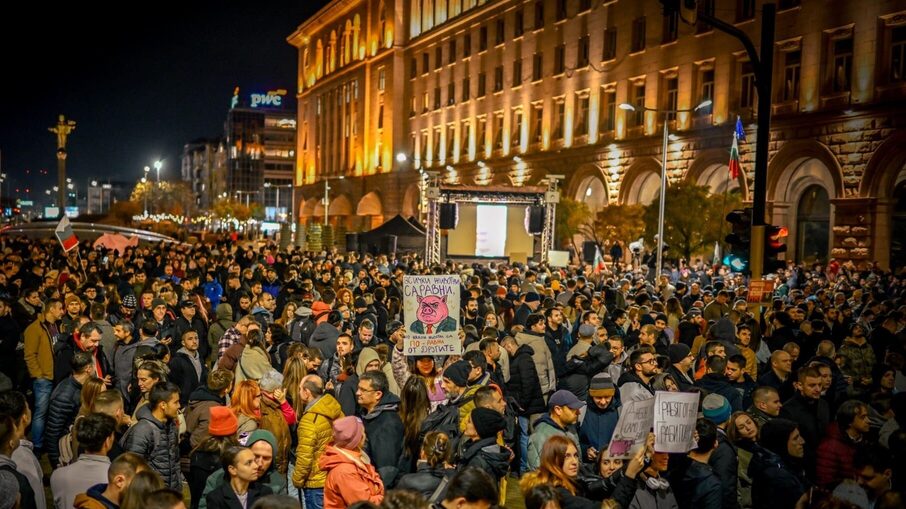
This broad appeal, however, also introduces new tension for the future of the party and ambiguity. For many voters, Radev represents the possibility of a decisive break from the existing system. At the same time, his political positioning raises questions about the direction such a break would take. In a context where Bulgaria urgently needs stability, voters are faced with a difficult trade-off: the promise of change versus the uncertainty of its consequences, particularly in terms of foreign policy orientation and coalition formation.
Another defining feature of Radev’s campaign has been his limited public communication. His strategy, often described as a form of “radio silence,” has involved relatively few public appearances and a lack of detailed policy clarification, including on key issues such as funding and governance structure. Instead, his messaging has remained broad, centred around dismantling the “oligarchic model,” leaving much of the interpretation to the voters themselves.
This ambiguity has played a dual role. On one hand, it has generated momentum by allowing different groups to project their expectations onto the project, contributing to renewed political engagement. On the other hand, it raises concerns about transparency and accountability. Without clearly defined policies, it becomes difficult to assess what the party concretely stands for beyond its general positioning against the status quo.
There are also indications that parts of his support base overlap with previously pro-Russian social media networks, including online communities that have shifted their messaging to align with his campaign. This further reinforces the complexity of his voter base, which is not unified in its expectations, but rather connected by dissatisfaction with the current system.
Ultimately, while Radev positions his project as an alternative to what he describes as an “oligarchic” political model, the lack of clarity around its structure, funding, and long-term direction raises an important issue. For voters — specifically younger ones — the challenge is not only to recognise the failures of the current system, but also to critically assess what is being offered as its replacement. The emergence of a new political party may signal movement, but it does not automatically lead to a sustainable structural change.
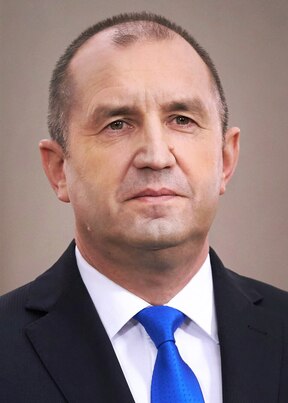
Rumen Radev, former president of Bulgaria, emerges as a central figure in the country’s evolving political landscape ahead of the upcoming elections.