



Ideals of female beauty that can only be met through painful processes of physical manipulation are nothing new. History is full of them: the tiny bound feet of imperial China, the suffocating corsets that sculpted wasp waists in nineteenth-century Europe.
Today, however, the pressure has taken on a new digital form — the “Instagram face”.
Scroll through social media long enough and a strange pattern emerges. Influencers, celebrities, and content creators begin to blur together. The same chiseled nose and razor-sharp jawline. The same overfilled lips. The same cheeks scooped clean of buccal fat. Individuality, once the essence of beauty, has been quietly eroded.
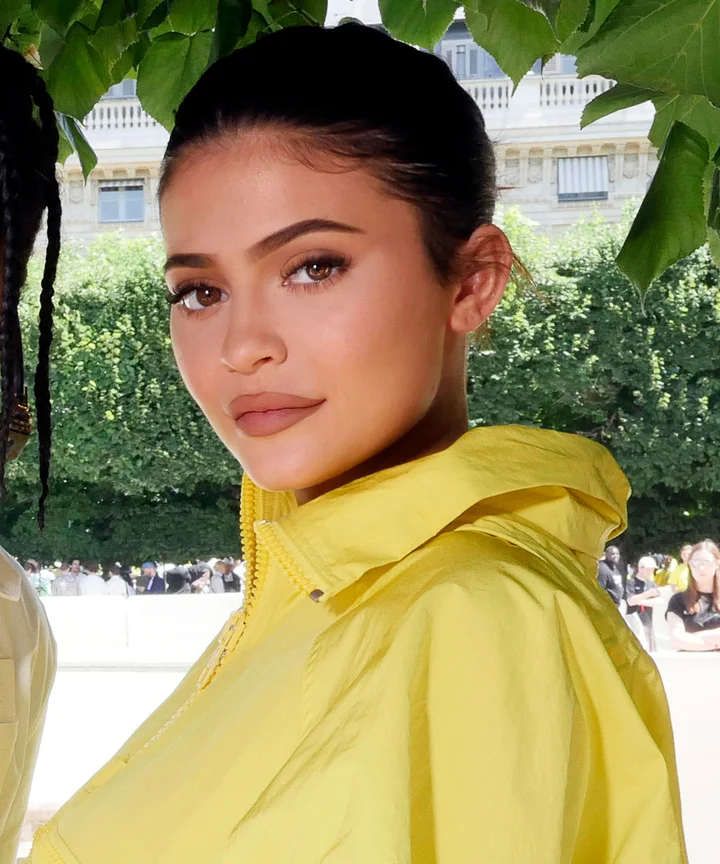
source: https://www.refinery29.com/en-gb/2018/07/205626/kylie-jenner-instagram-post
The proliferation of these highly specific, and often impossible, beauty standards has become so widespread that experts now refer to it as the Instagram face, a phenomenon increasingly linked to body image pressures among young women.
The term itself can be traced back to a 2019 article in The New Yorker, where writer Jia Tolentino described the look as a young face “with poreless skin and plump, high cheekbones,” one that is “distinctly white but ambiguously ethnic.”
In other words: a carefully engineered aesthetic that blends features from multiple racial backgrounds while smoothing away anything that signals individuality.
Researchers are now studying the phenomenon more closely. A 2024 observational study published in Aesthetic Surgery Journal Open Forum described the idealized “Instagram face” as symmetrical, aligned with the golden ratio, and defined by a small neat nose, full lips, high cheekbones, and a sharp, sculpted jawline.
The study points out that around 95 million photos and videos are uploaded to Instagram every single day, many of them digitally altered to present an idealised, and often unattainable, version of reality. These images, repeated endlessly, quietly shape public perceptions of beauty.
And the competition is no longer simply human.
Young women scrolling through social media today are not only comparing themselves to each other but increasingly to hyper-realistic AI-generated faces that exist without pores, asymmetry, or aging.
For girls from marginalized racial or ethnic backgrounds, the “Instagram face” can send a steady stream of messages that they are somehow “too much” of one thing or “not enough” of another. When beauty standards reflect only a narrow slice of humanity, they subtly teach anyone outside that mold to question their own reflection. Those who do not fit the Eurocentric aesthetic face an additional burden. The pressure to alter their features can create a painful disconnect from their cultural identity, encouraging shame about the very traits that tie them to their heritage.
Meanwhile, the market is ready to capitalize.
The global rise of female spending power — sometimes referred to as the SHEconomy — has turned women into one of the most powerful consumer groups in the world. As more women advance in education and careers, industries increasingly target their insecurities, selling products and procedures that promise to “fix” perceived imperfections.
Cosmetic tweaks are increasingly marketed as a form of “self-care”: treating yourself to lip fillers, celebrating a milestone with a nose job, the list goes on. In some countries, the normalization goes even further. In South Korea, for instance, it is not uncommon for girls to receive plastic surgery procedures as a gift after graduating.
The face becomes something closer to a business project.
Increasingly, people are encouraged to treat their own appearance like a corporation: identify the underperforming sectors, invest in improvements, discard what doesn’t maximize returns. Rebrand the face to match whatever aesthetic currently dominates the algorithm.
The result is what some critics describe as a kind of “cyborgian face” — a digitally influenced composite that borrows features from different ethnicities and merges them into one globally marketable look.
Overly tanned skin. South Asian-inspired brows and eye shapes. Full lips associated with Black beauty. A slim Caucasian nose. Cheekbones often linked to Middle Eastern or Native American facial structures.
Globalization, filtered through cosmetic surgery and social media, is slowly turning human faces into a single product line.
And that is perhaps the most unsettling part. In a world where many women increasingly look alike, embracing your natural features — learning to work in harmony with your face rather than against it, becomes something quietly radical. A form of rebellion.
Because no matter how many procedures one undergoes, cosmetic perfection alone rarely delivers what it promises. Confidence and self-esteem cannot be injected or sculpted. They are built from within.
And perhaps the real act of defiance in the age of Instagram is simple: refusing to become a template.