



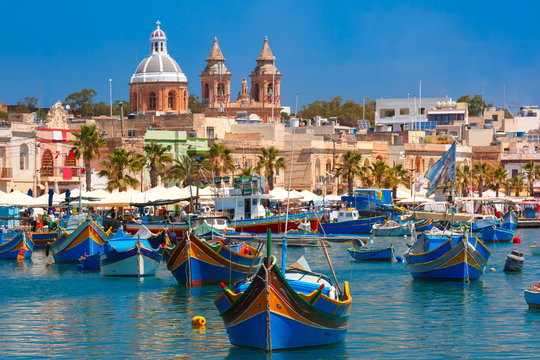
Malta’s strategic position in the Mediterranean has made it a crossroads of cultures, leaving a unique imprint on its language. The Maltese language is a fascinating blend of three main elements: Arabic, Italian, and English. This makes it a language with both Semitic and non-Semitic components.
https://commonwealthchamber.com/member-countries/malta/
Remarkably, Maltese is the only Semitic language in the European Union, evolving from Siculo-Arabic, spoken in Sicily and Malta during the Middle Ages. Unlike other Semitic languages, such as Arabic, Hebrew, or Amharic, Maltese has absorbed heavy influence from Italian, Sicilian, and English over the centuries. Understanding this rich history allows us to truly celebrate Maltese as a living, hybrid language.
A common misconception is that Maltese was merely influenced by Arabic. In reality, Maltese was born from Arabic, and without it, the language as we know it would not exist.
Today, I want to focus on Maltese morphology, a particularly fascinating aspect of the language. Being fluent in Arabic, Maltese, and English gives me a unique perspective, allowing me to explore these concepts as a native speaker of Arabic.
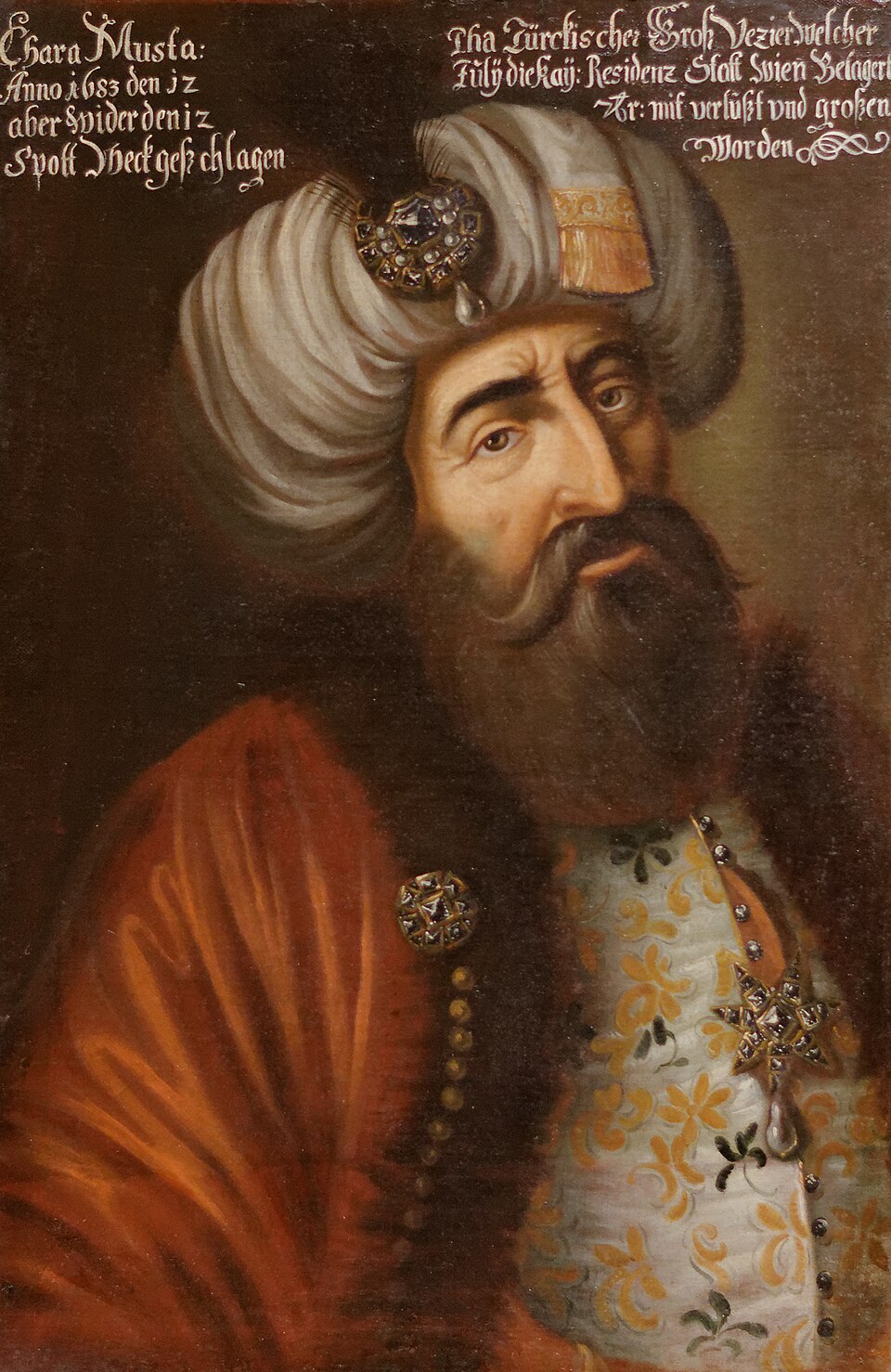
Mustafa Pasha – Senior Commander in the army of the Ottoman Empire. https://commons.wikimedia.org/wiki/File:Kara_Mustafa_Pasha.jpg
How Arabic Shapes Maltese Words
At its core, Maltese is a hybrid language, blending Semitic roots with Romance and English influences. Arabic contributes the structural foundation: most Maltese words are built from roots, usually three consonants, which combine with patterns to form verbs, nouns, and adjectives.
Typologically, Maltese morphology is a hybrid of two morphological typologies, shaped by historical contact. The root-and-pattern system is non-concatenative, following an introflexive system typical of Semitic languages. Here, consonantal roots carry meaning, while vowels and patterns indicate grammatical functions, gender, and number.
For example:
- The root f-r-k produces tfarrak (to scatter or break).
- The root n-b-ħ forms stenbħet ( she awoke).
On the other hand, the concatenative morphological typology is predominantly linked to the root and affixes in relation to the Romance element and English.
Even plurals often follow the Arabic “plural miksur” or broken plural pattern, as in kmamar, derived from Italian kamra, showing how Maltese adapts English and Italian words into its Semitic morphological framework.
At the same time, Romance and English influences introduced new structures and suffixes, creating it’s hybrid nature. For instance:
- iklun (from ikel + -un, meaning “food”)
- bankun (from bank + -un, meaning “bench”)
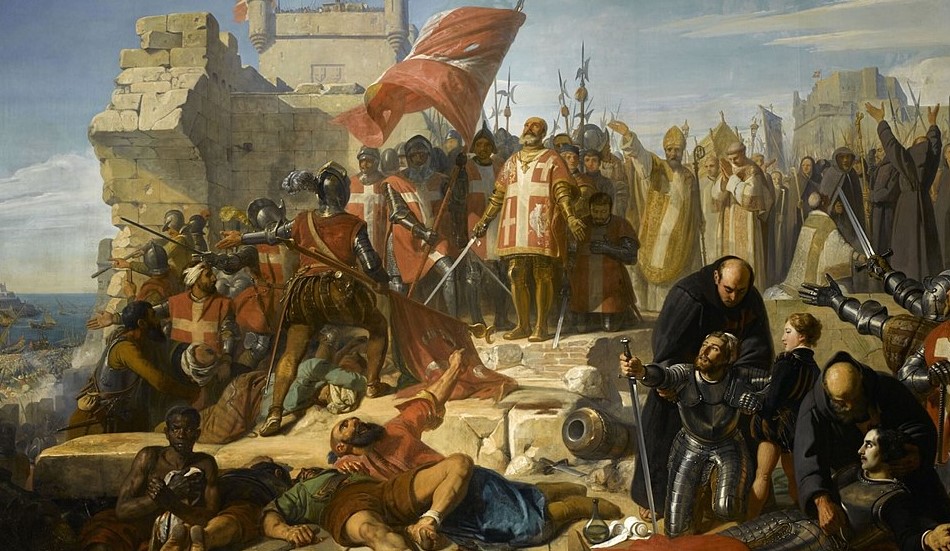
The Great Siege of Malta (1565) https://newsbook.com.mt/awdjo-bhal-lum-sehh-l-assedju-l-kbir-ta-malta-tal-1565/
Il-Kantilena: Malta’s Oldest Literary Treasure
Il-Kantilena (“The Old Song”) is the oldest known literary text in Maltese, dating back to the 15th century. It is attributed to Pietru Caxaro and demonstrates the deep Arabic roots of Maltese. It was written with Latin alphabet but almost all the words are derived from Arabic. Below is an example:
Original orthography: Xideu il cada ye gireni tale nichadithicum
Arabic orthography: اشهدوا القعدة يا جيراني، تعالوا نحدّثكم
Approximate English translation: Witness my predicament, my neighbours, as I shall relate it to you.
Approximate Maltese translation using modern vocabulary: Araw din il-qagħda, ħbieb, li se naqsam magħkom.
This text is a powerful reminder that Maltese is not just a language; it is a living tapestry of history, connecting Semitic origins with European influences and modern creativity.
The Present: Maltese in Action
In modern Maltese, the three linguistic elements, Arabic, Italian, and English, blend naturally in everyday speech. For example: “Il-Ħadd kont ltqajt mal-ħbieb tiegħi fil-bandli, konna xtrajn il-ġelat, qabel ma rajna film flimkien.”
Translation: “On Sunday, I met my friends in the park, we bought ice cream, before we watched a movie together.”
Here, we see Arabic roots in words like ħbieb (friends), Italian influence in ġelat (ice cream), and English borrowings in modern expressions such as film. Maltese continues to evolve, reflecting its rich history while adapting to contemporary life.
Ultimately, the Maltese language is a true reflection of Malta itself: small in size, yet rich and vibrant in culture. It shows that even lesser-spoken languages can carry immense historical depth and contemporary relevance. As the European Union celebrates its linguistic diversity, it is vital to remember and honour languages beyond the dominant ones like French, German, or English. Maltese reminds us that every language is a thread in Europe’s tapestry, united in diversity.
Moreover, Il-Kantilena demonstrates that even a small island like Malta has made a meaningful contribution to Europe’s linguistic and cultural heritage. Language is not just a tool for communication—it is a vessel of memory, creativity, and identity. Studying Maltese encourages us to appreciate the layers of history embedded in everyday words, to value our linguistic heritage, and to celebrate Malta’s uniqueness in a world often dominated by larger languages.
In this way, Maltese is more than a language to speak, it is a language to understand, preserve, and cherish. It serves as a bridge connecting the past with the present, the local with the global, and the Semitic with the European.