

The International Olympic Committee (IOC) is trying to solve two big problems at the same time: how to cut the cost of the Olympic Games and how to achieve full gender equality among athletes. These goals sound great – and in many ways, they are. But in practice, they have led to a surprising result: many well-known Olympic stars were unable to compete for medals this year.
When Equality Meets Reality: Why Some Olympic Stars Didn’t Make the Games

Olympic Agenda 2020: Fewer Athletes, Fewer Events, Lower Costs
In December 2014, the IOC adopted a long-term strategy called Olympic Agenda 2020. It was developed together with a wide range of partners, including non-governmental organisations, media, sports federations, and academic institutions. The strategy included 40 recommendations designed to “adapt” the Olympic Games to the challenges of the modern world.
The main goals were clear: make the Games cheaper to organise, so that more countries would be willing to host them, make them more environmentally sustainable and ensure greater gender equality among athletes.
As the IOC stated in the Agenda, the approved recommendations were meant to give “clear vision of where we are headed and how we can protect the uniqueness of the Games and strengthen Olympic values in society.”
One of the key ideas of Olympic Agenda 2020 was to limit the size of the Games. This included reducing the number of athletes, officials, and competitions. For the Winter Olympics, the IOC recommended specific limits: no more than 2,900 athletes, around 2,000 coaches and officials and a maximum of 100 events.
According to the IOC, these limits help control costs. After all, every athlete needs accommodation, food, transport, and facilities in the Olympic Village.
At the same time, the IOC wanted to use these limits to push for gender balance. The goal was a “fifty-fifty” ratio, meaning that women and men should each account for about half of the athletes in each discipline. The strategy also promoted more mixed-gender events in which women and men compete together.
The Winter Olympics in Milan and Cortina d’Ampezzo were supposed to be the most gender-balanced Winter Olympic Games in history, with women making up 47 percent of all Olympians.
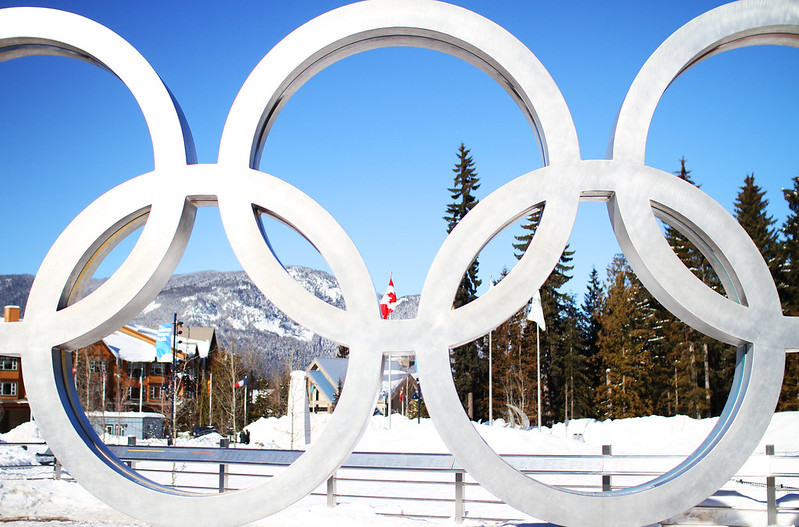
Picture: profernity (CC BY 4.0), Flickr
Three Instead of Five: The Case of Ski Jumping
To see how this works in real life, let’s look at ski jumping, a sport that is very popular in countries like Austria, Germany, Norway, Poland, or Slovenia.
Until the 2022 Winter Olympics in Beijing, 65 men could take part in Olympic ski jumping qualifications. This was necessary because only 50 jumpers are allowed to compete in the first round of a competition.
National quotas were based on World Cup results. The strongest countries could bring five athletes to the Olympics. Only four competed in the event, but the fifth served as a backup in case of injury, illness, or a sudden drop in form.
For the Milan–Cortina Games, this changed. Top teams were allowed to bring only four athletes, and fewer countries were allowed to use the maximum quota at all. As a result, countries like Poland, which previously could send five jumpers, were limited to just three.
This also forced changes in the competition format. Traditional four-person team events were removed and replaced by “super team” events, with only two athletes per team.
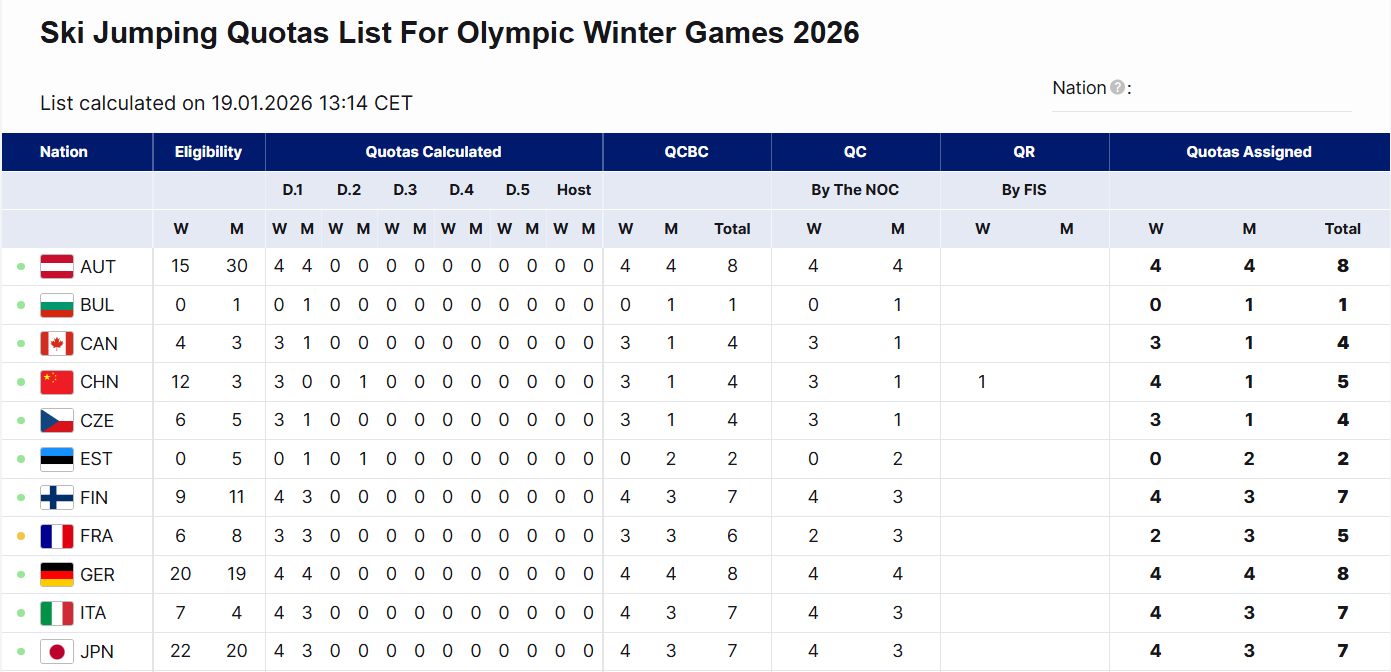
Ski jumping athlete quotas for the Winter Olympic Games 2026, source: www.fis-ski.com (table incomplete)
Watching the Olympics from the Couch
These limits had real consequences – even for legends of the sport.
One of the biggest names missing from the Games was Simon Ammann, a four-time Olympic champion from Salt Lake City (2002) and Vancouver (2010). At 44, he is no longer at his peak, but his name alone attracts fans. In Switzerland, he is considered a sporting icon, alongside tennis legend Roger Federer.
Another major absence was Austria’s Manuel Fettner. After years in the shadow of his teammates, he became one of the stars of the Beijing 2022 Olympics, winning two medals at the age of 36. He has announced that this season is his last, so another Olympic appearance could have been a perfect ending to his long career.
Other well-known athletes who missed out included Poland’s Dawid Kubacki, a two-time Olympic bronze medalist, Germany’s Karl Geiger, and Poland’s Piotr Żyła, as well as Norway’s Halvor Egner Granerud.
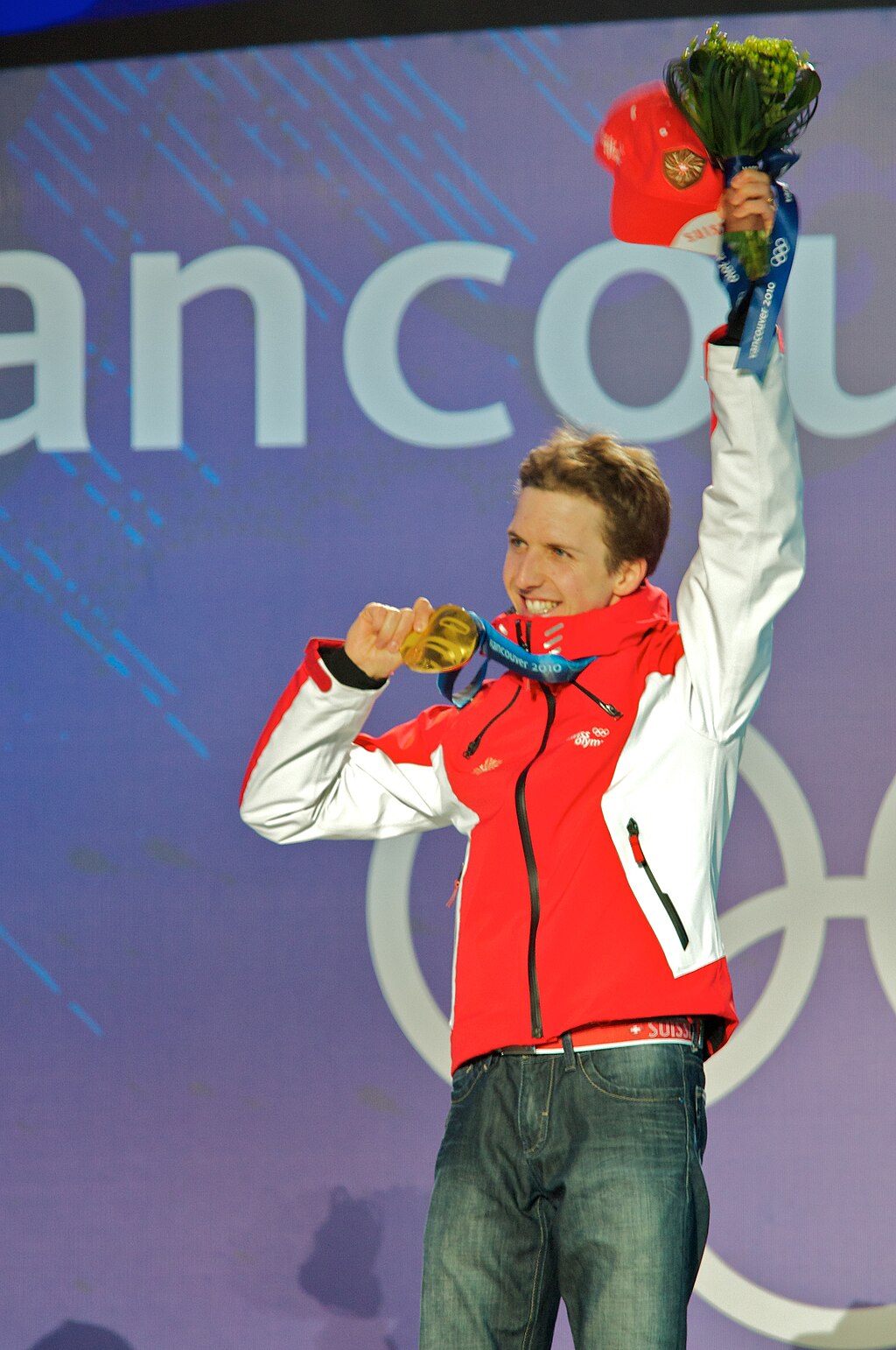
Simon Ammann with his gold medal at the Winter Olympic Games in Vancouver, 2010, picture by Duncan Rawlinson, CC BY 2.0, via Wikimedia Commons

Rejected – or Just Less Lucky?
Supporters of the new system argue that it ensures only the very best athletes go to the Olympics. If a country sends three athletes instead of five, they are likely to be the top three.
But selection is not always that simple. Coaches don’t choose teams based only on rankings or past medals.
In Poland’s case, selecting young and less experienced jumpers Kacper Tomasiak and Paweł Wąsek instead of more famous veterans turned out to be a brilliant decision in Milan. Poland won silver in the super team event, and Tomasiak also won two individual medals.
History, however, highlights the dangers of overly restrictive limits. Four years ago, before the Beijing Olympics, the selection of the Austrian Olympic ski jumping team posed a significant challenge for coach Andreas Widhölzl. Despite a five-athlete limit, he had seven or eight viable contenders.
Widhoelzl ultimately chose Fettner alongside the established favourites. And though his inclusion was uncertain, it was he who went on to secure Austria’s first individual Olympic medal in men’s ski jumping in 12 years and was the leader of the gold-winning team.
This year, with lower limits, Austria returned home without an individual medal, and many fans criticised the coach for leaving Fettner out despite his strong form.
Helping Smaller Countries – or Hurting the Show?
Lower quotas can help weaker nations. With fewer top athletes competing, it becomes easier for outsiders to finish higher. This supports the idea of internationalising the Olympics, especially the Winter Games, which involve fewer countries than the Summer Olympics.
Most winter sports are niche disciplines, popular in only a small number of countries. Seeing athletes from “unexpected” nations can help spread these sports globally.
But there is a downside. Star athletes attract viewers. Strong fields create intense competition. Without them, fewer people may tune in.
Critics also point out that some countries that already had small quotas now face even stricter limits. In other words, not only the strongest teams are losing out.
Rules Above Everything Else?
Sometimes the new rules lead to situations that seem to go against the Olympic spirit. American freestyle skier Tyler Wallasch qualified for the Olympics, but due to administrative rules, he was not allowed to compete – even though a quota spot was available.
In an open letter to the IOC, he wrote that watching his earned spot go unused because of a rule that “contradicts the Olympic spirit” shook his faith in the values that drew him to Olympic sport. The letter was signed by athletes from several countries.
He also quoted the founder of the modern Olympic Games, Pierre de Coubertin:
“The most important thing in the Olympic Games is not winning but taking part; the essential thing in life is not conquering but fighting well.”
Sports sociologist Michele K. Donnelly from Brock University added that true gender equality cannot be achieved by numbers alone. Equal participation also requires equal numbers of events and equal rules for men and women.
A Difficult Balance
The IOC now faces a complex challenge: cut costs, ensure gender equality, and maintain high-quality competition at the same time. These goals are not impossible to combine – but they may require more flexibility and compromise.
The question is no longer whether equality matters. It clearly does. The real question is how to achieve it without losing what makes the Olympic Games special.
Written by
Shape the conversation
Do you have anything to add to this story? Any ideas for interviews or angles we should explore? Let us know if you’d like to write a follow-up, a counterpoint, or share a similar story.
©2026 PulseZ. Design & developed by Matrix Internet Opens in a new tab