


The orange Line 7 heads south toward Valencia Sud. When the doors open at Paiporta, the air feels different: the smell of wet earth clings to everything.
As the metro emerges from the tunnel into the flat plains of Horta Sud, the landscape opens up. But the first thing you see when the doors slide apart isn’t farmland. It’s a wound: piles of rubble, sacks of construction material, broken palm trees scattered across the ground where fields used to be.
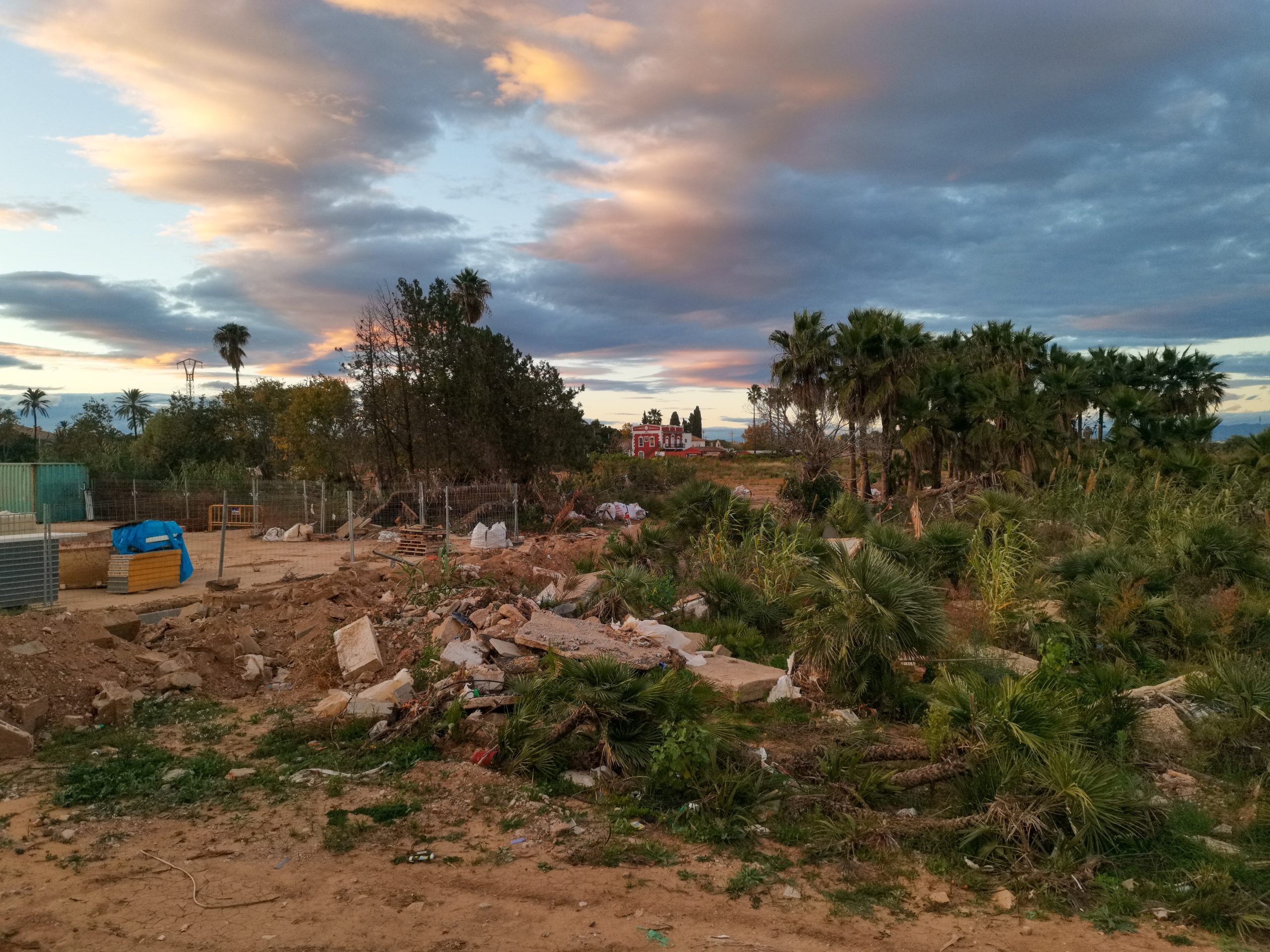
Debris and broken palm trees near Paiporta metro station, one year after the DANA floods. (Photo: Valentina Jaimes)
People here call Paiporta the zona cero (ground zero) of the DANA floods that hit the Valencia region in late October 2024. In minutes, water tore through streets and ground-floor homes. One year later, the clean lines of a rebuilt station and a newly paved road try to signal normal life, but the debris at the edges tells another story: recovery isn’t a straight line.
DANA is a Spanish acronym for Depresión Aislada en Niveles Altos, a high-impact weather system that can trigger extreme rainfall and flash floods, especially in the Mediterranean basin. A 2025 study published in Public Health Reviews frames the Valencia floods as part of a wider pattern of risk in which extreme events can be intensified by climate change
Walking toward the centre, Paiporta looks busy again at first glance. People come back from Valencia with shopping bags; bars are open; a few streets have fresh pavement. The glass-fronted municipal library is lit from inside, students bent over their laptops as no tragedy ever happened here.
But the closer you look, the less solid that normality feels. Facades are patched in places and raw in others. Repair work sits in plain sight, like the town is trying to move forward without quite being able to close the chapter.
Carrer Echegaray
A few streets from the station, I meet Coco, a worker patching up a flaking façade near his home.
Coco’s door is a grey metal sheet set into a damaged wall. On the door, a faded message reads “Está en venta” (for sale). Someone has added: “No está en venta” (not for sale). Another hand has answered over it. The messages overlap until one line dominates again: For sale.
Coco is a tenant, and he says he is in a legal dispute with the landlords. “Once the court cases start, they’ll throw me out,” he says. He believes they want the property back to build something new. He pays €100 a month, and he says he cannot miss a single payment without risking eviction.
He points to the compensation that was offered: €6,000 to repair a home. “You don’t fix this with €6,000,” he says. “And anyway, the owners kept the money. They want me out.”
When Coco opens the door, two white cats rush to meet him. “My biggest loves,” he says.
On the night of 29 October 2024, Coco was working in the fields. When he returned, the Civil Guard was outside his building.
Then he started shouting his cat’s name. “Luna, Luna!” he cried. Luna cried back from inside. The cat had climbed onto a wheel, soaked through, clinging there to stay above the water. The Civil Guard wouldn’t let him enter. It was too dangerous inside, with debris and broken glass everywhere. “Tomorrow,” they told him.
Today, one year after, the cats’ bowls are full, their toys scattered like proof that something in this house is still cared for.
Everything else feels temporary, left mid-repair. Doors have been taken off their hinges and leaned against the walls. The floor is bare and reddish, unfinished, and he says the cold rises up from underneath. There is no real kitchen, just a set of burners. The floodwater, he says, climbed almost to the ceiling; the walls still carry it in stripped surfaces.
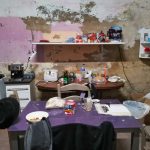
Inside a flood-damaged home in Paiporta, where repairs remain unfinished. (Photo: Valentina Jaimes)
Behind the apartment, a small courtyard is just dirt. A black sheet and a pair of jeans hanging up serve as a curtain between it and his bedroom. It’s an improvised boundary inside a home that no longer has solid lines.
Only the bathroom looks like someone tried to start again. There is a new toilet, a new sink, and mosaic tiles where the shower should be. But the water doesn’t work, Coco says, so he showers at his sister’s place.
“Everything needs fixing,” he says. “But something important is missing: money, time… and motivation.”
Coco is in his sixties, a builder by trade, with a white beard, smoke-rough voice, still in work clothes dusted with white paint. And then he switches register: what gives him joy, he tells me, is flamenco. He pulls out a red fan and starts to sing. He lives alone now, divorced, and admits that sometimes he simply cannot find the strength to finish the place by himself. Even with the skills to do it.
After the flood, he says, volunteers from other towns brought what they could: a fridge, a microwave, even a hot-water tank he still hasn’t been able to install. “That’s what made me cry,” he says. “People with heart.”
Outside, a banner hangs from a balcony: “Gràcies per l’ajuda” (Thank you for the help). It feels addressed to the volunteers who came when the town needed them most, from cities across Spain, bringing solidarity.
El Casino
Following the smell of river water, I reach the ravine that cuts through Paiporta. The Barranco del Poyo (the Poyo ravine) opens up in front of me: wide, exposed, almost too vast for something that runs through an ordinary town.
Along the edge, residents have tied tributes to the metal railings: flowers, drawings, garlands and handwritten notes. Messages for those who didn’t make it home.
Political anger is still written on the walls. On a fence near the station, someone has sprayed over a real-estate sign in red: “Sánchez dimisión” (Sánchez, resign).
The authors also point to poor coordination between levels of government, intensified by political polarisation as part of what fueled public frustration after the disaster.
At the corner of the bridge, a small group of older men sit on plastic café chairs, facing the shuttered entrance of the Ateneu Musical y Mercantil, the place everyone calls El Casino.
Before the flood, they tell me, this was where the town gathered: rehearsals, concerts, meetings, celebrations. On the façade, a painted clock still points to 1920, the year it was founded.
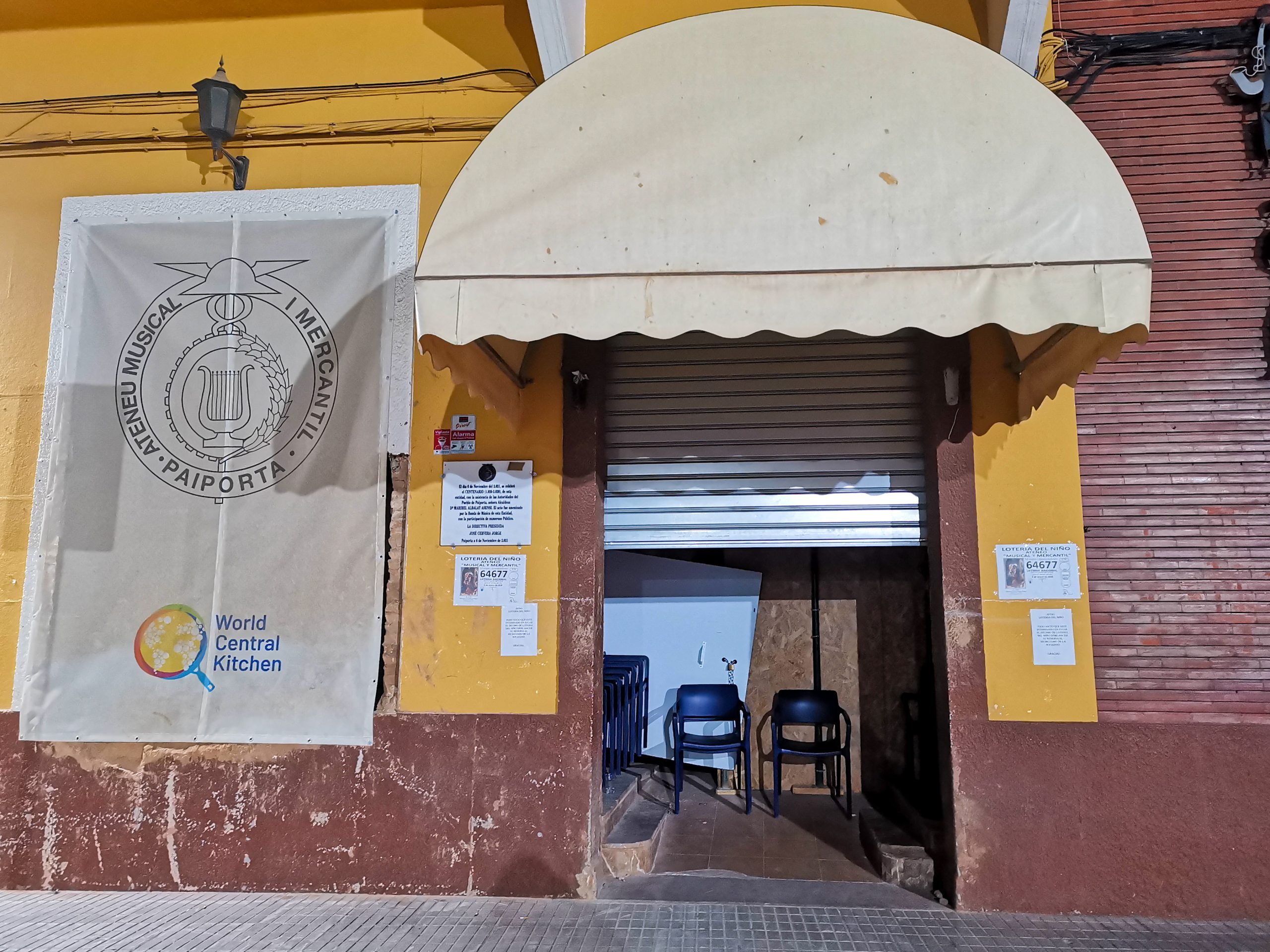
El Casino (the Ateneu Musical y Mercantil) once a key meeting place in Paiporta. (Photo: Valentina Jaimes)
Now one of them shrugs: “Todo está hecho polvo” (everything is in pieces). Literally, it means everything is dust, everything here is broken. But the phrase is also used for people. It can mean: I’m finished. I’m worn out. In Paiporta, it seems to mean both.
When they talk about reconstruction, they repeat the same thing: promises cost nothing. They joke bitterly about politicians who came for a photo and left quickly. One of them calls Sánchez el galgo (a greyhound) because, they say, he passed through and disappeared just as fast.
“What’s missing is mano de obra (manpower, hands)” one of them says. There are not enough workers to do the reconstruction.
Through the gaps, the ground floor looks gutted: exposed stone, cables dangling, no sign of a room you could use. Then you look up. The ceiling painting is still there, showing people making music. The building lost its walls and floors, but it hasn’t lost its memory.
Barranco del Poyo
In front of a barber shop, two high-school teenagers tell me what they still see when they close their eyes from those days: the cars. Piles of them, crushed like toys after the flood. A year later, they sound almost surprised by their own optimism. “It looks nicer now,” one of them says. “More modern.”
The town had to clear around 13,000 wrecked vehicles. Now the mayor says Paiporta wants less traffic in the centre and more green space.
It’s nearly seven in the evening. Down in the ravine, workers in helmets move between trucks and scaffolding. They are rebuilding the riverbed and working on the supports for a new bridge.
On the edge of the parking lot, grocery bag in hand, a man stops to watch. His name is José, a middle-aged resident of Paiporta. He looks at the machinery with the kind of attention you give to something that might protect you next time.
“For now, they’ve reinforced the sides,” he says, pointing to the raised parapets and newly built margins, measures meant to keep the water contained. Then he shifts from the present to the day everything broke. He says that during the DANA, it didn’t even rain in Paiporta. The water came rushing down through the ravine from upstream. And when it arrived, people didn’t know what to do. Stay inside? Go outside? Move the car? He remembers neighbours trying to save vehicles, pushing them into garages, as if that could outsmart a flood that was already coming.
The same study notes that public alerts were delayed, leaving residents with little time to react. With no clear window to move to safety, many people improvised, and some took risky last-minute decisions.
Later, he says, the water dropped again, dragging behind it the wreckage of whatever it had swallowed.
José says the town has changed, especially the people. Many were psychologically shaken. Even now, when there’s an orange or red weather alert, anxiety spreads fast. “When people hear rain,” he says, “it scares them.”
José looks back at the lights in the ravine. “These works cost money,” he says. “Infrastructure isn’t done overnight.” He has watched crews come here day after day for a year, building strength into the channel. He believes government funds and European support are helping. Still, he says, there’s a gap between rebuilding public works and repairing the ground floors where families actually live.
The mayor of Paiporta admits that, a year on, the reconstruction is still only around 20%. “It’s been much slower than we would like,” he says in an interview.
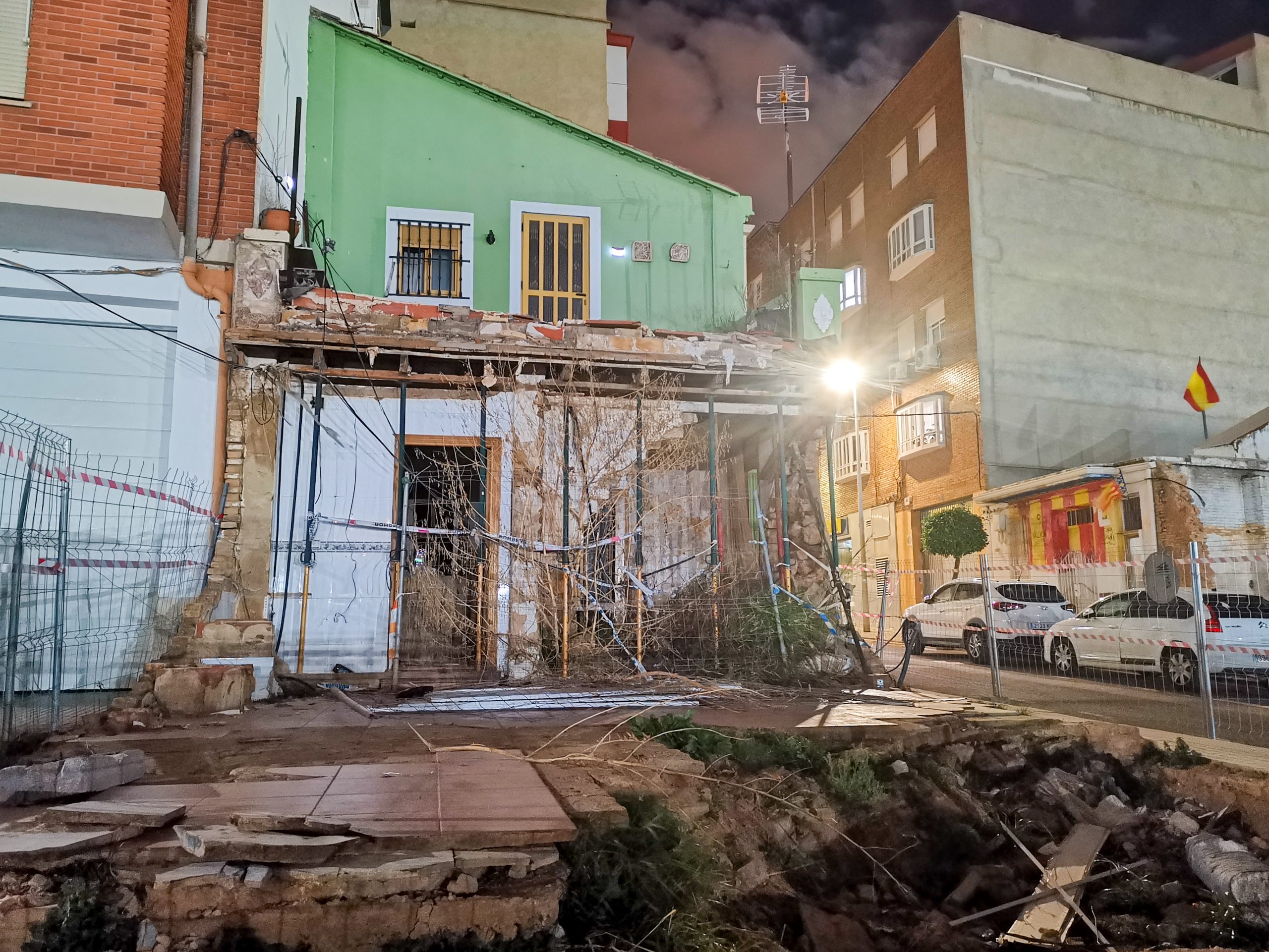
A ground-floor home left exposed long after the floodwaters receded. (Photo: Valentina Jaimes)
The authors argue that when homes sit directly along flood corridors, dense urban development can turn a surge into a direct hit.
Lower houses still sit with their ground floors broken open, the entrances collapsed toward the channel. Many of them are empty now. From the street, you can see straight into rooms that used to be bedrooms and living rooms. There is no furniture left, and no privacy.
In the openings where doors once were, nature has started to move back in. Young trees and branches grow up along the edges, as if they were trying to replace what is missing.
But the people who lived here are no longer here. You can still see the outline of their lives through the damaged walls, as if you’re looking into a home you were never meant to enter. And the question that hangs over Paiporta, quiet and unanswered, is: where are they now?