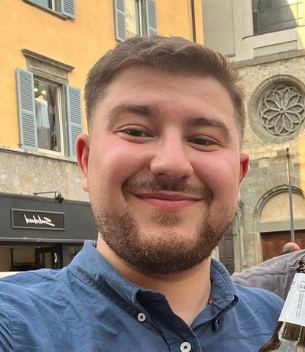
A fourteen-year-old moved out and began living alone in the capital.

When people hear this, reactions tend to surface quickly. Surprise. Concern. Quiet judgment. The assumption that something must have gone wrong, or that someone must have been irresponsible.

Back in 2014, I was that fourteen-year-old. For me, that decision became one of the most valuable experiences of my life.

Even today, that decision still unsettles people. A teenager relocating alone to a capital city sounds reckless by our modern standards.

It clashes with a culture that treats independence as a risk factor rather than a skill.

I’ve spent a large part of my life handling situations that many people would consider overwhelming.

Not because I’m unusually brave or resilient, but because, early on, no one framed difficulty as something to avoid.

That early exposure to uncertainty, responsibility, and the consequences of my own choices sits in sharp contrast to modern parental instinct to preemptively manage those difficulties on the child’s behalf.

The result often looks like care. The outcome often resembles learned helplessness – the condition in which capable people stop acting because experience has taught them that effort is unnecessary or unwelcome.

Learned helplessness develops when people are repeatedly protected from struggle long before they are incapable of handling it.

A student who excels under detailed guidance yet collapses when asked to choose a direction.

An employee who avoids taking decisions after years of managers “fixing it for them.”

A team that waits for permission long after autonomy is granted.

What disappears first is not skill, but the expectation to use it – over time, the absence of expectation becomes internalized. Capability erodes, not because it was never there, but because it was never required.

In our modern culture, this state is rarely treated as a problem. Sadly, it is often praised. Avoidance gets reframed as self-care. Low ambition passes as emotional intelligence. Reduced tolerance for discomfort signals self-awareness.

The language sounds considerate, even responsible. The consequences tend to be neither.

There is a growing social reward for opting out early. Saying “no” to a challenge is being presented as setting boundaries. Declining responsibility becomes a tool for maintaining balance.

Choosing the safest possible path gets interpreted as maturity. Over time, this rewires how competence is perceived in society.

Making an effort starts to look excessive. Endurance looks suspicious. Growth appears unnecessary.

Overprotection has quietly become the new normal. The intentions behind it are rarely malicious. But its effects compound anyway.

Care matters. Attention matters. Support matters. What disappears are the real-life experiences that help us grow as individuals.

They get filtered, padded, and supervised until very little remains that can actually shape a person. Protection from harm slowly turns into protection from experience itself.

When life gets overly padded, emotions dull. Opinions soften. Intensity feels excessive.
People learn to stay comfortable instead of learning how to respond under pressure.

Creativity fades under these conditions. Failure avoidance replaces experimentation. Original thought weakens when disruption is systematically avoided.

Overprotection also assumes a constantly stable environment. A world where values never require defense.

A reality where freedom, ideas, and beliefs remain permanently secure. That assumption does not hold.

Comfort relies on conditions that history rarely maintains.

Taking the present moment for granted leads to weakness. Skills atrophy when they are never tested. Convictions weaken when they are never challenged and resilience disappears when nothing requires it.

Sterilised experiences feel safe. But they also leave people unprepared.

Our world is changing and its systems cannot absorb uncertainty indefinitely. Language cannot neutralise consequence.
At some point, decisions still have to be made, and someone has to make them. This is where responsibility shifts back to the individual, whether welcomed or resisted.

Agency does not depend on confidence. It forms through action taken while fear remains present. Progress begins when doubt stops functioning as a veto.
Competence accumulates through movement, not readiness. Fear and uncertainty do not disappear with experience. They coexist with it. What changes is the response. Action becomes habitual.

The authentic human experience was never meant to be safe and sound.

Take responsibility back before circumstances force it on you. Seek experiences that require judgment instead of permission.

Allow friction to test your ideas. Mistakes teach faster than caution ever will. Stop hiding behind systems and safe language. Stop avoiding difficulties.

The world will test you without asking whether you feel ready or not. Respond anyway.

A fuller life demands participation. Step into it deliberately.

Written by

Shape the conversation

Do you have anything to add to this story? Any ideas for interviews or angles we should explore? Let us know if you’d like to write a follow-up, a counterpoint, or share a similar story.