

How does your journey in sexual and reproductive health begin?
I come from a South Asian family, half Muslim, half Catholic. From 18 to 28, I lived abroad in Angola, Brussels, Geneva and Lancaster. I studied Human Rights and International Law and really loved that work. I was in feminist peace organisations, at the European Anti-Poverty Network and other places that shaped how I see justice, gender equality and human rights.
But then there’s the personal part. I grew up in a family where menstruation, contraception and sex weren’t discussed. It was very much the idea that sex happens after marriage, not before.
How did those taboos impact you?
I remember vividly when I had my period for the first time. My parents weren’t even home, they were on a business trip. I was scared and confused. I didn’t know anything. I asked my aunt and she basically said, “Use something so you don’t bleed on the mattress.” That was my entire education.
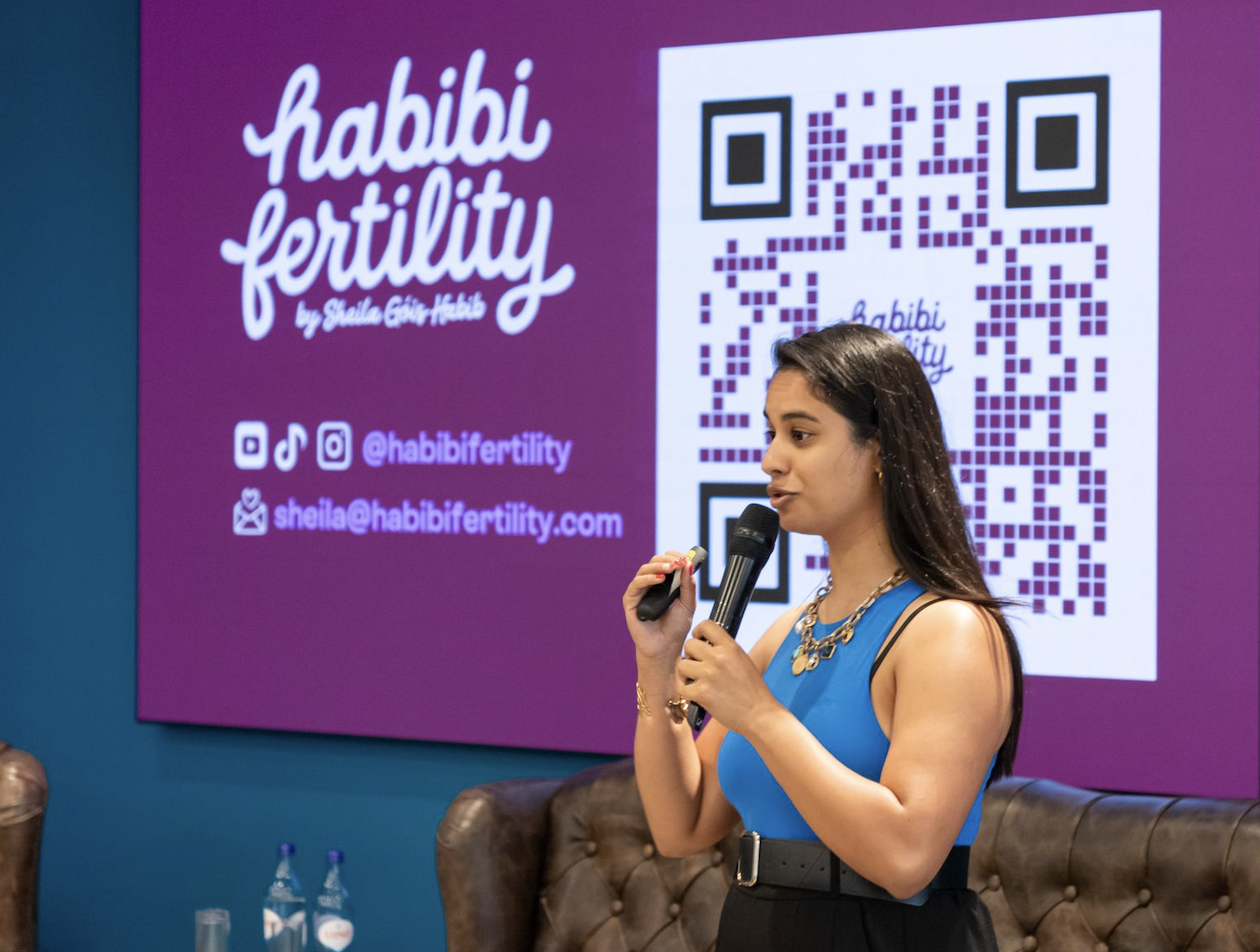
I grew up with this lack of information and slowly realised it wasn’t just me. Other women had the same gaps, especially in my Indian and Muslim communities, but everywhere really. That’s when I decided to create Habibi Fertility with the mission to promote body literacy as a human right.
What does “body literacy” mean in this work?
Body literacy starts with knowing the correct names of its parts. A lot of people don’t know the difference between a vulva and a vagina. They don’t know where the clitoris is. These things sound basic but they’re not common knowledge.
Then it goes deeper into understanding your cycle. Many people don’t know the cycle starts in the brain, or that ovulation is the main event. It implies understanding what hormonal changes mean for your mood, energy and productivity, not just for fertility. Every person is different, so the point should be to become a scientist of yourself: track how you feel in each phase and use that knowledge to live better.