

What is the President’s Youth Advisory Board expected to deliver?
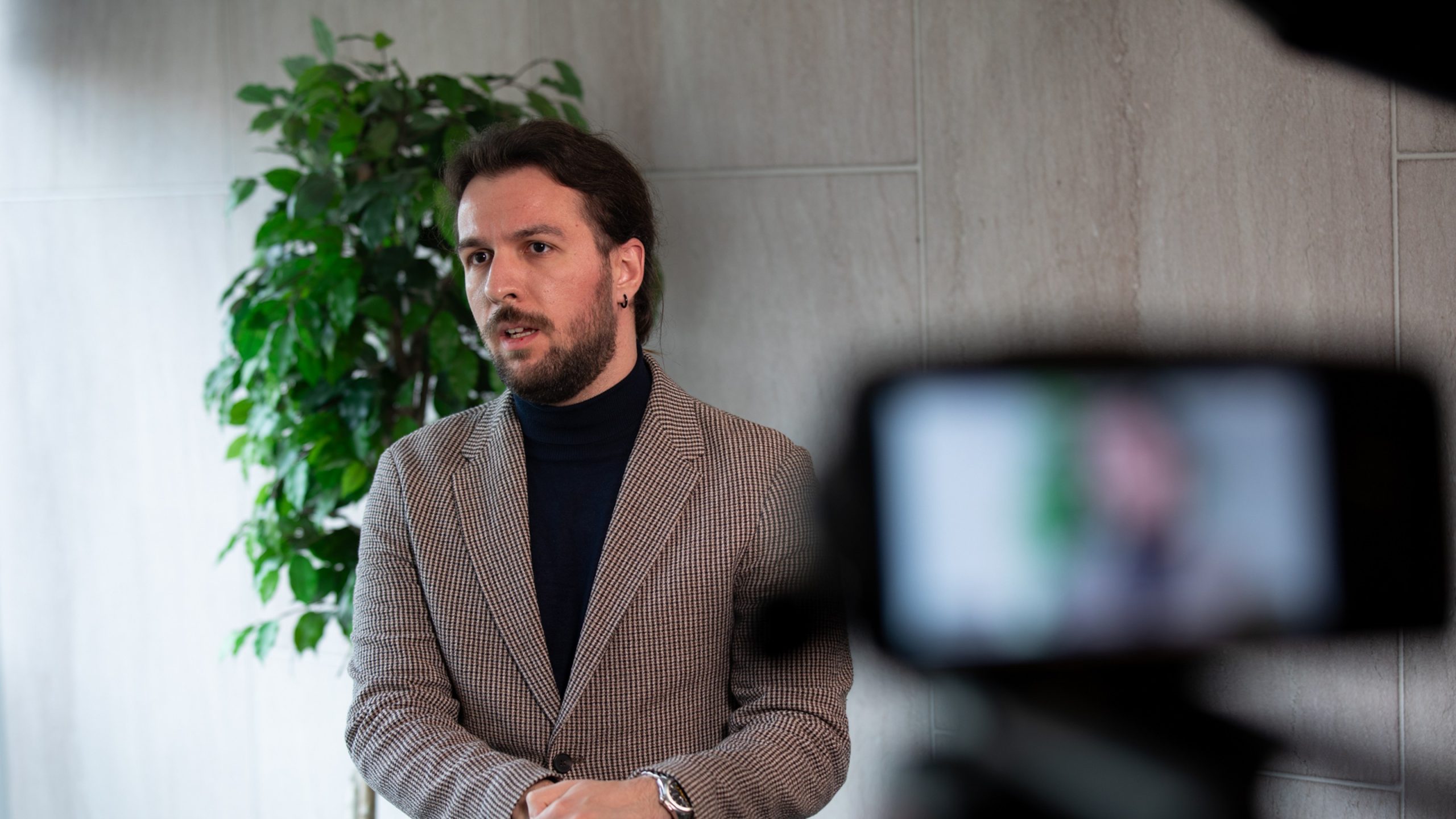
The new channel for European Youth
At a time when Europe is seeking ways to strengthen trust between institutions and young citizens, the European Commission is creating a new mechanism for direct consultation: the President’s Youth Advisory Board, a structure that places the voices of young people literally next to the President of the Commission. The initiative was announced in President von der Leyen’s Political Guidelines and officially launched in 2025, with the aim of strengthening young people’s participation in European policy-making. The Board’s first meeting took place on December 3, 2025, in Brussels, with the participation of young representatives from across the Union. The discussion focused on how young people use social media, the opportunities and risks that arise from it, including issues such as mental health and the need to define a “digital age of majority.”
The Board acts as an advisory body to the Commission and, in particular, to the President, allowing young people to directly express their experiences, concerns, and suggestions on policies that affect them. The Commission has placed support for young people at the heart of its work, believing that their experiences should be incorporated early on in policy design so that decisions reflect their needs. At the same time, the creation of the Board is a continuation of previous efforts to broaden youth participation, such as the annual Youth Policy Dialogues of each Commissioner and the “Youth Check” mechanism, which examines the impact of new initiatives on the lives of young people from the design stage. The Commission is also announcing a strategy for intergenerational justice and a European action plan against cyberbullying.
“My main motivation for joining the President’s Youth Advisory Board was my deep desire to ensure that young people’s voices are not only heard but genuinely integrated into real policymaking at the highest level of the European Union. Through my long-term engagement in European youth fora and representing the Hellenic National Youth Council, I have seen that young people bring energy, valuable experiences, innovative ideas, vast knowledge, and solutions that too often remain distant or do not reach places of real influence and decision-making. My participation in the PYAB allows me to help bridge this gap. I believe the most pressing need for young people in Europe today is strengthening democratic participation and mental well-being, while simultaneously addressing social inequalities, particularly those related to gender. For young people to feel that they truly belong in the European project, they need more opportunities with purpose, safer spaces to express themselves, and meaningful intersectoral youth policies that respond and reflect their realities. I am optimistic we will work seamlessly with the other National Youth Councils, as we already do in countless other settings, to meet these needs and succeed in this new youth advocacy effort that this European Commission President’s Experts Group is committed to establish.”
-Elvira Mentzelioti, Hellenic National Youth Council Representative in PYAB
The most important motivation for me to participate in the President’s Youth Advisory Board was the opportunity for institutional representation of my country’s youth within the European Union’s decision-making centres. Being able to convey the concerns, priorities, and proposals of young people from Cyprus directly to the President of the European Commission is not only an honour, but also a responsibility. I strongly believe that young people should not merely be recipients of policies, but co-creators of them. This institution moves precisely in that direction, strengthening the voice of youth at the highest political level, and this is my greatest motivation. At the European level, the most pressing need for young people today is to ensure that their voice is genuinely taken into account in policymaking. It is not enough to speak about the issues that concern young people; we must speak with young people and incorporate their positions into concrete measures. Young people have clear priorities, foremost among them affordable housing and economic security.
Today, young people across Europe struggle to buy or even rent their own homes, to start families, and to plan their futures, as wages often fail to keep pace with the rising cost of living. This is not merely an economic or social issue; it is a strategic issue for Europe’s future, as the housing crisis and the financial pressure faced by young people threaten Europe’s demographic balance and social cohesion. Political leadership, at both national and European levels, must recognise that without targeted policies to support young people—particularly in the areas of housing, employment, and the cost of living—Europe’s future is at risk. Only if young people’s concerns are translated into concrete public policies will we be able to effectively address these challenges and ensure that the next generation has real prospects.
-Loukas Lingis, Cyprus Youth Council (CYC)
In terms of its purpose, the President’s Youth Advisory Board was formally established by a Commission decision on June 25, 2025, as part of a commitment to strengthen the active participation of young people in European democracy. According to the same source, the purpose of the Board is to advise the Commission on issues that most affect young people, to evaluate policies under development, and to act as a “sounding board” so that policies are tailored to the real needs of young people. The Board’s main responsibilities include highlighting the challenges faced by young people from different social and economic backgrounds, advising the Commission on the basis of data and opinions gathered from European youth, providing feedback on policies, and facilitating communication between the Commission and young citizens in all Member States. In addition, members undertake to convey the key messages of their work to their networks, thereby enhancing the visibility of the Board.
In terms of composition, the Board brings together young people aged 18–28 from all National Youth Councils of the 27 Member States and from the European Youth Forum, together with observers from candidate countries. The President of the Commission chairs the meetings in person — a sign of political weight where young people are not just “heard” but engage in institutional dialogue with the Union’s top executive body. The official registration of the Board’s structure in the Register of Commission Expert Groups reinforces the image of an organized, institutionally protected mechanism. The register lists the 29 member organizations (the 27 national councils, the European Youth Forum, and additional participants), along with five observers from countries such as Moldova, Ukraine, Bosnia and Herzegovina, Kosovo, and Montenegro. This composition reflects the broader geopolitical reach of the EU, where youth are a catalyst for convergence within and beyond the Union’s borders. The National Youth Councils were selected without an open call for applications, as it was considered that their representation ensures the greatest possible balance and legitimacy for the functioning of the Board, thanks to their institutional role and the way in which they collect and convey the views of young citizens in their countries.
How do you think your participation in the Board can translate into changes or improvements in the daily lives of young people (e.g. in terms of education, employment, mental health, civic participation)?
The President’s Youth Advisory Board operates in an advisory capacity to the European Commission on policies and legislation to be established at the European level that concern young people. The mere fact that European Union technocrats will be systematically informed about young people’s concerns, and will receive concrete recommendations directly from young people themselves on issues they experience in their everyday lives, can, in my view, have a meaningful impact on their lives. There is a clear difference between taking decisions and shaping policies on education, employment, housing, mental health, or social participation after listening to the views of young people who experience these challenges first-hand, and having decisions made solely by technocrats in Brussels “about young people, without young people.”
It is particularly encouraging that the President of the European Commission seeks personal engagement and regular meetings with the Youth Advisory Board at least twice a year, as well as follow-up after each meeting through the preparation of a policy paper on the topic under discussion. In this way, technocrats and relevant stakeholders in Brussels will have, in a concrete and structured format, the views and proposals of young people in front of them. As a result, EU policies can be designed and implemented closer to the real needs of youth and translated into tangible improvements in their daily lives—from school and university to the workplace, access to mental health services, and the ability for active social participation.
-Loukas Lingis, Cyprus Youth Council (CYC)
My participation in the President’s Youth Advisory Board allows me to bring the real experiences and challenges I encounter on a daily basis as a youth worker, directly to the European Commission. Through my involvement in youth organisations and the Hellenic National Youth Council, I can help secure that policies are shaped by those who are most affected by them: young people themselves. When young people see their experiences reflected in the policies that shape their lives, they feel empowered, and that empowerment is essential for building a more democratic and equitable Europe.
As a student in STEM with a background in international research centers, I know how important it is for young people to have access to modern education, mobility, and programs that connect academic knowledge with the job market. I want to advance policies that strengthen specialisation and green innovation, while seeking to highlight inequalities in the labour market, especially for young women. Gender equality and the elimination of discrimination are prerequisites for a socially sustainable Europe. Having participated in dozens of European conferences and democratic forums, I have come to understand the close connection between mental health and political participation. A young person who feels safe, connected, and supported is a young person who participates. I want to promote policies that strengthen precisely this relationship. It is our duty and responsibility to make the most out of this role as members of the European Commission President’s Youth Advisory Board.
-Elvira Mentzelioti, Hellenic National Youth Council Representative in PYAB
Commission Decision C(2025)3967 itself sets out in detail the legal, political, and operational framework of the Board. It is based on Article 165 of the Treaty on the Functioning of the EU, which provides for the promotion of young people’s participation in democratic life. The recitals of the decision include the EU Youth Strategy 2019–2027, the legacy of the European Year of Youth 2022, and the President’s commitments to strengthen the political participation of young people. The Decision sets out in detail the Board’s responsibilities, highlighting issues affecting social groups of young people, advising the Commission, providing feedback on policies, facilitating communication with young people in all Member States, and ensuring that the needs of all young people, regardless of their identity or background, are taken into account.
Regarding the process for selecting representatives, each member (i.e., each National Council) nominates up to four representatives aged 18–28 each year, with proven experience in EU policies, a commitment to youth participation, and the ability to disseminate information to their communities. Two of these are ultimately selected to take part in the meetings. The Decision stipulates that the Board operates under the supervision of the Directorate-General for Education, Youth, Sport and Culture (DG EAC), meetings may be held in person or online, and the Board’s opinions/reports are to be adopted by consensus. What does this new structure ultimately mean for European youth? It seems to be a promise to place youth at the center of the political process, alongside the Union’s most prominent political figures. It means that the issues that concern Generation Z and Generation Alpha — from the use of digital media to social justice — are given institutional space and weight.
How do you intend to use your position on the PYAB to ensure that the voice of young people is effectively heard in European decision-making centers? Are there any specific priorities or actions you would like to promote?
As a member of the President’s Youth Advisory Board representing the Hellenic National Youth Council, I see my role as creating a genuine communication bridge between young people and the European decision-making ecosystem, guaranteeing that EU policies are shaped by youth, for youth, and with youth at its core. Through structured consultations with Greek and European youth networks, I will facilitate thematic dialogues and open consultations in collaboration with the European Commission’s Representation in Athens. At the same time, I will actively draw on Europe’s key participation mechanisms such as the EU Youth Dialogue, Youth Policy Dialogues, the Youth Stakeholders Group, the Youth Check, and the Implementation Dialogues, which together provide robust, evidence-based insights into what young people experience and expect. My long-standing involvement in youth organisations allows me to present a diverse and grounded set of perspectives to the highest political levels. In parallel, I aspire to prioritise topics consistently highlighted by young people themselves: gender equality, the agri-food and green transition, democratic participation and empowerment, and mental health as a cornerstone of a resilient generation. For me, representation was never a one-way process. Reporting back to youth networks and organisations is essential to make sure that young people clearly see how their contributions translate into tangible political outcomes. Through this continuous and reciprocal flow, I aim to help pave the way for a Europe that not only listens to its young people but co-creates policies with them, a Europe where youth voices are not symbolic but central to the decisions that outline our present and common future.
-Elvira Mentzelioti, Hellenic National Youth Council Representative in PYAB
First of all, I believe that my role as a member of the President’s Youth Advisory Board is two-way. On the one hand, we have the extremely important access to the President of the European Commission, through which we can convey young people’s concerns and propose solutions to policies that affect them. On the other hand, equally important is our systematic and meaningful communication with the young people of our own country, so that they can inform us about the issues that concern them, their lived experiences, and their proposals. I firmly believe that our role begins with listening carefully to the concerns and views of young people across a wide range of issues. We then communicate these positions to the European Commission and to the President herself, articulate them in a structured manner through the policy papers that are prepared, and ensure that they are taken into account in the shaping of legislation and policies. This cycle is completed by informing the young people of our country about what was discussed during the meetings, which proposals we submitted on their behalf, and the stage of implementation of each issue. Accountability to young people is, for me, just as important as representing them.
As for my personal priorities, as I mentioned earlier, the housing crisis and the economic security of young people are at the core. I do not single them out because I believe they are the only important issues, but because my daily interaction with young people in Cyprus clearly shows that these are the issues that concern them the most: how they will manage to secure a home and how they will survive economically in order to move forward with their lives. For this reason, whenever I am given the opportunity within the framework of the President’s Youth Advisory Board, I will seek to place the housing crisis and the economic survival of young people in Europe on the agenda. These are issues that require particular attention from the EU if it genuinely does not want to lose its young people and further aggravate the already problematic demographic challenge it is facing.
-Loukas Lingis, Cyprus Youth Council (CYC)
The President’s Youth Advisory Board is a promising participatory structure — but it remains up to the European institutions to prove that it will not function as yet another symbolic exercise or a “democratic simulation” for internal consumption. The real test is not its creation, but whether young people’s views will be meaningfully incorporated into the policies that shape their daily lives. If their voices remain marginalized, the mechanism will become an institutional board game, where players are invited to participate without ever actually moving the pieces. To avoid this, the EU must treat young people as bearers of knowledge, experience, and political will. Only then will the channel that has been opened become an authentic source of democratic renewal.
- advisory mechanisms
- Brussels
- civic engagement
- civic voice
- democratic participation
- DG EAC
- digital age of majority
- digital governance
- EU governance
- EU institutions
- EU policy
- EU youth strategy
- European Commission
- European democracy
- Generation Z
- institutional dialogue
- intergenerational dialogue
- mental health
- participatory governance
- policy evaluation
- policymaking
- political engagement
- social media use
- stakeholder consultation
- youth advisory board
- youth councils
- youth involvement
- Youth participation
- youth policy design
- youth representation
Written by
Shape the conversation
Do you have anything to add to this story? Any ideas for interviews or angles we should explore? Let us know if you’d like to write a follow-up, a counterpoint, or share a similar story.
©2026 PulseZ. Design & developed by Matrix Internet Opens in a new tab