

The European Commission has just rolled out its new LGBTIQ+ Equality Strategy for 2026–2030. While social acceptance is on the rise across the continent, violence and discrimination against non-heterosexual and trans people are still a painful part of everyday life.
The EU’s Game Plan: LGBTIQ+ Equality Strategy 2026–2030

📈 The Acceptance Paradox: High Support, Real Struggles
Recent data shows a clear positive trend: about three-quarters of EU residents say they have no prejudices against gay, bisexual, and transgender people. That’s a huge leap compared to the start of the decade.
Yet, here’s the kicker: one in three LGBTIQ+ individuals admits to experiencing discrimination in the past year.
This reveals a major paradox. While public opinion strongly backs equality, the actual living conditions for many haven’t improved enough. Hate-motivated violence, cyberbullying, and workplace discrimination remain common issues in many EU countries.
A New Strategy: Building on the Past, Shifting the Focus
The European Commission’s 2026–2030 strategy isn’t just a rerun of the previous 2020–2025 plan. It moves the focus from political statements to concrete tools and institutional support.
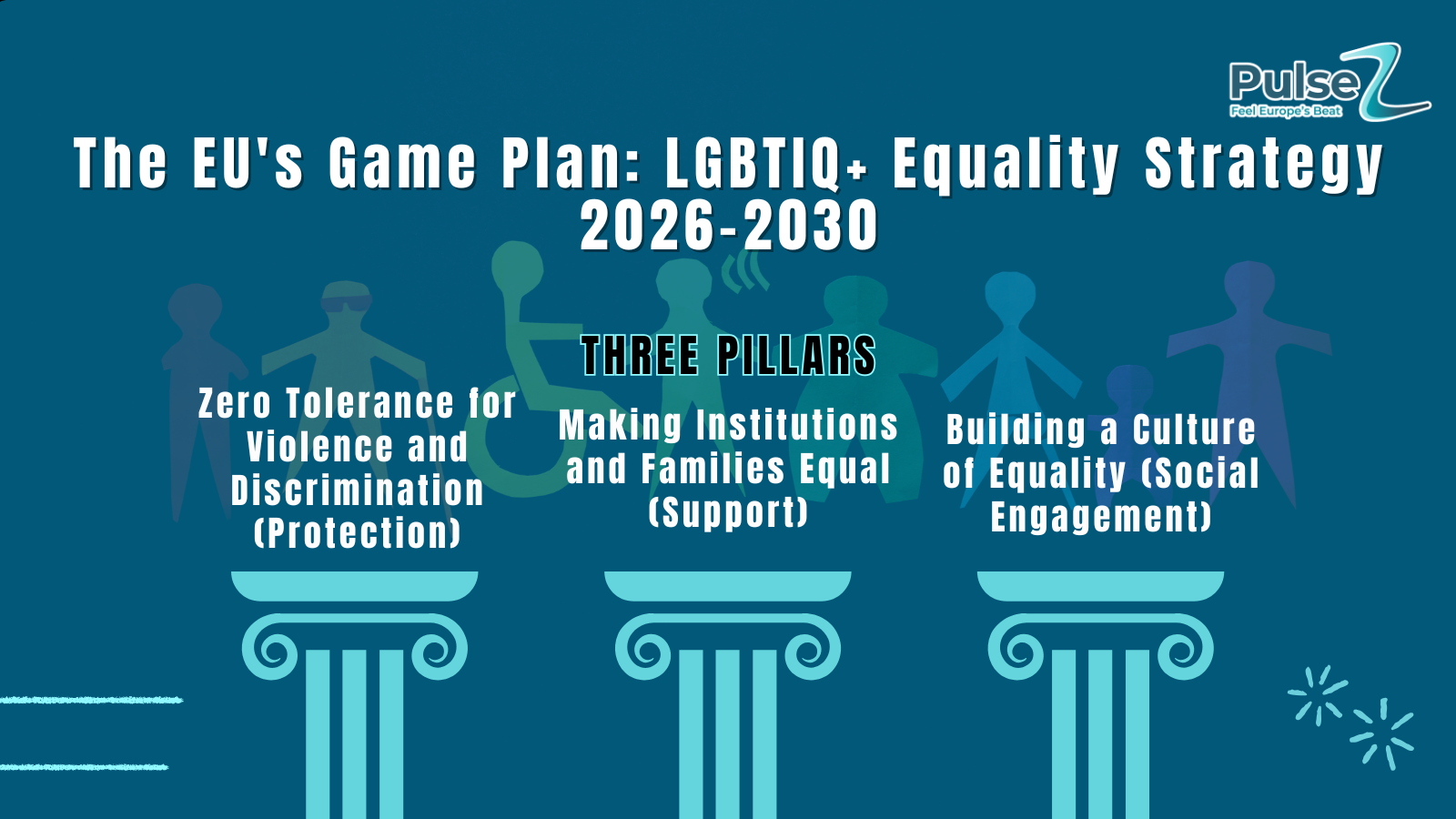
The main goal is to fully embed LGBTIQ+ equality into all EU policies—not just human rights, but also education, the job market, security, and healthcare. The strategy is built on three core pillars: Protection, Support, and Social Engagement.
Canva
Pillar 1: Zero Tolerance for Violence and Discrimination (Protection)
This first pillar is all about protecting people from violence and discrimination. The Commission is planning a new action plan to fight cyberviolence and the creation of a Knowledge Hub to collect and analyze data on online hate. The aim is to quickly spot and counter organized hate campaigns targeting LGBTIQ+ people.
The strategy emphasizes enforcing existing EU anti-discrimination laws and providing financial aid to civil society organizations that fight for equality. A special focus is placed on **”conversion therapies”—**forced attempts to change a person’s sexual orientation or gender identity. The Commission plans to deeply analyze these practices and consider legal action to ban them across the entire EU.
Pillar 2: Making Institutions and Families Equal (Support)
The second pillar focuses on strengthening the structures that support the LGBTIQ+ community. The Commission plans to boost the power of Equality Bodies, which are responsible for promoting non-heterosexual rights and fighting systemic discrimination.
A vital part of the program is the issue of Rainbow Families. The Commission urges member states to adopt laws that ensure parenthood is recognized across the EU, so that children of same-sex couples have the same rights no matter which country they live in.
The EU will also promote integration in the workplace by teaming up with the Diversity Charters Platform. This collaboration between government, businesses, and social organizations is set to create professional environments free from prejudice and discrimination.
Pillar 3: Building a Culture of Equality (Social Engagement)
The third pillar is about actively engaging society in the pursuit of equality. The Commission is calling on member states to develop national LGBTIQ+ strategies or action plans that are tailored to local conditions.
A new feature is the LGBTIQ+ Policy Forum, which will act as a platform for dialogue between the Commission and civil society groups, giving the community a direct voice in shaping EU policies. The strategy also includes improving data collection and analysis, which will help to accurately measure the scale of challenges faced by non-heterosexual people in specific countries.
The Commission announced a report on the implementation of employment equality laws in 2026. This report will show how countries are enforcing EU rules and where adjustments are needed. Simultaneously, guidelines on inclusive recruitment practices will be developed to improve access to jobs and career progression for LGBTIQ+ people. In many sectors, the “glass ceiling” effect—informal barriers limiting the careers of minority groups—still exists.
⚖️ Strategy Between Values and Debate
The goals of the strategy are ambitious and rooted in the values enshrined in the EU Charter of Fundamental Rights. However, implementing policies related to rainbow families or equality education may face resistance in countries where national politics lean toward conservative values.
This raises a question about the limits of EU authority in social policy. Will these new actions serve as a tool to support positive change, or will they become a source of tension between Brussels and member states?
One thing is certain: the 2026–2030 strategy is more than just a policy document. It is a test of the coherence of the European project, where the freedom to love and the freedom to be oneself are becoming a key measure of the quality of democracy.
Written by
Shape the conversation
Do you have anything to add to this story? Any ideas for interviews or angles we should explore? Let us know if you’d like to write a follow-up, a counterpoint, or share a similar story.
©2026 PulseZ. Design & developed by Matrix Internet Opens in a new tab