


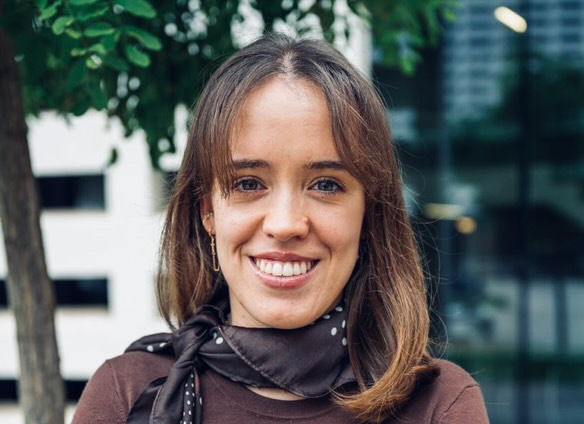
For those who may only know you digitally as “outside the norm”, who is Diana Reis beyond the social media handle?
I’m a young person from a small village with just 200 inhabitants, so growing up, I rarely saw people like me except in hospitals or physiotherapy settings. That made me question why people with a disability are only visible in such places. Being a person with a disability myself, often the only one around, I wanted to explore this more. At first, I researched other social issues like gender equality and feminism before disability. My first blog, the early days of feeling outside the norm, was my way to understand myself and the world.
As an advocate for disability rights, what feeds your need to understand the world around you?
I have cerebral palsy, a congenital condition which makes me feel different from others. I have long felt I don’t fit in anywhere. For example, I don’t use assistive equipment like a wheelchair regularly, as I only used one after surgery; but even then, I was often not seen as “disabled enough” or as “non-disabled” either. Physically, I am different, but socially I noticed people treated me differently too, and I wanted to understand why. It took me on a journey from personal reflection to realising that disability and ableism are structural issues, far beyond just my own experience.
Your activism is about building a new norm for disability rights. What could it look like?
Awareness of prejudice against people with a disability is still growing, like how feminism has changed over time. Now people are more open to learning, but a risk of “bubbles” and disconnection from broader society exists. Disability has always been part of life, yet society keeps these people in limited spaces with little room to challenge that. Sometimes, people with disabilities themselves accept and internalise this view. Change takes strong, ongoing political and social commitment. For example, many students leave universities because campuses aren’t accessible enough. Fixing this won’t happen quickly, but it’s a crucial step for real inclusion.